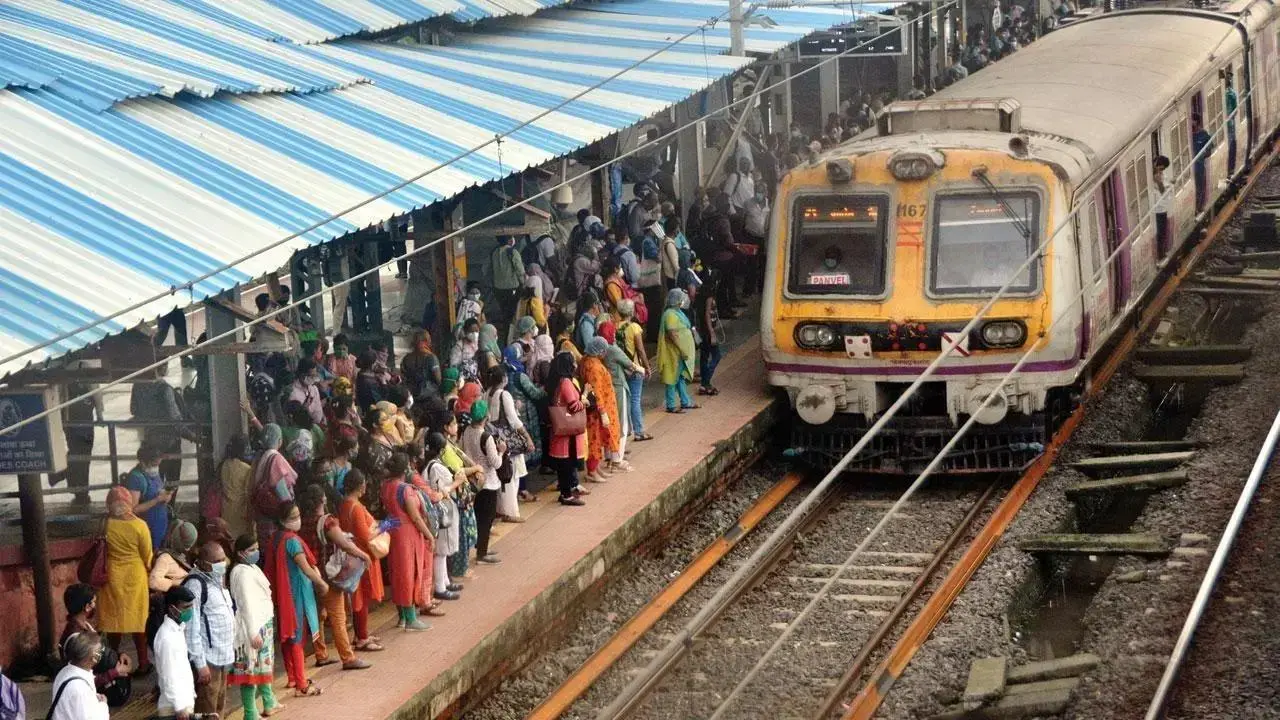
Mumbai’s suburban rail network is set for a major capacity upgrade following central approval for additional rail lines between Badlapur and Karjat, a stretch that has long been a bottleneck for commuters and freight services alike. The decision strengthens a critical segment of the Mumbai Metropolitan Region’s transport spine, where rising population growth and economic activity have placed sustained pressure on existing infrastructure.
The sanctioned project will add two new tracks alongside the existing corridor, expanding the route to four lines over a distance of more than 32 kilometres. The alignment will serve multiple suburban stations that cater to fast-growing residential settlements beyond Kalyan, areas increasingly relied upon by households seeking affordable housing within commuting distance of Mumbai’s employment centres. Railway planners say the additional lines are designed to address a structural imbalance on the corridor, which currently handles a mix of suburban services, long-distance passenger trains, and freight traffic. By physically separating local and mainline operations, the project is expected to improve punctuality, reduce cascading delays, and allow more predictable scheduling across services.
The corridor forms part of one of India’s busiest high-density rail routes, linking Mumbai to southern and eastern markets. Freight volumes on this section have increased steadily, driven by industrial growth and port-linked cargo movement. Transport analysts note that without added capacity, suburban services risk further deterioration, undermining public confidence in rail as a dependable daily mode of travel. Execution responsibility has been assigned to the dedicated rail infrastructure agency for the Mumbai region, with construction scheduled to begin after land acquisition is completed. The project requires a combination of railway-owned land, government parcels, and privately held plots, a process that urban planners say will require careful coordination to minimise displacement and construction disruption.
The investment, estimated at over ₹1,300 crore, will be jointly funded by the Union government and the Maharashtra government. Infrastructure economists view this cost-sharing approach as essential for large metropolitan rail upgrades, where benefits extend beyond commuter convenience to include regional productivity gains and lower road congestion. Beyond track expansion, the project includes station improvements, boundary protection, and operational safety upgrades. These elements are intended to enhance passenger movement, reduce trespassing risks, and improve overall station management—factors that directly affect commuter experience, particularly during peak hours.
Urban development experts argue that strengthening suburban rail capacity is central to sustainable growth in the Mumbai Metropolitan Region. Reliable rail connectivity enables housing development in peripheral towns without proportionally increasing road traffic or carbon emissions. It also supports more equitable access to jobs by reducing travel uncertainty for lower- and middle-income commuters. Once construction begins, the project is expected to be completed within a few years, aligning with other suburban rail upgrades underway across the region. The real test, planners say, will lie in integrating new capacity with service planning and station-area development, ensuring that infrastructure investment translates into safer, faster, and more inclusive mobility for Mumbai’s expanding urban population.
Mumbai Rail Network Expands Toward Karjat