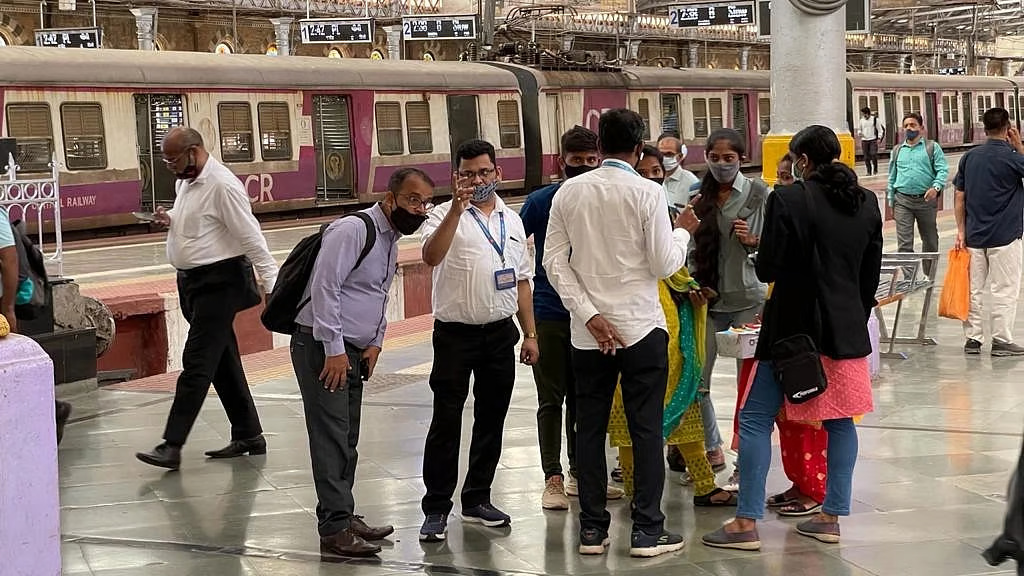
A large-scale ticket inspection exercise across Mumbai’s suburban rail network has highlighted persistent challenges in fare compliance, raising broader questions about commuter behaviour, system design, and the sustainability of public transport funding in India’s financial capital.
During a 12-hour enforcement drive conducted across major stations and train services, railway authorities identified close to 5,800 instances of passengers travelling without valid tickets. The checks spanned suburban routes as well as longer-distance services operating within the metropolitan region, underscoring that fare evasion remains a network-wide issue rather than a localised anomaly. Railway officials indicated that a significant share of violations involved travel in premium segments, including air-conditioned local services and First Class compartments. Urban transport experts note that this trend reflects a mismatch between service upgrades and enforcement perceptions, with some commuters assuming lower scrutiny in newer or higher-end offerings. Such behaviour, they argue, undermines the financial logic of investing in improved commuter comfort and energy-efficient rolling stock.
The enforcement operation was carried out at multiple high-footfall stations and onboard services using a coordinated deployment of ticket inspectors and supervisory staff. Authorities reported that several thousand additional cases were detected during routine inspections running parallel to the special drive, suggesting that ticketless travel is not confined to isolated time windows or peak congestion periods. From a governance perspective, fare compliance is critical to the long-term viability of mass transit systems. Suburban railways form the backbone of Mumbai’s low-carbon mobility ecosystem, carrying millions daily while keeping private vehicle usage in check. Revenue leakage through fare evasion places added pressure on public finances, often leading to deferred maintenance or slower service upgrades, which ultimately affect commuter safety and reliability.
Urban planners point out that the weekend timing of the drive weakens commonly cited justifications such as long queues or time constraints. With digital ticketing platforms and mobile-based passes increasingly available, enforcement outcomes are now being interpreted as behavioural challenges rather than access limitations. This strengthens the case for combining stricter checks with improved last-mile ticketing integration and real-time fare validation systems. The inspection exercise also generated a substantial fine collection within a short duration, highlighting the scale of untapped revenue that could otherwise support station upgrades, accessibility improvements, and climate-resilient infrastructure. Transport economists argue that predictable fare recovery is essential for reinvesting in electrification, energy-efficient operations, and inclusive station design, especially as the network expands to serve growing suburban populations.
Looking ahead, officials suggest that enforcement drives will continue alongside efforts to streamline ticket purchasing and reduce friction points for legitimate commuters. The episode serves as a reminder that sustainable urban transport depends not only on infrastructure investment but also on shared responsibility between operators and passengers to maintain fairness, efficiency, and long-term system resilience.
Mumbai Rail Authorities Catch Thousands Of Commuters Without Valid Tickets