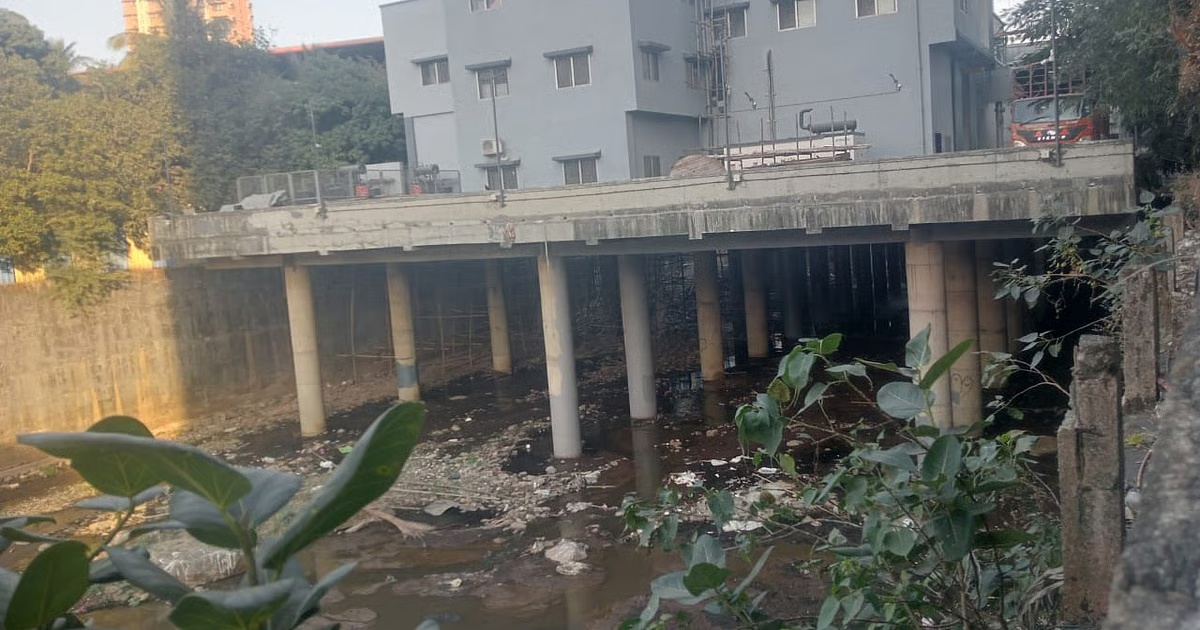
Mumbai’s R North Ward, covering large parts of Dahisar and sections of Borivali, has emerged as a pressure point where rapid urban expansion is colliding with fragile civic systems. Despite being home to major infrastructure projects and redevelopment activity, the ward continues to grapple with flooding, pollution, and weak internal connectivity—issues that carry serious implications for public health, climate resilience, and everyday mobility.
Situated at the northern edge of the Brihanmumbai Municipal Corporation’s limits, the ward has seen a sharp rise in residential density driven by redevelopment and population growth. It also falls within the influence zone of the upcoming Coastal Road extension towards Dahisar and Bhayandar, a corridor expected to significantly cut travel times and reduce vehicular emissions at a citywide scale. However, urban planners note that while such mega projects improve regional connectivity, the lack of supporting local roads and last-mile infrastructure has left many neighbourhoods struggling with access and congestion. Monsoon vulnerability remains a recurring challenge. Civic records indicate the presence of multiple major and minor drains across the ward, many of which overflow during heavy rainfall due to incomplete desilting and encroachments. Low-lying junctions near key highways and station areas routinely experience waterlogging, disrupting traffic and affecting local businesses. Transport experts warn that repeated flooding not only increases commute times but also intensifies air and noise pollution as vehicles idle for long periods.
Environmental stress is another growing concern. Sections of the Dahisar River continue to receive untreated sewage and solid waste, leading to foul odours and the release of methane, a potent greenhouse gas. Despite investments in sewage treatment capacity, residents and environmental observers say visible improvements on the ground remain limited. The situation is compounded by the degradation of mangrove buffers in certain pockets, where unauthorised construction and land clearing have reduced natural flood protection and biodiversity. Unregulated redevelopment has further added to the ward’s challenges. Construction dust, inadequate waste handling, and pressure on existing utilities have raised concerns about air quality and liveability. Urban health specialists point out that such cumulative environmental stress disproportionately affects vulnerable communities living near drains, construction zones, and congested corridors.
The ward’s civic issues have also gained prominence ahead of local body elections, with infrastructure delivery, flood management, and environmental protection emerging as key voter concerns. Analysts observe that residents are increasingly scrutinising how public funds are translated into local outcomes, particularly in fast-growing peripheral wards. Looking ahead, experts argue that R North Ward’s experience underscores the need for integrated planning—where transport megaprojects, river rejuvenation, redevelopment, and local services are aligned. Strengthening drainage networks, protecting natural ecosystems, improving internal road connectivity, and enforcing construction norms could collectively shift the ward towards a more resilient and people-first urban future. Without such coordination, Mumbai’s growth at the edges risks deepening civic stress rather than easing it.
Mumbai R North Ward Struggles With Floods Pollution