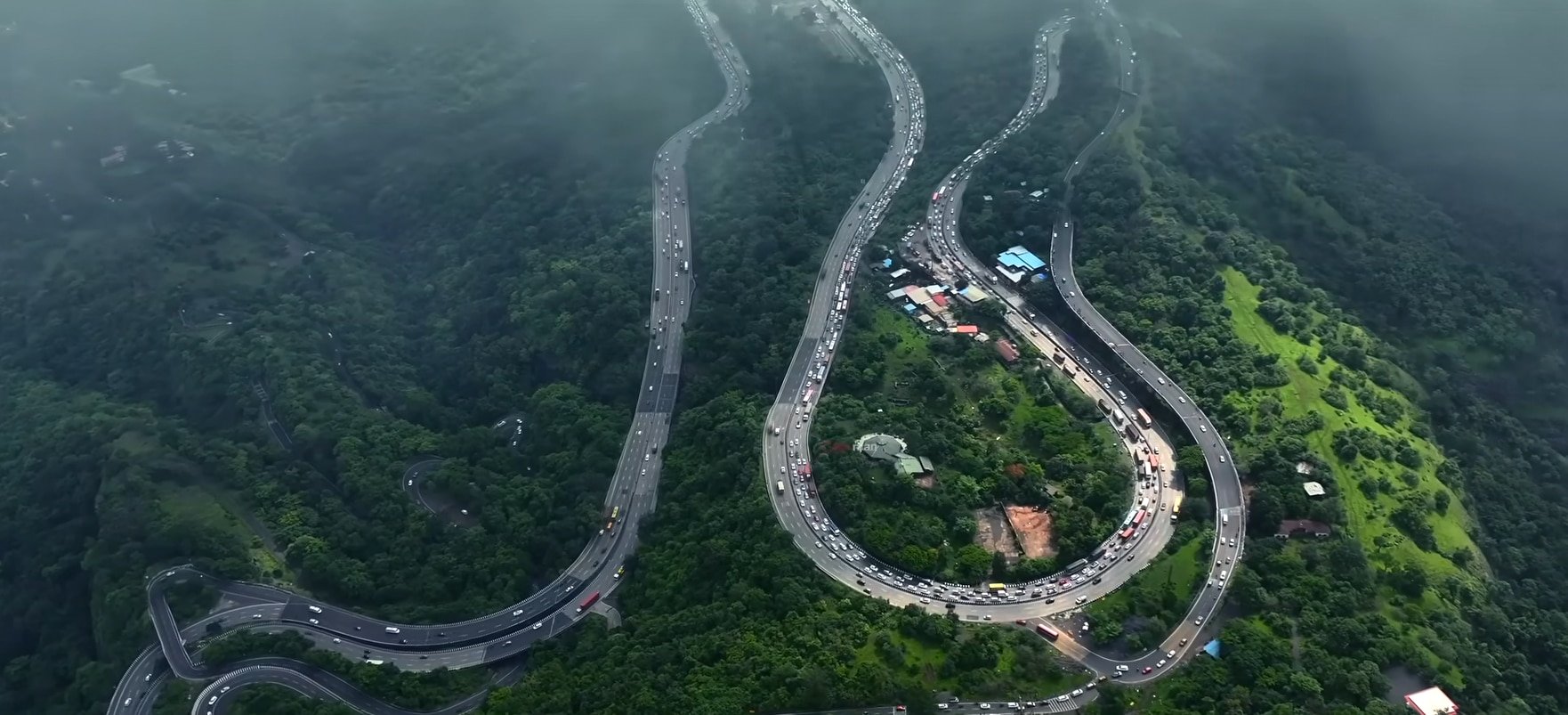
A major upgrade to western India’s busiest highway corridor is nearing completion as the Mumbai Pune Missing Link project approaches operational readiness. The new alignment on the Mumbai Pune Expressway is expected to shorten travel distance, bypass accident-prone mountain sections and improve journey reliability between Mumbai and Pune two of the country’s most important economic centres.
Infrastructure authorities say the project represents one of the most technically complex upgrades undertaken on the expressway since it opened in the early 2000s. Once operational, the new 13.3-kilometre corridor will replace a winding stretch of the existing route through the Western Ghats, reducing the travel distance by roughly six kilometres while potentially cutting commuting time by up to half an hour. The initiative is being implemented by the Maharashtra State Road Development Corporation, which has been tasked with modernising transport infrastructure across the state’s most heavily used road networks. Officials involved in the project say the Missing Link has been designed to improve both efficiency and safety, particularly along the steep and accident-prone Khandala Ghat section of the expressway.
A defining feature of the project is a large cable-stayed bridge spanning the Tiger Valley area near Lonavala. The structure rises nearly 182 metres above the valley floor, comparable to the height of a multi-storey skyscraper, making it one of the tallest road bridges built in India. Engineers note that constructing a bridge of this scale within a mountainous landscape required extensive geological studies and precision engineering to ensure long-term structural stability. The new corridor also incorporates two major tunnels designed to allow vehicles to pass beneath the mountainous terrain rather than navigating sharp curves and steep gradients. One of the tunnels stretches close to nine kilometres, placing it among the longest road tunnels in the country. By diverting traffic away from landslide-prone sections of the ghats, planners expect the design to significantly improve travel safety during the monsoon season.
Transport economists say the Mumbai Pune Missing Link could have wider economic implications beyond reducing commute times. The expressway serves as a critical logistics route linking Mumbai’s ports and financial districts with Pune’s manufacturing and technology clusters. Faster and more reliable travel could therefore support regional supply chains and labour mobility across the Mumbai Metropolitan Region and western Maharashtra. The infrastructure upgrade also highlights the growing need to modernise existing transport corridors as urban populations expand. Experts argue that improving road safety and reducing congestion on high-traffic highways can contribute to lower fuel consumption and reduced vehicle emissions an increasingly important goal for cities aiming to balance economic growth with environmental sustainability.
With construction reportedly nearing completion, authorities are preparing for final inspections and operational readiness. If timelines hold, the Mumbai Pune Missing Link could open to traffic around the state’s foundation day celebrations in early May, marking a significant milestone in the evolution of one of India’s most strategically important expressway corridors.
Mumbai Pune Missing Link Reshapes Expressway Travel