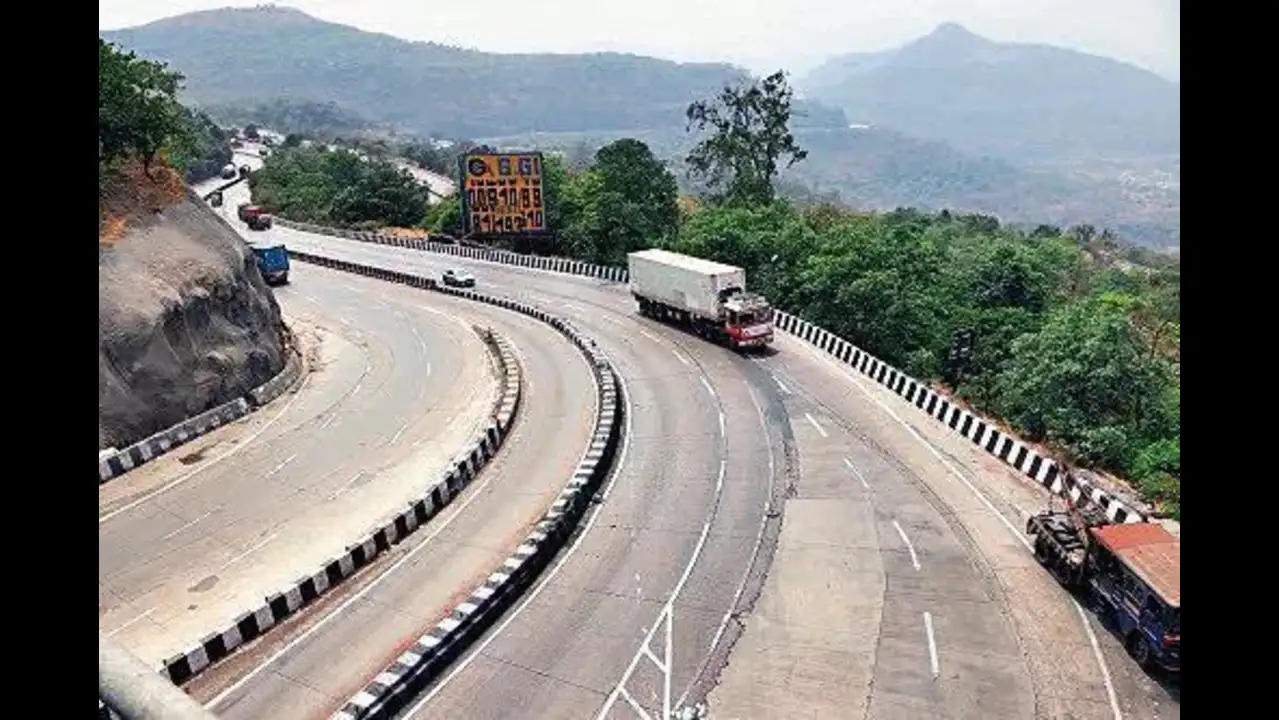
Mumbai Pune Link 96 Percent Ready New Deadline Set
The Mumbai-Pune Expressway’s long-pending “missing link” upgrade is 96 percent complete, with the Maharashtra State Road Development Corporation (MSRDC) now targeting a September 2025 opening.
Designed to reduce travel time and increase road safety, the ₹6,600-crore infrastructure project includes complex engineering components such as deep tunnels and a towering cable-stayed bridge. The 13-kilometre stretch aims to shorten the distance between Mumbai and Pune by 5.7 kilometres and cut commute time by approximately 30 minutes. It is expected to allow vehicles to travel at speeds of up to 120 km/h, while also bypassing landslide-prone sections that frequently cause accidents and bottlenecks, particularly during the monsoon. Among the project’s highlights are a 1.75 km tunnel, an 840-metre viaduct, and an 8.9 km tunnel that passes 170 feet beneath Lonavala Lake. However, the most technically demanding structure is a 650-metre cable-stayed bridge across Tiger Valley, rising 180 metres above the Khandala landscape. This section remains under construction and is proving especially difficult as the monsoon approaches.
Despite repeated delays—shifting the original March 2024 opening to January, then March 2025—the MSRDC has reaffirmed its commitment to finishing the project by September next year. Officials state that ongoing construction is being carefully managed to avoid any disruption to the existing Mumbai-Pune Expressway, which remains one of the country’s busiest highways. The completed sections, including the tunnels and one viaduct, are already in use by project crews to reach the remaining works. Authorities say this has helped speed up tasks in remote areas such as the second viaduct and the valley-spanning bridge. Once operational, the new link is expected to transform the expressway into a “zero-fatality corridor,” offering a more secure route free from natural hazards that have plagued travellers for decades. MSRDC engineers continue to prioritise safety and environmental resilience as they close in on the final stage of construction.
The missing link project, once considered an engineering challenge, now stands as a key step toward smarter and safer highway connectivity in Maharashtra. Its timely completion could serve as a model for future transport infrastructure in regions grappling with both topographic and climatic challenges.