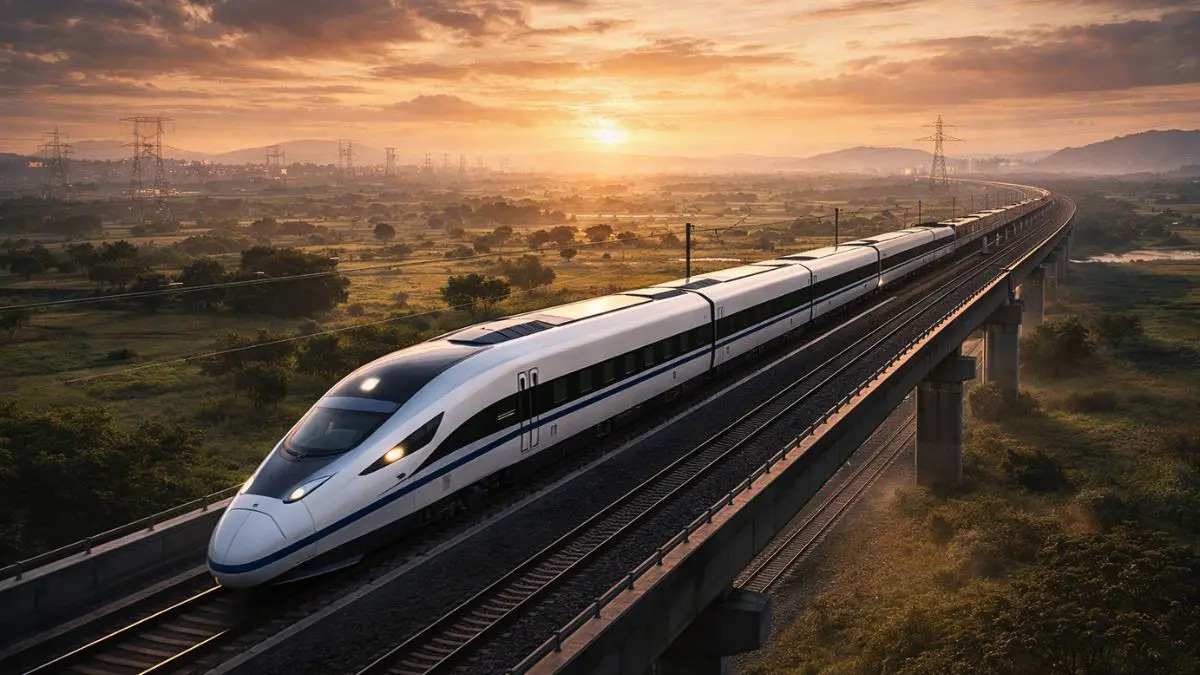
Mumbai Pune High Speed Train To Sharply Cut Travel Time
Maharashtra is moving closer to a transformative high-speed rail corridor that aims to reduce travel time between Mumbai and Pune to approximately 48 minutes, a dramatic compression of the current 3-to-4-hour rail journey and a potential catalyst for regional economic integration and climate-aligned mobility. The proposal, highlighted in the Union Budget 2026-27, aligns with a national push to expand India’s high-speed rail (HSR) network across major metropolitan clusters.
The envisioned Mumbai-Pune HSR corridor is part of a broader plan for seven new high-speed corridors, which would link major city pairs at speeds of up to 300–350 km/h, drastically cutting intercity travel duration while offering a lower-carbon alternative to road transport. The 48-minute target underscores how such infrastructure could reshape mobility patterns in one of India’s most densely populated and economically interlinked regions.For commuters and businesses, this corridor represents more than a time-saving proposition. A sub-one-hour connection between a financial hub (Mumbai) and a burgeoning tech and education centre (Pune) could expand labour markets, boost day-trip business travel and enable integrated regional development strategies. Urban economists describe such improvements as “connectivity multipliers” — infrastructure that not only speeds movement but fosters investment clustering, talent flows and supply-chain efficiencies across metropolitan corridors.
The corridor investment also reflects evolving transport policy priorities. Traditional rail services between the two cities are constrained by terrain, mixed use of tracks and capacity limits. A dedicated high-speed line, engineered to modern specifications, is envisaged to complement existing commuter and express services while helping absorb traffic that currently contributes to congestion and emissions on arteries such as the Mumbai-Pune Expressway and the Samruddhi Mahamarg.From an urban sustainability perspective, high-speed rail could significantly reduce per-passenger carbon emissions compared with car and bus travel — particularly important as cities confront rising climate risks and prioritise modal shifts to public transport. However, the actual carbon and economic impact will depend on energy sources, integration with urban transit networks, and usage patterns post-implementation, according to transport planners.
Despite the ambitious vision, the project is at an early planning and budgeting phase. Officials have not yet disclosed construction schedules, final alignments, station locations or financing structures specific to this corridor. Large-scale HSR projects in India historically involve lengthy land acquisition, regulatory approvals and phased construction — factors that can extend delivery timelines.Strategic alignment with other regional infrastructure efforts — such as rail station redevelopment, grade separations, and freight linkages — will be essential to ensure the high-speed corridor integrates effectively into broader transport ecosystems. There is also growing discourse among planners and commuter advocates about balancing high-speed rail with frequent, accessible regional services that support daily travel needs.
As Maharashtra debates the next steps for mobility transformation, the proposed Mumbai-Pune high-speed rail corridor stands out as a potential hallmark of 21st-century transport planning — one that could redefine intercity life, redistribute economic opportunity across the hinterland and phase in cleaner, faster rail mobility for future generations.