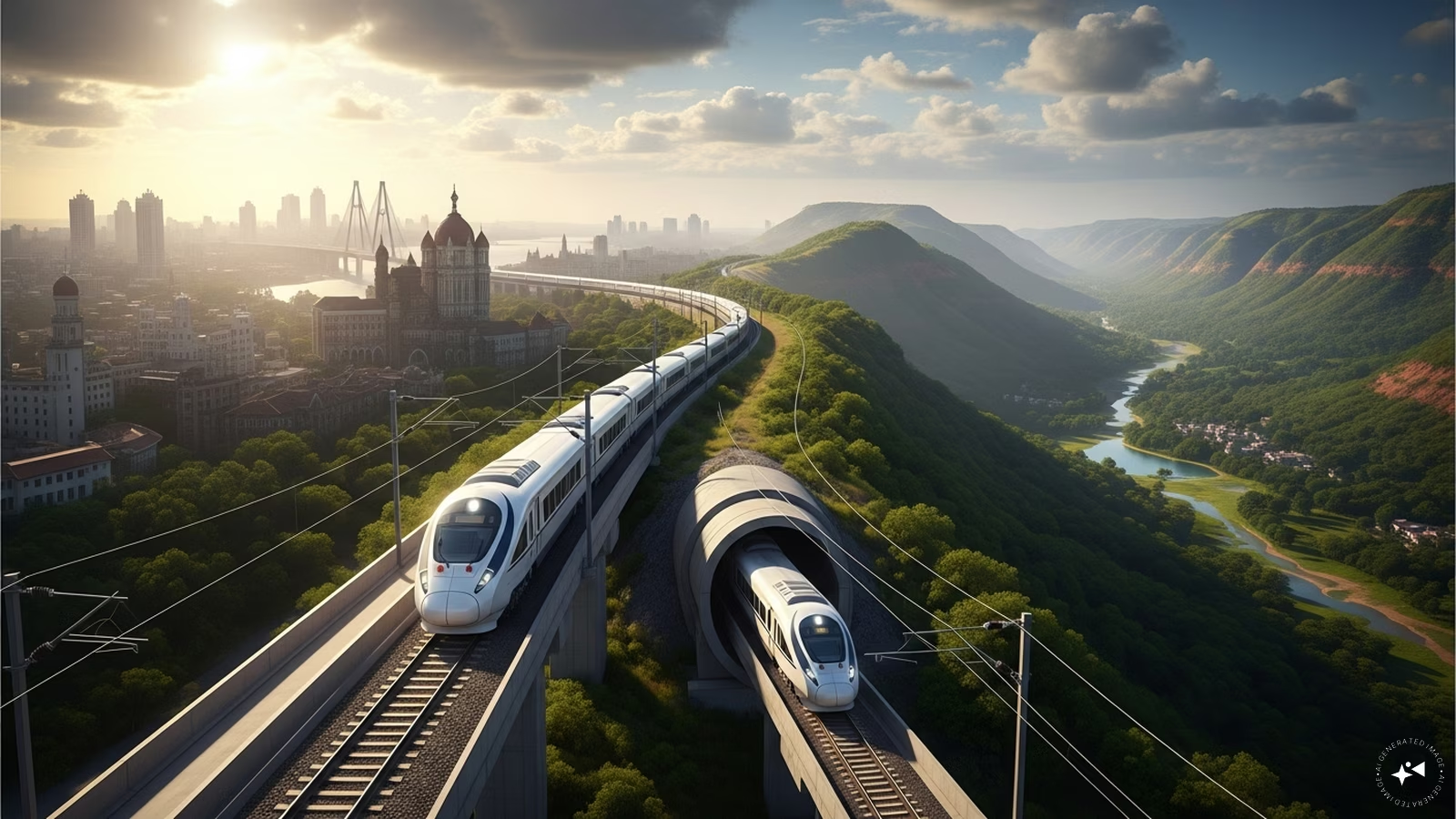
India’s Union Budget 2026 flagged a transformative phase for intercity mobility with the announcement of seven high-speed rail corridors designed to stitch major urban and economic centres into a faster, more sustainable transit network. Among these, the Mumbai–Pune and Pune–Hyderabad routes signal a strategic shift in regional connectivity that could reshape travel, city linkages, and economic geography across western and southern India.
Finance officials described the corridors as “growth connectors” aimed at slashing travel times, decongesting road and conventional rail networks, and promoting low-carbon passenger mobility. The corridors form part of a broader infrastructure push backed by a significant increase in public capital expenditure for fiscal year 2026–27.Pune, often overshadowed by megacities like Mumbai and Bengaluru in national transport planning, emerges as a critical junction. The Mumbai–Pune high-speed line is poised to bind the financial capital and one of Maharashtra’s industrial and educational hubs more tightly, reducing journeys that today take several hours into rapid transfers measured in under two hours. The Pune–Hyderabad corridor further extends this high-speed grid into Telangana, linking Pune with a growing technology and commercial centre.
Urban planners highlight that these corridors could recalibrate regional mobility patterns, unlocking new economic linkages across city clusters. High-speed rail is expected to attract business travellers, students, and tourists by offering reliable schedules and substantially reduced travel times compared with existing road and rail options. This capacity for rapid inter‑urban movement may also ease pressure on overburdened highways such as the Mumbai–Pune Expressway and conventional tracks that currently carry mixed freight and passenger services.Critically, these corridors are part of a national network that spans roughly 4,000 kilometres and includes routes connecting Hyderabad with Bengaluru and Chennai, and new links in northern and eastern India such as Delhi–Varanasi and Varanasi–Siliguri. By anchoring Pune into this web of high‑speed lines, policymakers aim to drive balanced urban growth beyond traditional metros and diversify economic opportunities in smaller but rapidly expanding cities.
Industry observers caution that the ambitious scope of high-speed rail construction carries execution risks, including land acquisition challenges, funding consistency, and the need for advanced safety and signalling systems. Yet, the budget’s fiscal envelope and framing of high-speed rail as a cornerstone of modern infrastructure reflect a long-term pivot toward sustainable transport solutions that align with climate resilience goals.For citizens and businesses, the practical effects will unfold over years as planning, approvals, and construction progress. Beyond faster travel, the corridors could stimulate housing, logistics, and commercial real estate markets in corridor cities — a trend that local governments and developers will need to manage to ensure inclusive and equitable growth.
As the nation moves from Budget announcement to project execution, attention will turn to detailed timelines, integration with local transit systems, and measures to ensure accessibility for all segments of society. Effective implementation of these high-speed corridors could mark a defining chapter in India’s urban and regional connectivity story.