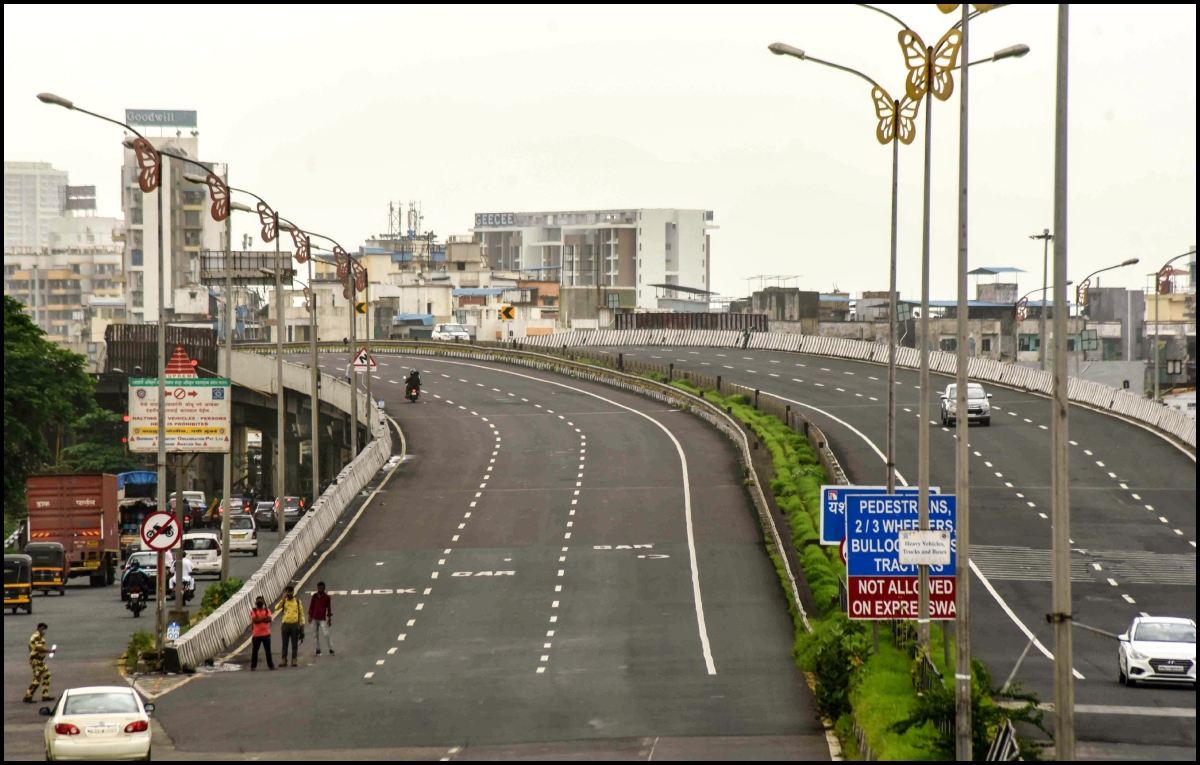
Transport authorities are considering a revision to the heavy-vehicle speed limit on the steep Bhor Ghat section of the Mumbai‑Pune Expressway, raising it from 40 km/h to between 45 and 50 km/h. Transporters are backing the move, arguing that the current limit hampers traffic flow, overloads brakes, and results in excessive e-challans.
Situated between Lonavala (Pune district) and Khalapur (Raigad district), the 10‑km Khandala Ghat descent poses a unique challenge for trucks and buses, which already face steep braking dynamics on this incline. By contrast, light vehicles are permitted to travel at up to 60 km/h on the same stretch, with regular expressway limits of 100 km/h for cars and 80 km/h for heavy vehicles. Transporters argue that the disparity makes the 40 km/h cap unrealistic on this gradient. Since the installation of the Intelligent Traffic Management System (ITMS), speed violations have surged. A first-time offence now attracts a ₹2,000 fine, with steeper penalties for subsequent breaches. Transporters estimate that up to 30% of e-challans on the ghat occur when vehicles are travelling at 43–50 km/h—marginally above the restrictive limit.
A joint field survey by MSRDC, highway police and transport officials confirmed that heavy vehicles struggle to maintain 40 km/h: in first gear, speeds drop to 25–28 km/h; in second, brakes overheat if maintaining the limit continuously. As a result, frequent braking leads to mechanical stress and potential safety hazards. Local bus operators have described the limit as both “unscientific” and “unfair”. One representative noted, “Sudden braking often leads to accidents. The government calls it an expressway, but expects speeds of just 40 kmph.” They contend that a new speed limit of 45–50 km/h would balance safety with mechanical logic.
The Maharashtra Transport Commissioner acknowledged transporters’ concerns as valid, stating it is “practically difficult to maintain such low speeds on a sharp downward slope.” The MSRDC holds authority over road regulations, but any limit adjustments will require final endorsement from the highway police. Safety remains a priority. The Mumbai‑Pune Expressway recorded a rise in road fatalities—82 deaths in 2024, a 26% increase over the previous year—and 143 serious injuries, up from 89 in 2023. Heavy vehicles were frequently involved, especially in rear-end collisions often linked to brake misuse on ghat sections. Experts warn that speed limit adjustments must be accompanied by engineering, enforcement, and driver training measures.
The Zero Fatality Corridor initiative, launched in 2016 on this expressway, significantly reduced fatalities by 58% through enhanced infrastructure, crash barriers, and driver awareness. Any speed limit change will need to integrate into this model’s holistic safety framework. Environmental imperatives also play a role. Heavy vehicles braking and accelerating repeatedly generate higher carbon emissions. Allowing a steady speed between 45 and 50 km/h could reduce fuel consumption and improve air quality—aligning with zero‑carbon transport goals for Maharashtra.
Wider signage, real-time monitoring, and automated alerts should accompany any speed increases. Transporters have requested advance warning signs to reduce abrupt braking zones, which currently contribute significantly to crashes and traffic jams. As highway police prepare deliberations on revising the speed limit, stakeholders have called for field trials and a pilot study to gather empirical data. Transport officials suggest a temporary 45 km/h cap, combined with strict engine and brake maintenance inspections, as a trial.
Looking ahead, a decision is imminent. A higher speed limit may ease congestion, reduce undue fines, and lower emissions, but only if accompanied by comprehensive safety measures—including signage, monitoring, training, and regular vehicle checks. Such a nuanced approach could make the Mumbai‑Pune Expressway’s ghat stretch a global model—optimising efficiency without compromising on safety or environmental impact.
Mumbai Pune ghat heavy vehicles may see speed hike