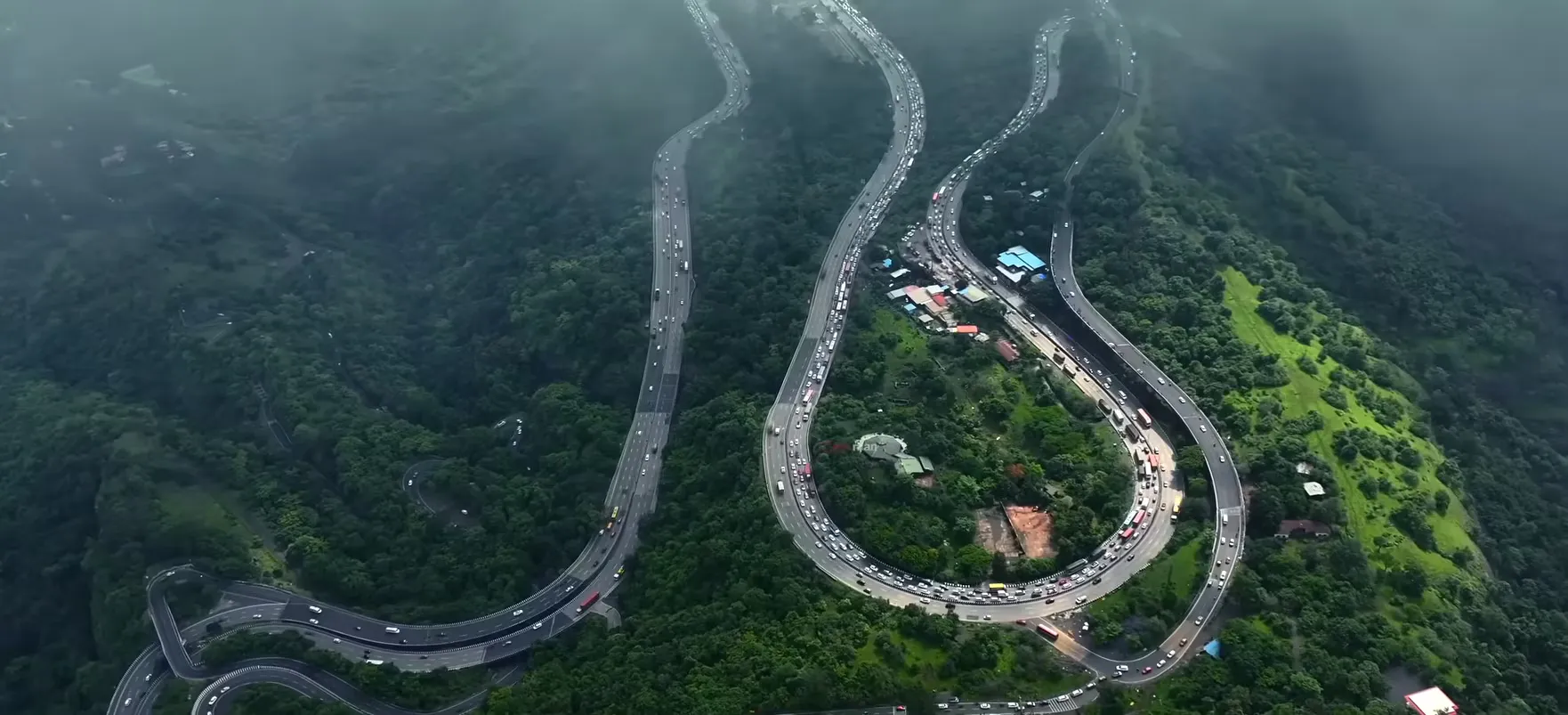
A critical infrastructure gap on the Mumbai–Pune Expressway is approaching closure, with the long-delayed missing link expected to be operational by the end of March 2026. The new section is designed to bypass the heavily congested Khandala ghat stretch, offering a safer and more predictable drive between Maharashtra’s two largest urban economies and reshaping mobility along one of India’s busiest transport corridors.
The Mumbai Pune Expressway missing link spans just over 13 kilometres but carries outsized significance. By avoiding the winding ghat section between Lonavala and Khopoli, the new alignment is expected to reduce travel time by up to half an hour during peak periods. More importantly, it aims to eliminate a major accident-prone zone that has long disrupted passenger movement and freight logistics, particularly during monsoon months. Project officials indicate that the corridor has been engineered to navigate the Western Ghats through a combination of long tunnels and elevated viaducts. This design allows traffic to move at consistent speeds while minimising sharp gradients and blind curves that characterise the existing route. For daily commuters, logistics operators and intercity buses, the improvement lies as much in journey predictability as in time savings.
From an economic standpoint, the Mumbai Pune Expressway missing link is expected to strengthen integration between Mumbai’s financial districts and Pune’s manufacturing, technology and education hubs. Transport economists note that even modest reductions in travel uncertainty can significantly improve labour mobility, supply-chain reliability and regional competitiveness across the Mumbai Metropolitan Region and western Maharashtra. Urban planners also point to broader land-use implications. Faster, safer connectivity typically accelerates development pressure along expressway corridors, influencing residential demand, warehousing activity and commercial investments in satellite towns. The challenge, experts caution, will be ensuring that growth remains aligned with infrastructure capacity, environmental safeguards and local mobility needs.
Environmental considerations have been central to the project’s execution due to its passage through ecologically sensitive terrain. Officials involved in oversight say extensive slope stabilisation, water management systems and structural monitoring have been incorporated to improve resilience against heavy rainfall and landslides. These measures reflect a growing recognition that large transport projects must adapt to climate variability rather than merely overcome geography.
The expressway authority has indicated that comprehensive safety audits and trial runs will be conducted before the corridor is opened to traffic.
These assessments will evaluate tunnel systems, emergency response access and traffic management protocols to ensure readiness under high-volume conditions. As completion nears, the Mumbai Pune Expressway missing link represents more than a shortcut through the hills. It signals a shift towards infrastructure that prioritises safety, reliability and regional integration. The final test will lie in how effectively the corridor balances faster movement with environmental stewardship and long-term urban planning once vehicles begin flowing through the new route.