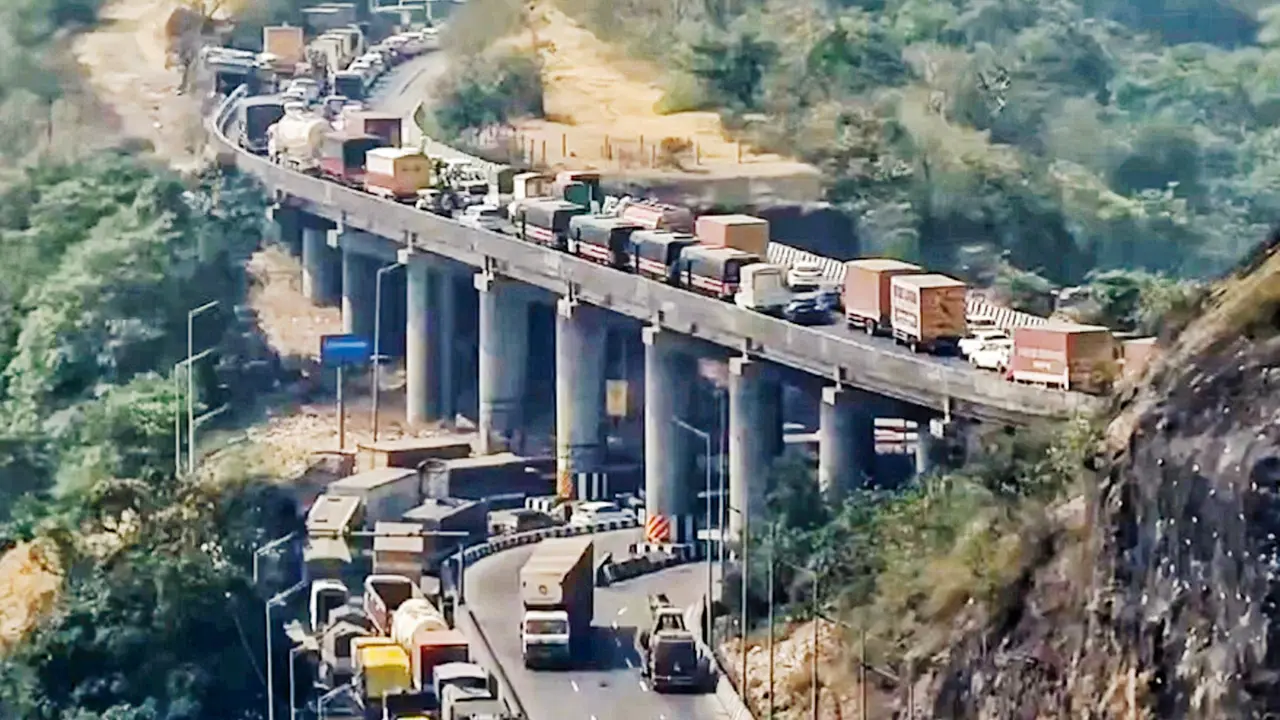
A sharp rise in holiday travel volumes brought large sections of the Mumbai–Pune Expressway to a near standstill this week, exposing the growing strain on one of India’s busiest intercity corridors. The congestion, particularly severe along the Bhorghat stretch, highlights the widening gap between rising vehicle demand and the corridor’s operational capacity.
Authorities implemented staggered vehicle movement controls to ease pressure on the route, temporarily holding traffic and releasing it in intervals to prevent further build-up. Despite these measures, travel speeds remained significantly reduced, with long queues persisting for hours. For thousands of commuters, what is typically a few-hour journey turned into an extended and unpredictable commute. The episode underscores recurring vulnerabilities along the Mumbai Pune Expressway traffic network, especially during peak travel periods such as festivals and long weekends. Transport analysts note that ghat sections, with their terrain constraints and limited expansion potential, are particularly susceptible to bottlenecks. Even minor disruptions can cascade into large-scale congestion due to high traffic density.
This is not an isolated incident. In recent months, a major accident involving a hazardous goods vehicle triggered prolonged disruption along the same corridor, halting movement for more than a day. Such events reveal the limited redundancy within the system and the challenges of managing emergency situations on critical highways that serve both passenger and freight traffic. From an economic standpoint, repeated congestion on the Mumbai Pune Expressway traffic corridor has broader implications. The route is a vital link connecting financial, industrial, and logistics hubs. Delays affect supply chains, increase fuel consumption, and reduce productivity, particularly for businesses reliant on time-sensitive deliveries.
Urban mobility experts argue that the issue reflects a deeper structural imbalance. While vehicle ownership continues to grow, infrastructure expansion has not kept pace in a sustainable manner. The reliance on road-based travel between major cities places increasing pressure on highways, raising concerns around emissions, road safety, and long-term resilience. There is also a climate dimension. Prolonged idling in traffic contributes to higher carbon emissions and deteriorating air quality, especially in ecologically sensitive zones such as the Western Ghats. As cities push towards lower-carbon mobility systems, such patterns highlight the urgency of shifting a portion of intercity travel demand to rail-based alternatives and public transport networks.
Policy responses may need to go beyond short-term traffic management. Experts suggest a combination of intelligent transport systems, better incident response mechanisms, and multimodal integration to reduce dependency on highways. Investments in high-capacity transit corridors, including rail, could provide long-term relief while supporting more sustainable travel behaviour. For now, the latest disruption serves as a reminder that infrastructure built for yesterday’s traffic volumes is struggling to accommodate today’s mobility patterns. Addressing this imbalance will be key to ensuring that critical corridors remain efficient, safe, and aligned with the evolving needs of urban India.