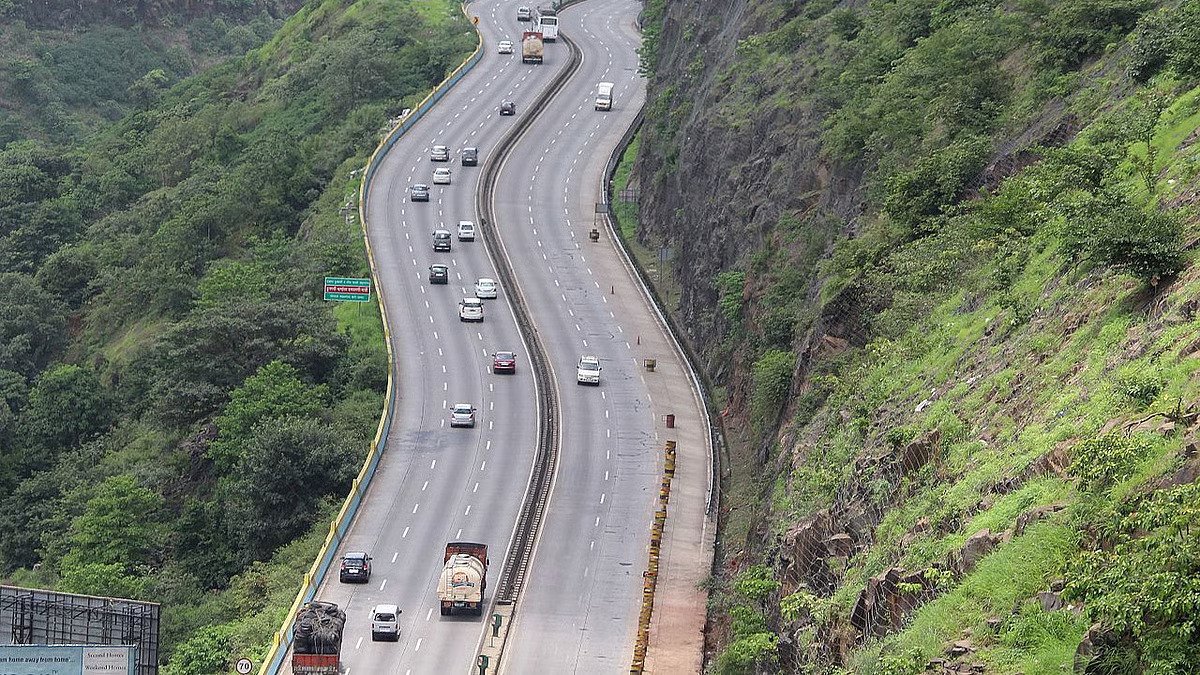
A renewed policy push by the Maharashtra government aims to address chronic congestion and emergency response failures on the Mumbai-Pune Expressway, following a recent incident that paralysed one of India’s busiest intercity corridors for more than a day. The move marks a shift from reactive traffic control to systemic risk management on infrastructure critical to regional mobility, logistics, and economic productivity.
The trigger for the intervention was a hazardous materials accident near a tunnel section in the Khopoli belt, which forced authorities to shut down the expressway for an extended period. Thousands of commuters, freight operators, and bus passengers were stranded without access to basic services, exposing gaps in emergency preparedness, inter-agency coordination, and real-time traffic diversion planning. The disruption underscored how a single incident can cascade into a regional mobility failure, with economic and human costs stretching far beyond the crash site. Senior officials acknowledged during the ongoing state budget session that the expressway’s operating framework has not kept pace with rising traffic volumes or the growing movement of hazardous cargo. Transport planners and safety experts flagged the absence of standardised protocols for managing chemical leaks, fire risks, and mass evacuations on access-controlled highways. In response, the government has initiated a review of safety norms governing the transport of flammable and high-risk materials, alongside the drafting of updated operating procedures for emergency scenarios.
A key pillar of the proposed reform package is the integration of technology-driven monitoring systems. Authorities have begun expanding high-resolution surveillance coverage along the corridor to detect speeding, unsafe lane changes, and congestion build-up in real time. These feeds are being linked to centralised control rooms to enable quicker interventions, dynamic traffic advisories, and coordinated responses between highway patrol units, medical teams, and local administrations. The state is also reassessing emergency medical access on the expressway. Proposals under evaluation include faster ground evacuation protocols and time-bound transfers to tertiary care hospitals in Pune and Mumbai during critical “golden hour” windows. While aerial evacuation remains constrained during night operations, officials indicated that upgrades to ground-based emergency infrastructure would be prioritised in the short term.
From an urban and environmental perspective, planners argue that smoother traffic flow and quicker incident clearance could also reduce idling-related emissions on the expressway, which carries a heavy mix of private vehicles, intercity buses, and freight trucks. Improved enforcement of digital tolling and staggered staffing during peak holiday travel are expected to further ease pressure on bottleneck stretches. Looking ahead, mobility experts say the expressway’s revamp could serve as a template for managing risk on other high-capacity corridors across Maharashtra. As traffic volumes continue to rise with regional growth, the challenge will be to balance speed, safety, and sustainability—ensuring that critical transport infrastructure supports economic activity without compromising resilience or public safety.
Mumbai Pune Expressway Set For Safety Overhaul