


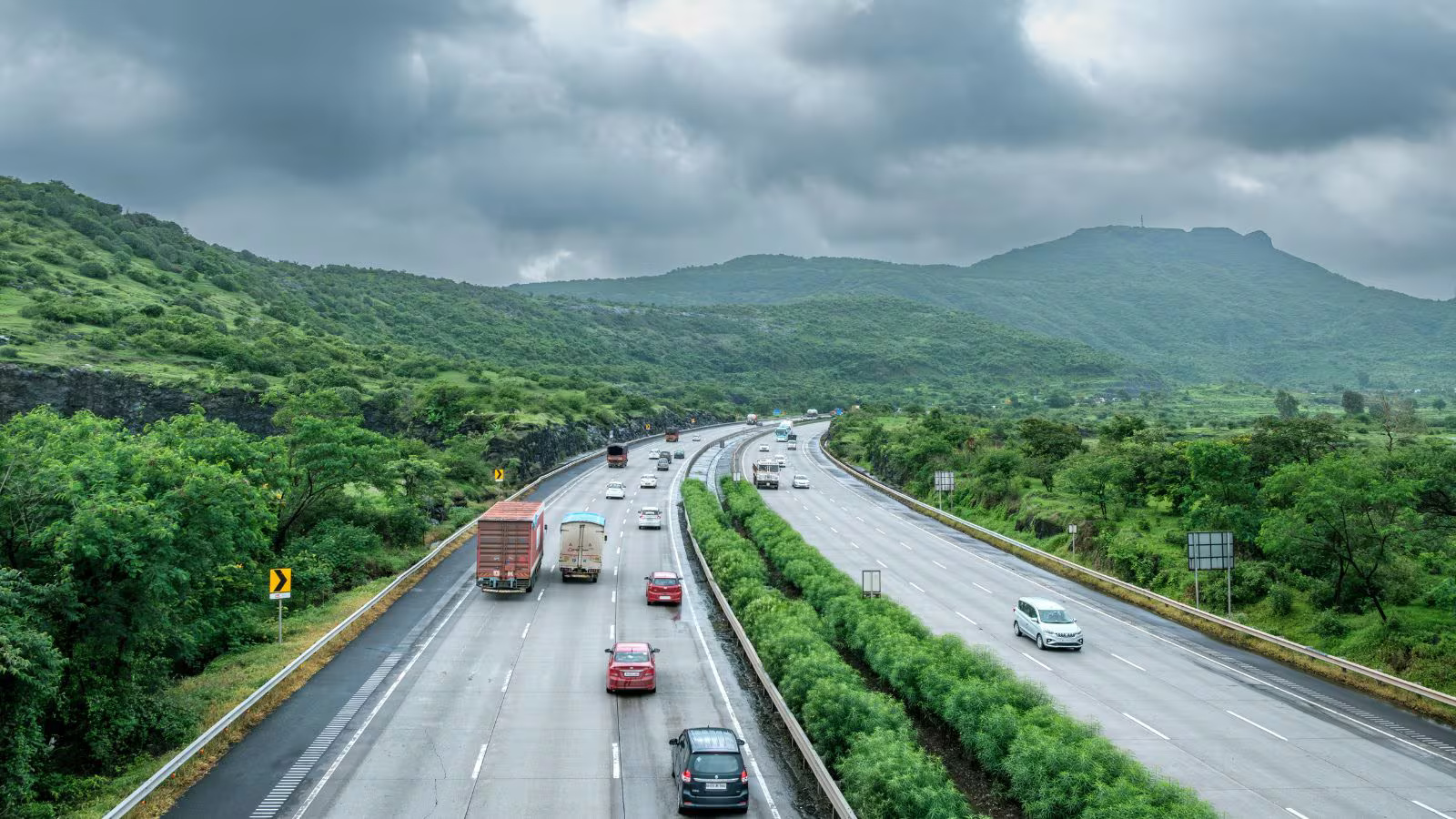
India’s most heavily used intercity road corridor is undergoing a quiet but consequential transformation. Authorities have begun rolling out a coordinated set of operational, regulatory and technology-led interventions on the Mumbai–Pune Expressway, aimed at reducing recurring congestion, improving road safety and stabilising freight and commuter movement between the country’s financial capital and one of its fastest-growing urban economies.
The 95-kilometre access-controlled highway carries tens of thousands of passenger vehicles and freight trucks daily, linking Mumbai’s port-led economy with Pune’s manufacturing, IT and education hubs. Persistent choke points, accident-prone tunnels and unmanaged heavy vehicle movement have long undermined its efficiency. Officials say the latest measures are designed to address these structural weaknesses rather than rely solely on physical road widening. According to transport and highway authorities, enhanced surveillance systems, faster incident response protocols and tighter enforcement of vehicle regulations are now being deployed across vulnerable stretches. These include ghat sections with steep gradients, tunnel zones with limited visibility and freight-heavy segments feeding into port and logistics corridors. Urban mobility experts note that delays on this expressway routinely spill into city streets, worsening air quality and commute times across the Mumbai Metropolitan Region.
A key shift is the regulation of heavy commercial vehicle movement during peak urban hours. By restricting truck entry into Mumbai at select times, planners expect smoother passenger traffic flow and fewer breakdown-related blockages. Logistics operators acknowledge that while scheduling adjustments are required, predictable travel times ultimately lower fuel consumption and operating costs — a critical factor for sustainable freight movement. Safety interventions are also being prioritised. Accident data shows that tunnel sections and downhill ghat stretches account for a disproportionate share of serious incidents. Real-time traffic monitoring, quicker tow-away services and improved lane discipline enforcement are expected to reduce secondary congestion caused by stalled vehicles. Highway safety specialists point out that even minor incidents can paralyse traffic for hours due to the expressway’s limited exit options.
Beyond immediate congestion relief, the Mumbai Pune Expressway upgrades reflect a broader rethink of intercity infrastructure management. Rather than expanding road capacity indefinitely, authorities are focusing on operational efficiency, demand management and technology — approaches increasingly seen as essential for climate-resilient transport networks. Reduced idling time and smoother traffic flows also carry measurable benefits for emissions reduction along one of western India’s busiest corridors. For daily commuters, logistics firms and regional planners, the changes signal a more predictable and safer travel environment, though officials caution that behaviour change remains critical. Lane discipline, speed compliance and reduced shoulder stoppages are central to sustaining the gains.
As travel demand between Mumbai and Pune continues to grow alongside real estate development and industrial expansion, planners say the expressway will serve as a test case for managing mobility on high-density corridors without compromising safety, efficiency or environmental outcomes.
Also Read: Mumbai Sees Cleaner Air Amid Rising Heat
