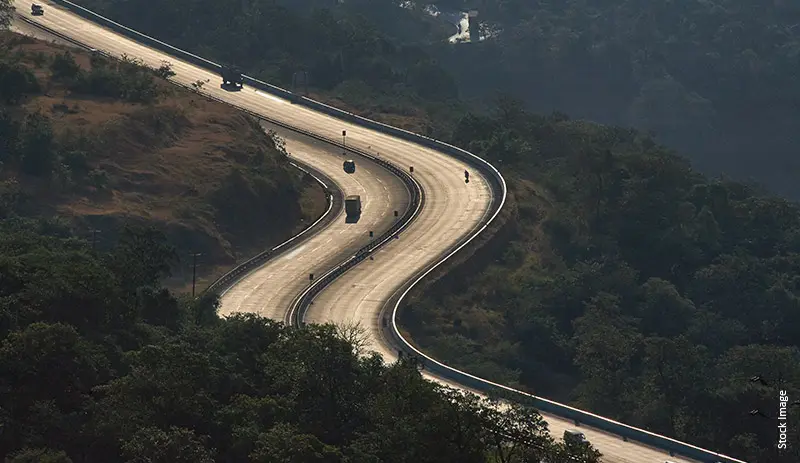
Mumbai Pune Expressway Revenue Signals Urban Connectivity
The Mumbai–Pune Expressway has consolidated its position as India’s most commercially productive expressway, generating toll revenues that underscore its critical role in regional mobility and economic integration. Stretching roughly 95 kilometres between two of Maharashtra’s largest urban centres, the corridor reported annual collections exceeding ₹1,630 crore, reflecting robust traffic volumes and sustained demand for fast, reliable intercity travel.
For commuters and businesses alike, this revenue performance matters beyond simple accounting. The expressway is a key freight artery linking Mumbai’s ports and financial districts with Pune’s industrial and technology clusters. High utilisation translates into faster conduit time for goods, lower logistics costs, and bolstered competitiveness for firms operating across the corridor. This inevitable traffic concentration — while economically positive — also spotlights the need for future-proofing infrastructure to remain resilient in the face of rising vehicle numbers and climate uncertainties.A senior transport planner notes that the expressway’s commercial success results from a combination of demand concentration and premium pricing. The toll regime on the route is among the highest nationally — averaging above ₹3 per kilometre — and is a significant contributor to the overall revenue aggregate. In December 2024 alone, the corridor registered near-record monthly collections, far outpacing the aggregated toll receipts of all expressways during the same period.
However, the financial performance carries implications for equity and road safety. High toll tariffs can act as barriers for low-income users and small logistics operators, particularly in a state where alternative public transport options on the same axis remain limited. Urban economists emphasise that pricing strategies should be balanced with broader accessibility goals to avoid exacerbating socio-economic divides. Additionally, traffic enforcement data from advanced camera systems indicates a surge in violations along this route, highlighting systemic safety challenges accompanying high utilisation. Enforcement agencies have logged millions of incidents involving overspeeding and other infractions, yet actual fine recovery rates remain low, suggesting gaps in compliance and behavioural deterrence. Indian infrastructure experts also point to broader governance questions. The expressway was built and continues to operate under state-led frameworks distinct from National Highways Authority standard models, giving Maharashtra State Road Development Corporation (MSRDC) and its concession partners considerable autonomy over tolling and maintenance. This has enabled faster delivery and early revenue realisation compared with some national toll projects, but also calls for transparent accountability mechanisms given the scale of collections and the corridor’s socio-economic importance.
Looking ahead, the expressway’s revenue trajectory strengthens the case for capacity enhancements and intelligent demand management. Planned expansions and traffic-flow improvements could alleviate congestion, reduce emissions, and accommodate projected freight growth, aligning with sustainable urban mobility objectives. Equally, integrating safety enforcement, toll equity, and climate resilience into future upgrades will be essential to balance economic utility with quality of life for tens of thousands of daily users.