


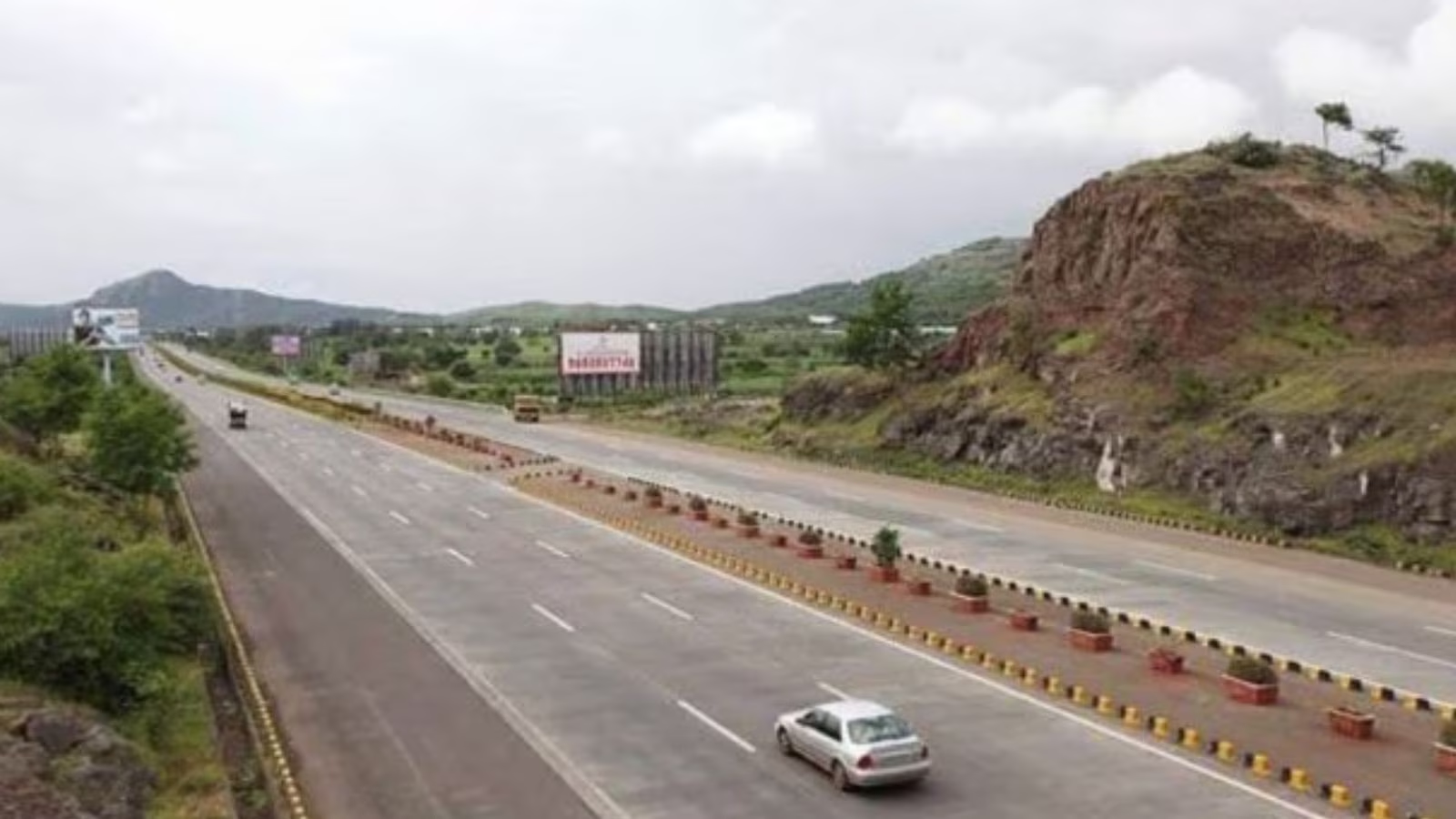
Mumbai–Pune commuters and freight operators are awaiting the completion of a critical segment of the Mumbai–Pune Expressway, which has long been a congestion bottleneck despite the highway’s strategic economic importance. The incomplete stretch, involving tunnels and India’s tallest road pylon, is expected to improve traffic flow, shorten travel times, and reshape regional connectivity, with wider implications for urban development and industrial logistics along the corridor.
The expressway, a lifeline connecting India’s financial capital with industrial hubs in Pune and beyond, currently experiences severe traffic snarls, particularly during peak periods and festival seasons. Urban planners and transport economists highlight that the missing link not only slows vehicular movement but also increases emissions due to idling vehicles, contributing to air quality and climate concerns in the region. Completion of the new segment promises a more resilient corridor that aligns with sustainable mobility objectives. A senior transport official explained that the engineering complexity of the project—requiring tunnels through hilly terrain and the construction of a record-setting road pylon—has contributed to construction delays. Such structural feats are essential to maintain gradient standards, reduce travel distance, and integrate modern safety features. The design also reflects lessons from global infrastructure, including the incorporation of tunnels to minimise deforestation and reduce the environmental footprint of large-scale highways. Industry experts emphasise the economic dimension: the Mumbai–Pune Expressway supports logistics networks for manufacturing, warehousing, and e-commerce distribution across Maharashtra. Any reduction in travel time can significantly lower fuel consumption, enhance supply chain reliability, and incentivise equitable regional growth. Moreover, by reducing congestion on urban feeder roads, the highway extension could indirectly relieve pressure on municipal transport systems, improving commuting conditions for local populations.
Environmental analysts note that the expressway upgrade has potential to support more sustainable travel patterns if coupled with policy measures such as freight scheduling, electric vehicle incentives, and green landscaping around the corridor. Aligning the infrastructure with low-carbon objectives ensures that the economic benefits of the expressway do not come at the cost of environmental degradation. Looking ahead, the completion of this critical link could serve as a template for other urban–peri-urban corridors in India, demonstrating how large-scale infrastructure can combine engineering excellence, economic utility, and environmental stewardship. Stakeholders across transport, urban planning, and logistics sectors will be monitoring its impact on traffic decongestion, urban expansion, and climate-resilient mobility.
Also Read: National Highway Assets Attract Long Term Capital
Mumbai Pune Expressway Missing Link Adds Relief
