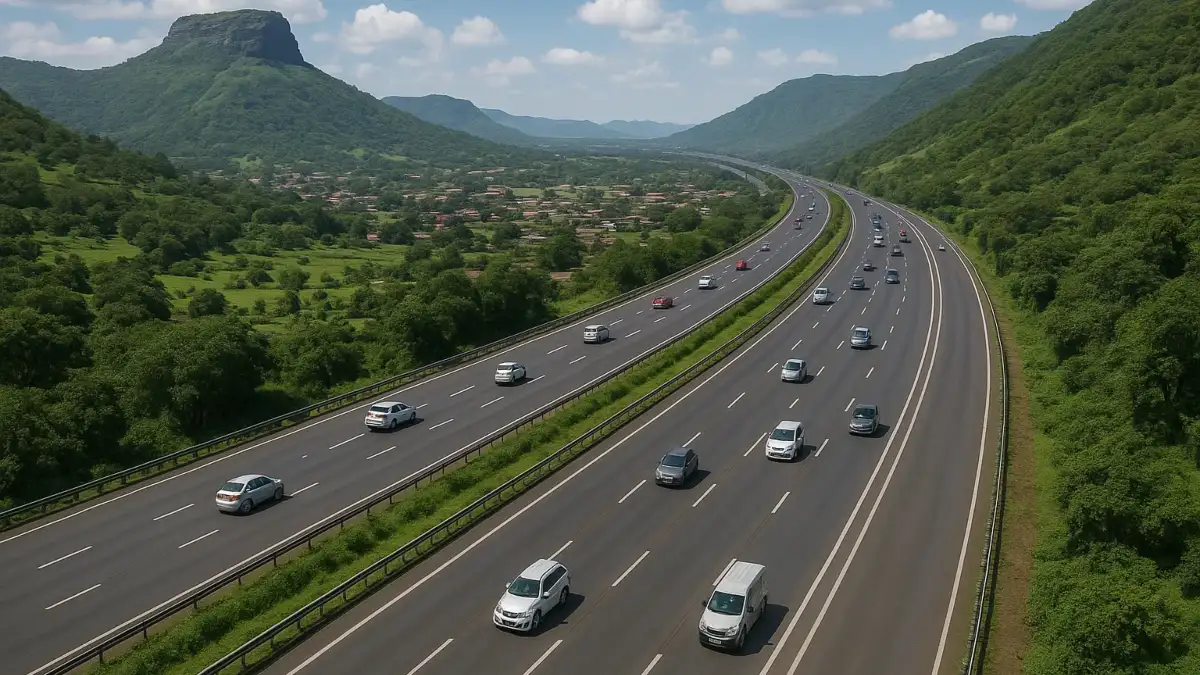
A critical bottleneck on the Mumbai–Pune Expressway is poised to be eliminated, with authorities indicating that the long-pending missing link could open by early May. The 13-kilometre stretch, located in the Lonavla ghat section, is expected to significantly reduce congestion, shorten travel time between Maharashtra’s two largest urban economies, and improve safety on one of India’s busiest intercity corridors.
The new link is designed to bypass a heavily congested section where expressway traffic currently funnels into older highway lanes, creating chronic delays, especially on weekends and during holiday peaks. Once operational, the corridor is projected to reduce travel time by around half an hour, a gain that carries economic implications for logistics operators, daily commuters and tourism-linked businesses across the Mumbai Metropolitan Region and Pune district. Infrastructure officials overseeing the project indicate that construction is in its final stages, with structural work largely completed. The alignment includes elevated viaducts and long tunnels engineered to smooth gradients and reduce accident risk in the ghat terrain, a stretch historically associated with traffic snarls and weather-related disruptions. Urban transport planners view the design as a move towards safer, more predictable highway travel rather than simply a capacity expansion.
For Mumbai, the missing link’s completion comes at a time when outbound traffic pressure has intensified due to suburban expansion, rising car ownership and increased leisure travel. The expressway functions not only as a connector to Pune but also as a gateway to southern and western Maharashtra. Any improvement in flow therefore has ripple effects across freight movement, regional real estate markets and workforce mobility. The project also highlights a broader shift in Maharashtra’s infrastructure strategy, which increasingly focuses on grade-separated, access-controlled corridors to improve efficiency without expanding surface footprints indefinitely. Experts note that while such projects ease congestion in the short to medium term, they must be complemented by public transport investments and land-use planning to avoid inducing additional traffic over time.
Alongside the expressway upgrade, state authorities have outlined longer-term plans to address congestion within Pune through underground road networks aimed at separating through-traffic from local movement. Urban economists caution that subterranean road projects must be carefully assessed for cost, environmental impact and integration with mass transit to ensure they support inclusive and climate-resilient growth. From a sustainability perspective, smoother traffic flow on the Mumbai–Pune corridor could reduce idle time and emissions per trip, though absolute environmental gains will depend on vehicle mix and future traffic volumes.
Infrastructure specialists argue that highway efficiency must ultimately align with cleaner vehicle technologies and stronger intercity rail alternatives.
As the anticipated opening approaches, attention will turn to operational readiness, safety audits and traffic management protocols. If executed as planned, the missing link could mark a meaningful improvement in intercity mobility—one that demonstrates how targeted infrastructure upgrades can deliver economic value while easing everyday travel stress for millions.
Mumbai Pune expressway link nears final opening