


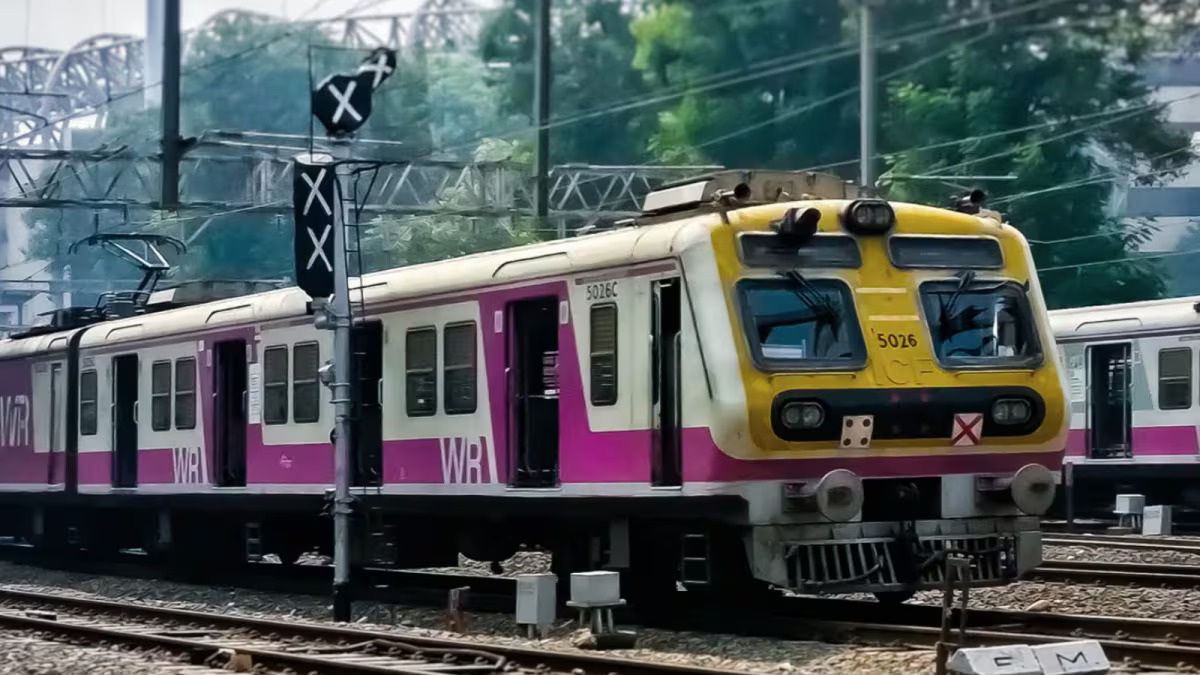
The Mumbai Rail Vikas Corporation (MRVC) has proposed new dedicated rail corridors along existing suburban lines to segregate local train operations from long-distance services, aiming to improve regional connectivity and enhance commuter convenience. Officials stated that proposals for two additional lines along the Asangaon-Kasara and Badlapur-Karjat corridors, as well as a new corridor connecting Panvel and Vasai, have been submitted to the Maharashtra government for approval.
According to railway experts, the current shared lines between local and long-distance trains often result in congestion, delays, and operational inefficiencies. “The aim of the proposed corridors under the Mumbai Urban Transport Project (MUTP) 3B is to ensure full segregation of mainline and suburban operations. This will enhance punctuality, capacity, and safety for daily commuters,” an MRVC official said. The Panvel-Vasai stretch, currently used by long-distance and MEMU trains, will be converted exclusively for local suburban services. Commuters in Navi Mumbai, Panvel, Kalyan, and Vasai-Virar are expected to benefit significantly from the new corridors, which promise reduced travel time and increased frequency of trains during peak hours. Railway planners noted that segregated lines would also enable smoother integration of future transport projects, including potential metro and regional rapid transit systems, fostering a more sustainable and eco-friendly urban mobility network.
The MRVC has stressed that the proposed corridors will not only enhance operational efficiency but also mitigate carbon emissions by reducing idling times for trains and ensuring smoother flow of suburban services. Experts also highlighted that improved suburban connectivity can relieve pressure on road transport, encouraging commuters to shift from private vehicles to rail-based transport, further supporting the city’s goals of sustainable urban development. In addition to physical infrastructure, Indian Railways is exploring digital solutions to ease commuter access, including a WhatsApp ticketing facility for Mumbai locals. Officials emphasised that combining technological upgrades with physical infrastructure improvements is central to the strategy of creating an equitable, reliable, and user-friendly public transport ecosystem.
Regional planners have welcomed the proposals but cautioned that land acquisition, environmental clearances, and construction schedules will need careful management to avoid disruption to existing services. Analysts noted that successful implementation of these corridors could set a benchmark for suburban rail improvements across other Indian metropolitan regions. The MRVC’s submission marks a significant step towards transforming Mumbai’s suburban rail network into a more sustainable, segregated, and commuter-centric system. If approved, these corridors could pave the way for faster, safer, and more efficient travel, aligning with broader government initiatives to modernise urban transport while promoting environmental sustainability.
Also Read: Nagpur Pune Vande Bharat Express Sees Over 150 Passengers On Waiting List
