

HomeNewsMumbai Proposes Dedicated Bus Lane Andheri Saki Naka Metro Congestion Relief Plan

Mumbai Proposes Dedicated Bus Lane Andheri Saki Naka Metro Congestion Relief Plan

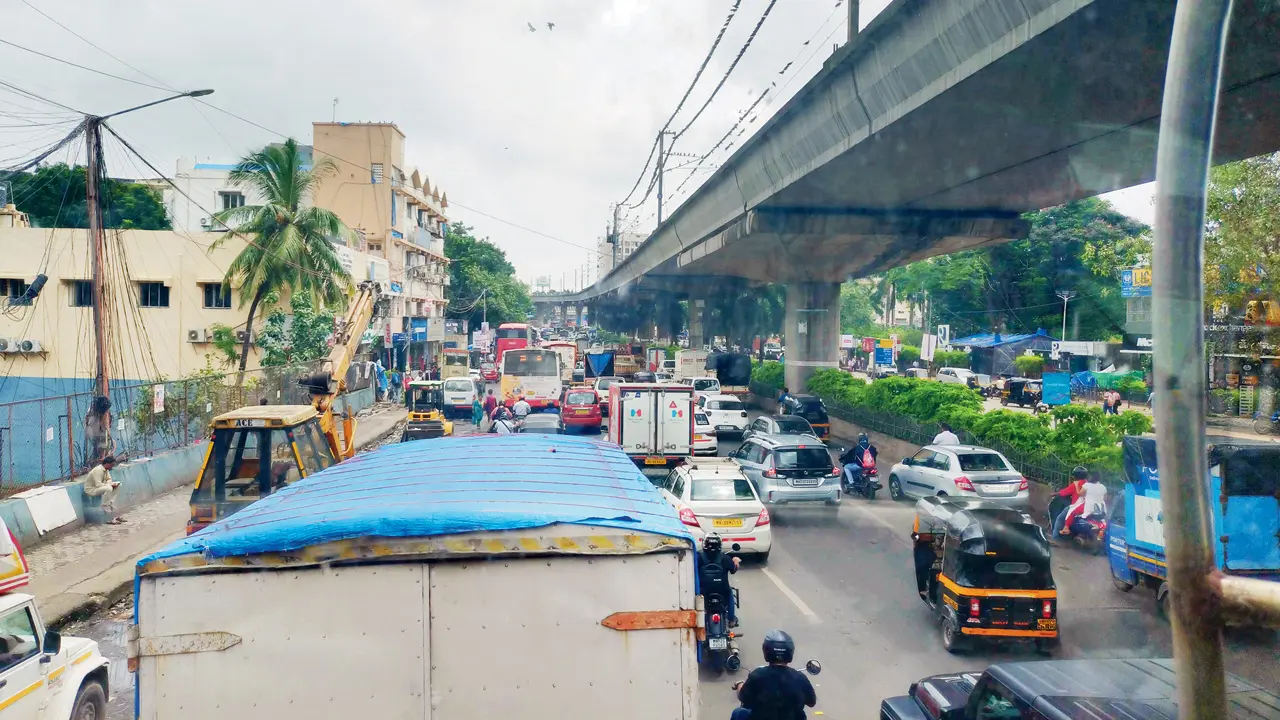
Mumbai’s east-west transport corridor, particularly the stretch between Andheri East and Saki Naka, is poised for a strategic intervention aimed at easing severe congestion on the city’s Metro Line 1. With four-coach trains regularly overwhelmed during peak hours, urban transport specialists suggest that supplementing train services with a dedicated bus lane could provide a rapid, low-cost solution to improve commuter experience.

The proposed initiative involves reserving the left-most lane of the 4.8 km Andheri East–Saki Naka road exclusively for buses and emergency vehicles. The lane would be marked red and monitored via CCTV to ensure compliance, creating a reliable transit option that avoids mixed traffic delays. A transport researcher presented the plan to an economist, highlighting that this phased approach could initially cover the Andheri East–Saki Naka segment, with potential extension to Chakala, SEEPZ, and adjacent commercial hubs based on initial performance.
A senior traffic official noted that this method requires minimal infrastructure modifications compared to road widening or expanding metro capacity. “By implementing a dedicated lane, we can alleviate peak-hour congestion while improving reliability for bus commuters,” the official said. Industry experts also point out that predictable travel times may encourage some commuters to shift from Metro coaches to buses, reducing passenger density and improving comfort for remaining passengers.

Beyond easing commuter stress, the plan aligns with sustainable urban mobility goals. Encouraging bus travel reduces private vehicle dependence, lowering emissions and contributing to cleaner, more equitable city spaces. The corridor’s design further promotes inclusive access, particularly for working women and individuals with mobility challenges, while supporting first- and last-mile connectivity to offices, residential areas, and industrial zones that the Metro cannot directly serve.The proposal remains under review by the Brihanmumbai Municipal Corporation (BMC), local traffic authorities, and BEST, the city’s public bus operator. If approved, Phase 1 implementation could set a precedent for similar interventions along other overcrowded urban corridors, demonstrating a scalable model for sustainable mobility that balances cost efficiency with commuter needs.
Meanwhile, the city is incrementally enhancing bus services along this corridor. BEST recently launched the AC bus route A-329, connecting Andheri East, Saki Naka, Marol, and Chakala, providing immediate relief while the larger bus-lane strategy is considered.The initiative reflects Mumbai’s growing focus on multi-modal transport solutions, marrying Metro infrastructure with complementary bus services to create a more resilient, inclusive, and environmentally responsible urban mobility network.

Mumbai Proposes Dedicated Bus Lane Andheri Saki Naka Metro Congestion Relief Plan