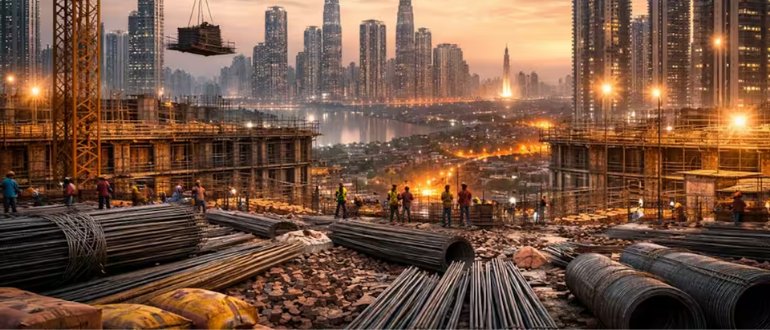
A disruption along one of the world’s most critical oil and trade corridors is beginning to reshape construction economics in India’s most expensive housing market. In Mumbai, developers are reporting rising input costs and delayed material shipments, signalling that the Strait of Hormuz crisis could translate into higher property prices particularly in the premium segment.
Shipping routes for key construction materials have been forced to bypass the Persian Gulf passage, extending transit durations by up to three weeks. Industry estimates suggest that container freight costs have surged significantly as vessels reroute around southern Africa. This has introduced fresh cost pressures into an already strained supply chain, especially for projects dependent on imported inputs. The impact of the Strait of Hormuz crisis is most visible in core building materials. Steel prices have climbed sharply in recent months, while aluminium and bitumen remain elevated due to supply disruptions in Gulf-linked markets. Imported finishing materials such as high-end stone and fittings are also becoming costlier, adding to the expense burden for developers focused on luxury housing.
Urban planners point out that the cumulative effect of these increases is not marginal. Construction costs in large cities have already risen steeply over the past few years, driven by labour shortages, regulatory changes, and global commodity volatility. The current geopolitical disruption compounds these challenges, potentially pushing project budgets beyond initial estimates and affecting delivery timelines. Within the Mumbai Metropolitan Region, where high-rise and luxury developments dominate, the Strait of Hormuz crisis could disproportionately affect ongoing projects. With thousands of premium homes under construction, even small increases in per-square-foot costs can translate into significant price revisions for buyers. Developers may attempt to absorb some of the escalation, but sustained pressures are likely to be passed on to end users.
At the same time, demand dynamics remain uneven. While affluent buyers and overseas investors continue to show interest in high-value properties, broader segments face tighter financial conditions. Elevated global oil prices are feeding into inflation, limiting the possibility of interest rate relief. This keeps home loan rates relatively high, affecting affordability for mid-income households. There are also indirect effects emerging from the crisis. Travel disruptions linked to regional instability may slow investment decisions by non-resident buyers, who form a notable share of the premium housing market. Delays in site execution, particularly during critical construction windows such as the monsoon season, could further stretch project timelines.
However, the situation is prompting a shift in strategy. Developers are increasingly exploring local sourcing of materials and diversifying supply chains to reduce dependence on volatile global routes. Experts suggest that this transition, while gradual, could support more resilient and regionally anchored construction ecosystems over time. As the Strait of Hormuz crisis continues to unfold, its influence on urban housing markets highlights the deep interconnection between global geopolitics and local city development. For Mumbai, the immediate outcome may be higher housing costs but the longer-term response could reshape how the city builds, sources, and sustains its growth.