


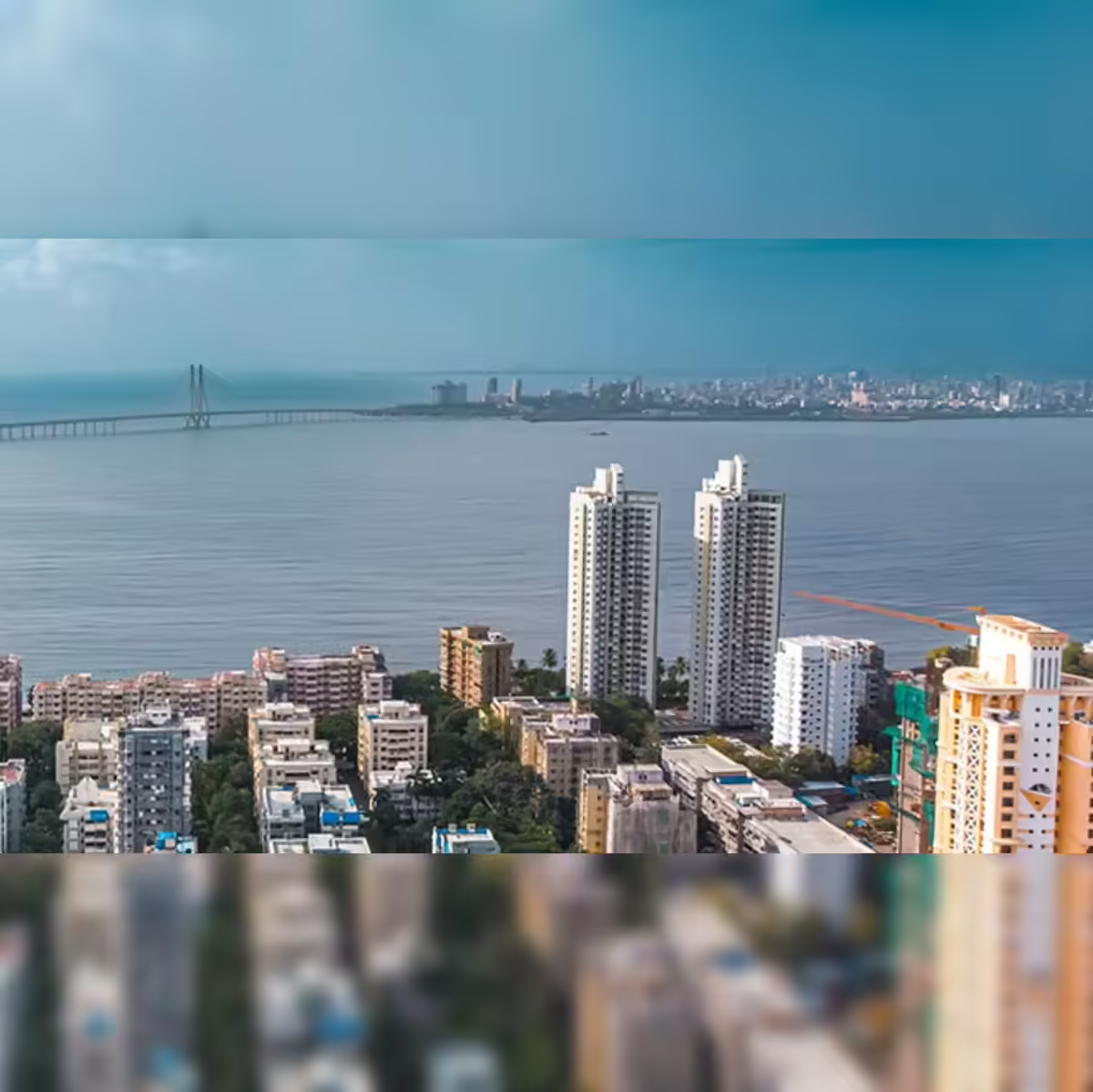
Mumbai opened 2026 with an unexpected fiscal signal from its property market. January, typically a cooling-off period after year-end deal closures, delivered the city’s strongest January stamp duty collections in over a decade, underscoring a shift in buyer behaviour towards higher-value homes and signalling important implications for urban affordability, land use, and municipal finances.
Official registration data from within the Brihanmumbai Municipal Corporation limits shows that stamp duty collections crossed Rs 1,012 crore during the month, generated from just over 11,200 property registrations. While the number of transactions dipped compared to the same period last year, revenue growth remained positive indicating that buyers are paying more per home even as volumes soften. This divergence between volume and value reflects a maturing market rather than a contraction. Urban economists point to stable household incomes, predictable interest rate conditions, and sustained infrastructure investment as key factors supporting buyer confidence. For the city administration, stronger Mumbai stamp duty inflows at the start of the year provide fiscal headroom for capital spending on transport, drainage upgrades, and climate-resilient civic infrastructure. A closer look at the price distribution reveals where demand is concentrating. Homes priced above Rs 5 crore accounted for a higher share of registrations than a year earlier, while the Rs 2–5 crore segment also expanded. Properties in the Rs 1–2 crore range now form roughly a third of all transactions, suggesting a recalibration of what constitutes a “mid-market” home in Mumbai’s evolving urban economy.
Conversely, the sub-Rs 1 crore segment continued to shrink, highlighting growing affordability pressures for first-time and budget-constrained buyers. Residential assets dominated registrations, accounting for nearly four out of every five deals. Industry experts attribute this to end-user demand rather than speculative activity, supported by employment stability and improved connectivity across suburban corridors. Compact housing remains the city’s default choice: homes under 1,000 sq ft made up the vast majority of registrations, reflecting both land scarcity and a preference for lower operational and energy costs in dense urban environments. Geographically, market activity remained anchored in the western and central suburbs, which together contributed nearly 85 per cent of all registrations. These areas continue to benefit from metro expansions, road upgrades, and proximity to employment hubs. South Mumbai, constrained by limited supply and premium pricing, maintained a marginal share.
For planners and policymakers, the January data points to a city prioritising value over volume. Sustaining this momentum will depend on whether future housing supply can balance density, affordability, and environmental performance. As Mumbai pushes forward with transit-oriented development and climate adaptation projects, aligning real estate growth with inclusive and resilient urban outcomes will remain the central challenge.
Mumbai property market opens year resilient
