


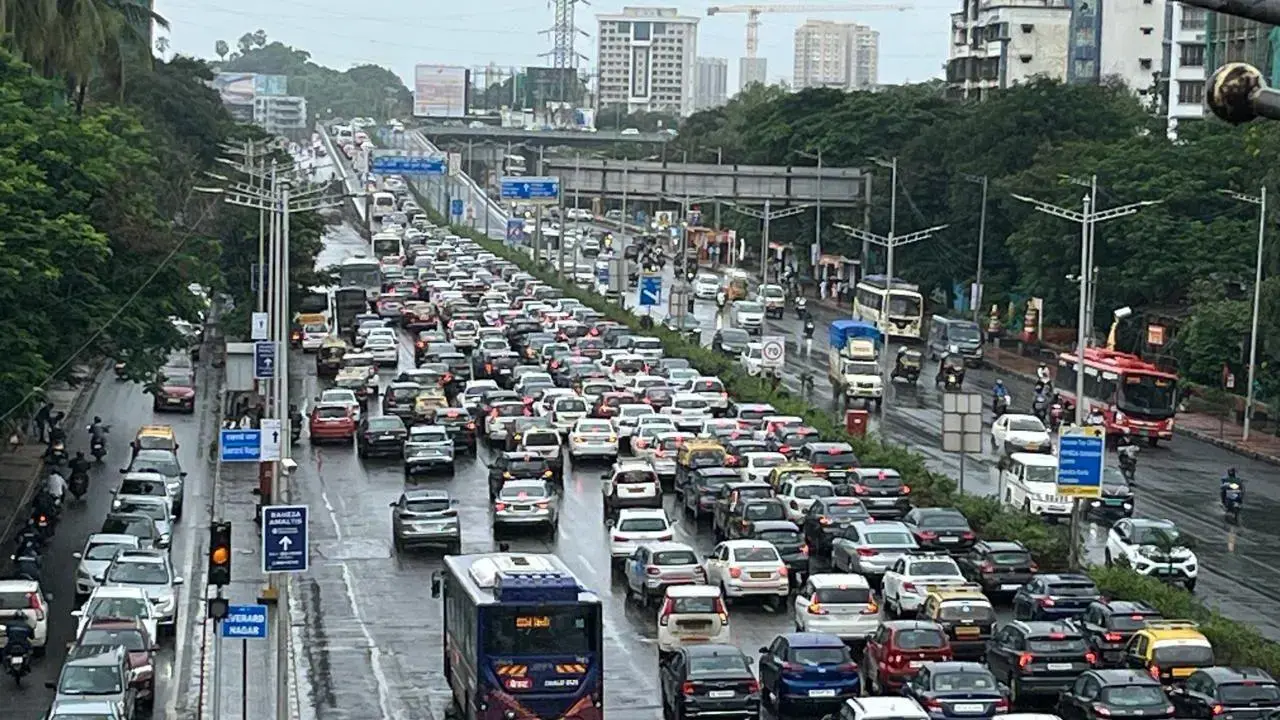
Mumbai’s streets are groaning under the weight of an unprecedented surge in private vehicles, with the city’s registered fleet crossing 50 lakh in 2025. A new civic report reveals that two-wheelers and cars account for nearly 88 per cent of the total, leaving public transport buses with less than a one per cent share in the vehicle population.
According to the municipal Environment Status Report for 2024–25, the city registered 50,54,907 vehicles by March 2025, marking a sharp rise from 45.37 lakh in 2023. Over the past year alone, 2.94 lakh new vehicles were added — a 6.2 per cent jump — fuelling further congestion in one of the world’s most traffic-choked metropolises. The data highlights the dominance of two-wheelers, which account for 59.34 per cent of Mumbai’s fleet, followed by cars, jeeps, and station wagons at 28.72 per cent. In contrast, public transport numbers remain staggeringly low, with buses contributing just 0.73 per cent of new registrations and barely 0.42 per cent of the overall vehicle pool.
Experts say the tilt towards private mobility reflects both rising incomes and a lack of confidence in affordable, efficient public transport. The shift also has direct implications for sustainability, as vehicle emissions are a leading contributor to urban air pollution. Fuel usage trends further underline this challenge. Of the total fleet, nearly 79 per cent run on petrol, followed by 11 per cent on diesel and 9 per cent on CNG. Electric vehicles remain negligible at under one per cent, with just 48,854 registered across the city. Despite targeted subsidies, the pace of EV adoption continues to lag behind the government’s green mobility targets.
The municipal transport body has, however, made visible strides in electrification. Of its 2,731 buses, 91 per cent already run on CNG or electricity, with officials confirming that the entire fleet will be electric by 2027. This transition alone is expected to cut 3.18 lakh tonnes of carbon dioxide emissions annually, a rare bright spot in Mumbai’s otherwise fossil-fuel heavy transport landscape. Yet, the larger challenge remains structural. With more than four out of every five vehicles being private, the city faces rising congestion, deteriorating air quality, and mounting climate costs. Urban mobility specialists stress that unless public transport infrastructure is scaled up — from expanding metro lines to improving last-mile connectivity — Mumbai risks being locked into an unsustainable cycle of growth.
The report makes clear that while the electric bus transition is encouraging, it cannot offset the overwhelming reliance on private vehicles. For a city that aspires to sustainability, the numbers are a warning sign that mobility policies must shift decisively towards public transport, shared mobility, and eco-friendly alternatives.
Also Read: Telangana Railway Stations Undergo Modernisation With Amrit Bharat Push
