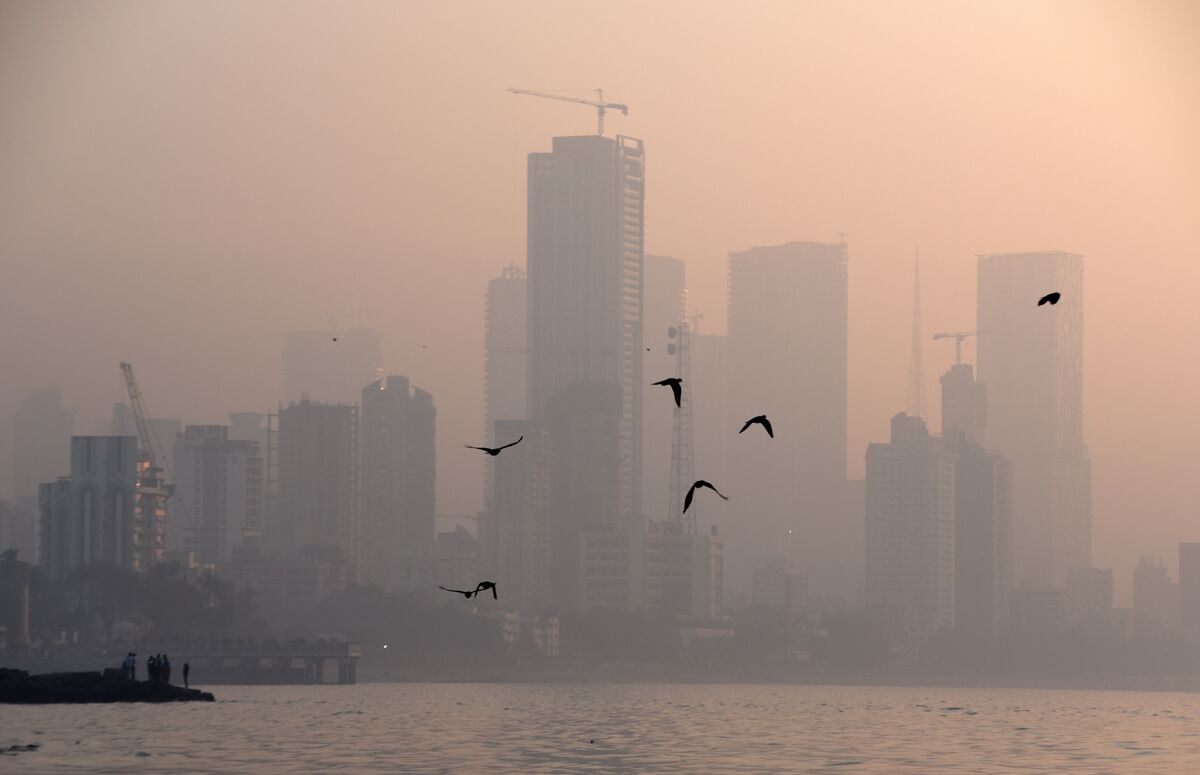
Mumbai Pollution Spike Raises Health And Policy Concern
Mumbai’s air quality deteriorated sharply over Thursday and Friday as a dense layer of smog settled over the metropolitan region, pushing the city’s Air Quality Index (AQI) from satisfactory levels into the moderate pollution category with readings around 127. The prolonged haze that failed to dissipate by midday disrupted normal visibility and deepened concerns among health professionals, urban planners and residents about the city’s air management strategy and its resilience to seasonal pollution spikes.
The Metropolitan Region’s atmospheric conditions — a mix of calm winds and cool winter temperatures — have allowed fine particulate matter (PM2.5 and PM10) to stagnate close to the surface, trapping emissions from vehicles, construction sites and household fuels. This accumulation of airborne pollutants is typical during pre-summer months but experts say the intensity and persistence of smog this week signals structural challenges in pollution governance.Urban health analysts note that while an AQI of 127 is classified as moderate, it nonetheless poses elevated risks for sensitive groups such as children, the elderly and those with respiratory conditions, who may experience irritation in the eyes, throat and lungs even at these levels. The sudden jump in AQI has triggered advisories from environmental health bodies urging limited outdoor exposure during peak smog hours.
The latest episode comes amid broader concerns over Mumbai’s ability to manage air quality consistently. Local environmental data from recent months show a pattern of fluctuating air quality, with several monitoring stations reporting multiple days in the unhealthy range due to ongoing construction dust, traffic emissions and other urban activities. This trend underscores the limits of short-term mitigation efforts in a high-growth megacity where rapid development and industrial activity continue to increase pollutant loads.City authorities have experimented with a suite of regulatory responses, ranging from dust-control measures at construction sites to flying squads tasked with enforcing emissions standards. Civic bodies have also issued stop-work notices to non-compliant projects and promoted water sprinkling and fogging systems as dust suppression mechanisms. Despite these initiatives, air quality has remained vulnerable to meteorological conditions and episodic surges in anthropogenic pollution.
Urban planners stress that Mumbai’s smog episodes reflect deeper governance and infrastructural deficits. Unlike northern plains cities where crop burning is a major seasonal driver, Mumbai’s pollution stems largely from intra-city sources — traffic congestion, construction dust and industrial emissions. Reducing these will require strengthening enforcement of existing regulations, expanding real-time monitoring networks, and integrating air quality goals into transportation and land-use planning.
As the winter season progresses, sustained focus on clean mobility, emission control norms and community awareness will be critical. Enhancing public transit, electrifying vehicle fleets and incentivising dust-reducing building practices could help shift the city toward more climate-resilient air quality outcomes in the long term.