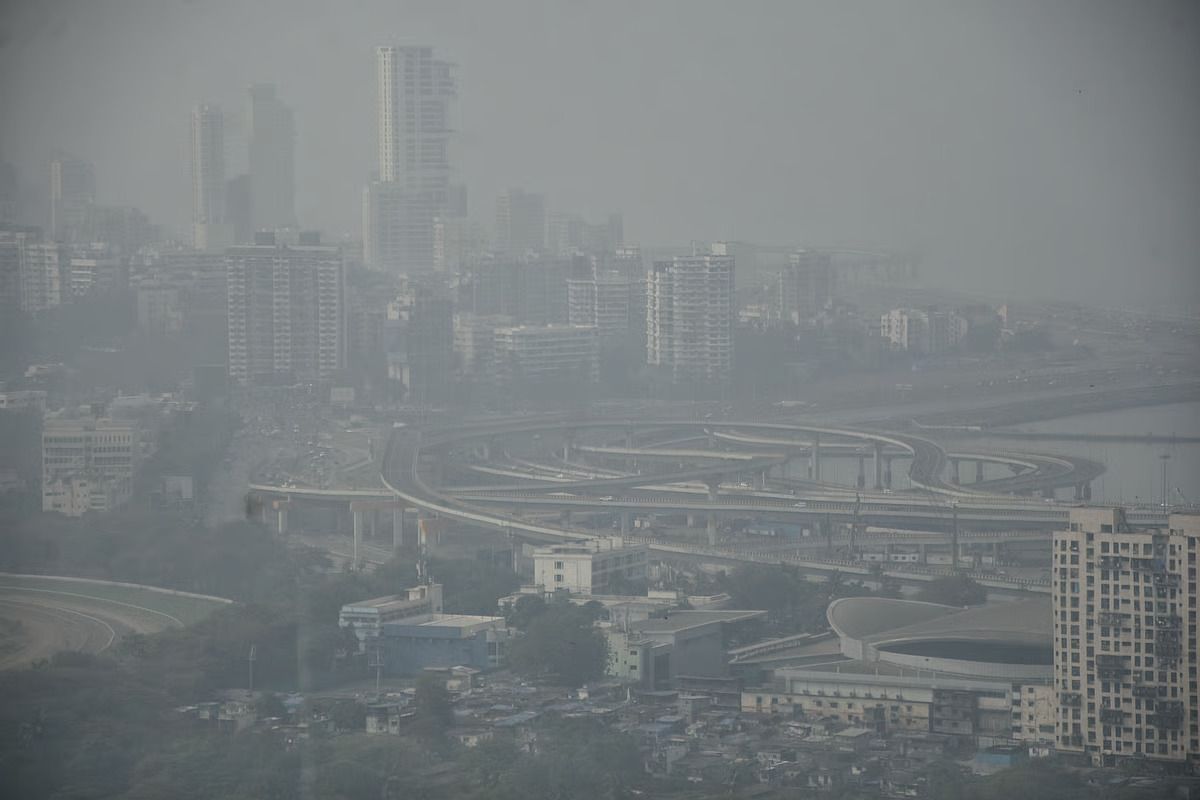
Rising air pollution in Mumbai is emerging as a significant public health concern, with fresh government data indicating a strong link between deteriorating air quality and a growing burden of lung cancer in India’s financial capital. The findings, placed before the state legislature this week, underline how environmental stressors are increasingly shaping health outcomes in dense, infrastructure-heavy cities.
According to data compiled from a statewide cancer screening initiative, lung cancer now accounts for a majority of newly identified cancer cases in Mumbai. Public health officials attributed this trend largely to prolonged exposure to airborne pollutants, including vehicular emissions, construction dust, and industrial particulates. Urban health experts say the data reinforces what epidemiological studies have long suggested: that sustained exposure to polluted air significantly increases cancer risk, particularly in megacities with high population density and constant construction activity. The screening exercise, conducted across multiple districts, also highlighted a worrying rise in breast cancer cases, especially among women. Health administrators acknowledged that delays in early detection continue to aggravate disease severity, increasing treatment costs and reducing survival rates. The situation has drawn attention to structural gaps in preventive healthcare, particularly in fast-growing urban regions where health infrastructure has struggled to keep pace with population growth.
In response, the Maharashtra Government has outlined plans to expand cancer screening and treatment capacity through a decentralised, three-tier healthcare framework spanning taluka, district, and state levels. Officials indicated that the strategy aims to reduce dependence on a handful of tertiary care centres by strengthening diagnostic and treatment services closer to where people live. At present, advanced cancer treatment infrastructure remains unevenly distributed across the state. Radiotherapy facilities are operational in only a small number of districts, forcing patients from smaller cities and towns to travel long distances for care. Health planners confirmed that procurement processes are underway to establish radiotherapy units across most remaining districts, which could significantly cut waiting times and travel-related hardship for patients.
The state is also exploring the expansion of mobile diagnostic services to improve early detection, particularly in underserved areas. Currently, a limited fleet of diagnostic vans serves a large population, restricting outreach. Scaling up these services is expected to play a crucial role in identifying cancers at earlier, more treatable stages. Another key proposal under consideration is the inclusion of advanced diagnostic imaging, such as PET scans, under publicly funded health insurance schemes. Officials noted that high out-of-pocket costs often delay diagnosis, pushing patients into advanced stages of disease before treatment begins.
Urban policy specialists argue that the data should also prompt deeper reflection on city planning and environmental regulation. Mumbai’s cancer trends, they say, illustrate how unchecked pollution, congested transport networks, and relentless construction can translate into long-term public health costs. Integrating cleaner mobility systems, stricter construction norms, and improved air-quality monitoring into urban development plans will be essential if cities are to remain liveable and economically productive. As Maharashtra moves to expand its healthcare response, the challenge ahead lies not only in treating disease but in addressing the urban conditions that contribute to it—linking public health outcomes directly with the future of sustainable, climate-resilient city development.
Mumbai Pollution Linked To Rising Cancer Burden