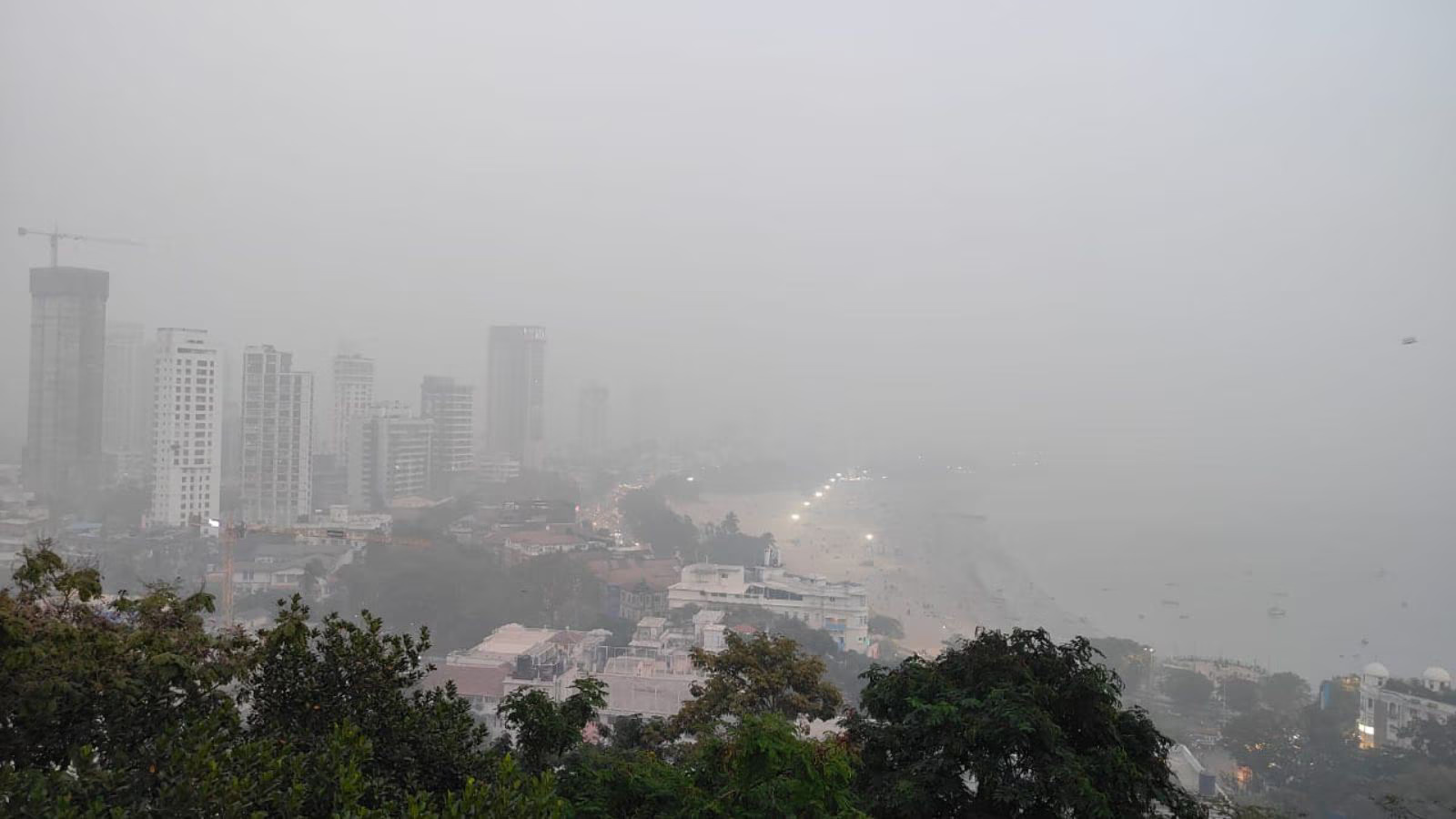
Mumbai witnessed a renewed deterioration in air quality on Friday morning as pollution levels climbed back into hazardous territory, reinforcing concerns over the city’s ability to manage recurring winter smog episodes. Real-time monitoring data showed the citywide Air Quality Index (AQI) rising sharply, placing Mumbai among the more polluted urban centres in the state and highlighting the persistent environmental stress faced by India’s financial capital.
The spike was driven by elevated concentrations of fine particulate matter, particularly PM2.5 and PM10, which pose significant health risks even during short exposure periods. Environmental analysts note that Mumbai’s AQI remained notably higher than the broader Maharashtra average, underscoring the city’s unique vulnerability due to dense traffic, industrial activity, port operations, and large-scale construction. Localised pollution data revealed stark disparities across neighbourhoods. Several residential and commercial hubs—including central business districts, coastal stretches, and transit-heavy zones—reported readings well above safe thresholds. In some pockets, pollution levels crossed into the most dangerous category on the AQI scale, where breathing conditions are considered unsafe for all population groups, not just those with pre-existing health conditions.
High-risk zones were largely concentrated around transport corridors, industrial clusters, and logistics hubs, where emissions from vehicles, diesel generators, and waste-handling activities tend to accumulate. Urban planners point out that such hotspots reflect long-standing land-use challenges, where residential areas coexist alongside freight terminals, refineries, and major arterial roads without sufficient buffer zones or emission controls. Weather patterns have further compounded the situation. Moderate humidity combined with low wind speeds has restricted pollutant dispersion, allowing contaminants to remain trapped near ground level. Temperature variations across the city, particularly in eastern suburbs, also contributed to uneven pollution build-up, worsening exposure for residents in these areas.
Public health experts caution that repeated oscillations between unhealthy and severe air quality categories can have cumulative impacts, particularly on children, senior citizens, and outdoor workers. Reduced lung function, aggravated respiratory conditions, and increased cardiovascular stress are among the most commonly cited risks. Residents have been advised to minimise prolonged outdoor activity, especially during early morning and late evening hours when pollution tends to peak. From a broader urban governance perspective, the episode raises questions about Mumbai’s preparedness for climate-linked air quality challenges. While episodic improvements are often attributed to short-term weather changes, sustained relief depends on structural interventions—cleaner transport systems, stricter industrial emission monitoring, dust control at construction sites, and better waste management practices.
As Mumbai continues to grow vertically and horizontally, environmental experts argue that air quality management must be embedded into planning decisions rather than treated as a seasonal emergency. Without coordinated action across transport, housing, and infrastructure sectors, pollution spikes are likely to remain a recurring feature of the city’s winter months. For residents, the latest deterioration serves as another reminder that clean air is increasingly becoming an urban resilience issue rather than a temporary inconvenience.
Mumbai Pollution Levels Trigger Fresh Health Concerns