


Mumbai police tightened security across city entry points on Sunday, stopping more than 300 vehicles carrying protesters from entering the city. The decision, taken in coordination with the traffic department, was aimed at easing the growing congestion that had paralysed several arterial routes over the weekend.
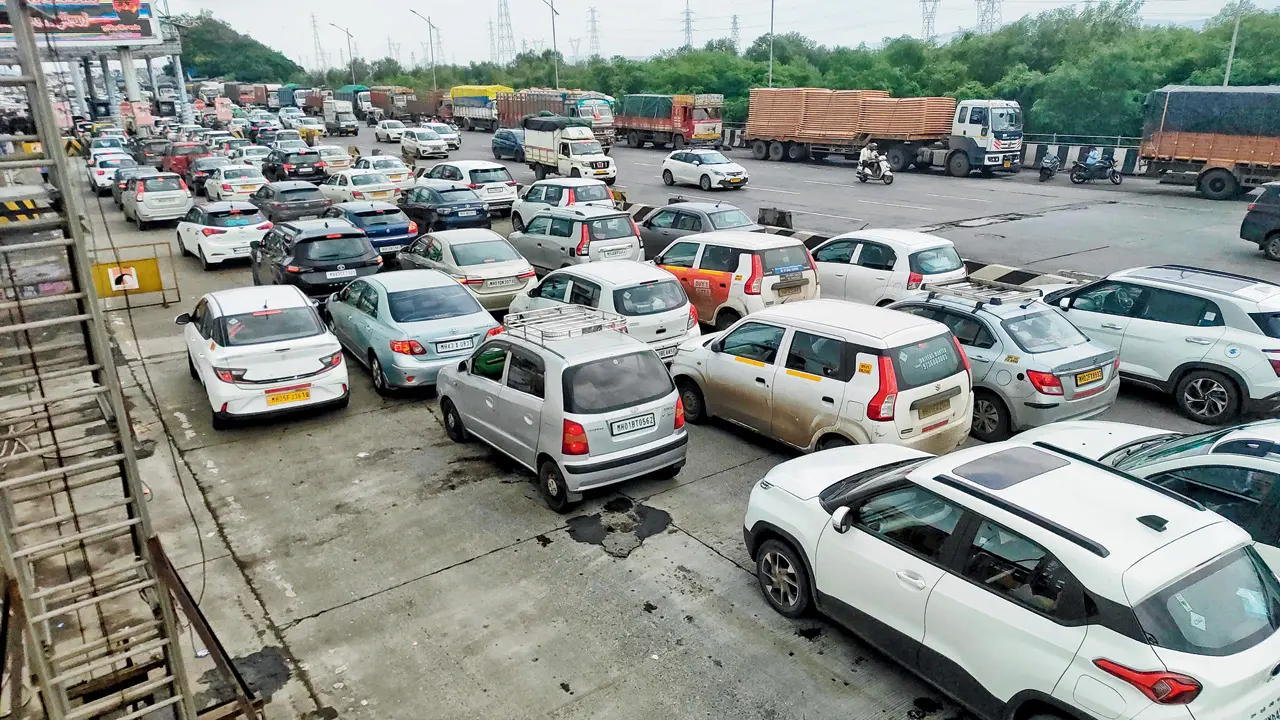
Authorities said that while the protests were continuing, movement of vehicles into the city was being curtailed to prevent further traffic collapse, particularly in South Mumbai, where gridlocks had become routine since Friday. By Monday morning, traffic movement had eased marginally, but long delays persisted at several check nakas and toll points. At the Vashi flyover, one of the busiest entry corridors, police, municipal and reserve forces were deployed in double shifts to control vehicular movement. Heavy trucks were positioned strategically to reduce six lanes into a single lane, forcing a staggered flow of traffic. According to officials, the move was necessary to maintain order, though it caused frustration for daily commuters.
Despite the deployment of over 300 personnel in Navi Mumbai, congestion at the Vashi toll naka and the adjoining Sion–Panvel highway remained severe. Motorists complained of being stuck for more than an hour, with some attempting to finish office work from inside their stationary cars. For many, the extended delays translated into lost productivity and disrupted schedules, fuelling public resentment. Police officials at checkpoints were recording details of each vehicle, verifying licences, and turning back those linked to protesters without valid travel documents. To accommodate protesters, designated parking spaces were arranged in Navi Mumbai, with officials advising them to use suburban trains for travel into Mumbai. Direct train connectivity was cited as a sustainable option to manage crowd pressure and reduce vehicular inflow.
Senior officers confirmed that only essential supply vehicles, particularly those carrying food for protest participants already in Mumbai, were being allowed limited access. Around 120 such vehicles had been cleared with strict instructions to leave the city immediately after deliveries. Officials acknowledged that some vehicles attempted to bypass checkpoints through internal routes, but additional staff had been mobilised to intercept them. Traffic management, officials said, remains a pressing challenge during mass mobilisations of this scale. While restrictions are proving effective in containing vehicular chaos, the measures are also intensifying the daily struggle of commuters. For a city already grappling with rising pollution, inadequate public transport capacity, and carbon-heavy congestion, the crisis underscores the urgent need to promote sustainable mobility and equitable urban planning.
As the standoff continues, authorities are striving to balance the right to protest with the right of citizens to move freely. With trains carrying thousands more passengers than usual, the episode serves as a reminder of the importance of resilient transport infrastructure for a city aspiring to a sustainable and equitable future.
Also Read: Navi Mumbai Residents Protest Road Repair Works Carried Out During Heavy Rainfall
