


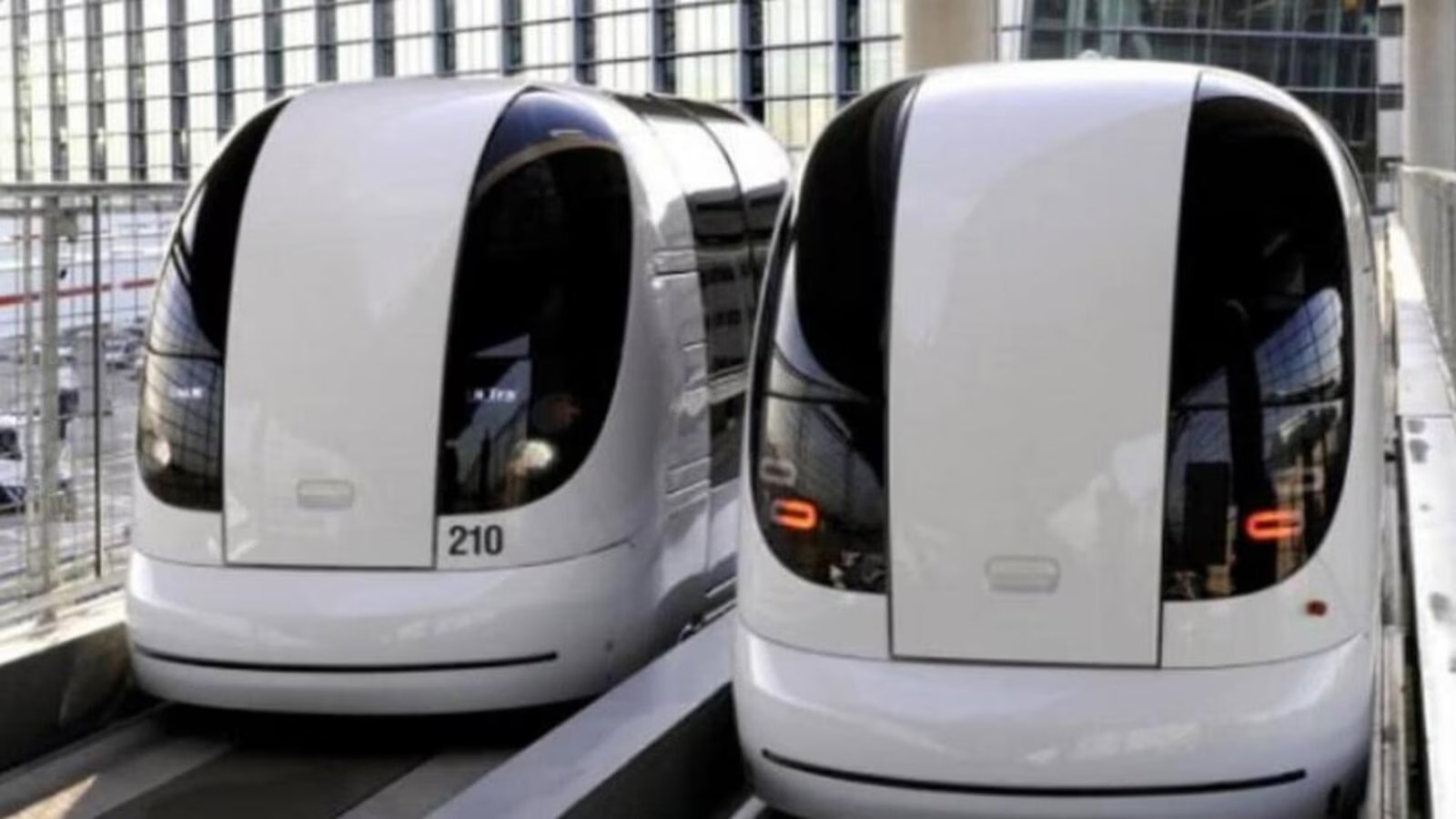
Mumbai’s long-awaited pod taxi initiative at the Bandra Kurla Complex (BKC) has taken a decisive step forward after receiving clearance from the Maharashtra Coastal Zone Management Authority (MCZMA). The ₹1,016-crore Automated Rapid Transit System (ARTS) aims to redefine last-mile connectivity in the city’s premier financial hub, but not without raising concerns over its environmental footprint.
Planned for completion within three years, the elevated pod car network is expected to serve between four to six lakh commuters daily. With 21 stations strategically placed across BKC, the system promises faster, more reliable transit, reducing dependence on fuel-based modes and easing congestion. However, official clearance documents indicate that the project will impact 0.14 hectares of mangroves and require the felling of 431 trees. A small portion of the 8.01-kilometre route will pass directly above mangrove belts near BKC. The implementing agency has already approached the Tree Authority for necessary permissions to proceed with vegetation removal.
Currently, BKC office-goers rely heavily on buses, auto-rickshaws and taxis for the last leg of their commute from nearby railway stations. Commuters frequently complain of infrequent bus schedules, overcharging by auto drivers and overcrowded transit options during peak hours. Officials argue that conventional buses are often underutilised in non-peak periods, adding to operational inefficiencies. The proposed ARTS will feature compact, driverless, battery-powered pods running on a dedicated elevated track between Bandra and Kurla. Designed to operate on-demand, the system will incorporate smart sensors, automated control systems and charging docks at each station. Authorities project a substantial reduction in intra-BKC travel times and a shift towards zero-emission mobility.
Environmental experts, while acknowledging the potential benefits of sustainable urban transport, have flagged the loss of mangroves as a concern. Mangrove ecosystems act as natural flood barriers and carbon sinks, playing a vital role in maintaining Mumbai’s ecological balance. They warn that even small-scale destruction could set precedents for future encroachments. City planners and transport experts, however, view the project as a model for integrating technology-led mobility solutions into urban networks. They argue that if mitigation measures, including compensatory tree planting and mangrove restoration, are strictly enforced, the initiative could set a benchmark for eco-conscious urban transport infrastructure in India.
With the environmental nod now in place, the next steps hinge on obtaining tree-cutting permits and securing final clearances before construction begins. Whether the project can balance development with ecological preservation will be closely watched by both commuters and conservationists in the years ahead.
Also Read: BMC Cracks Down On ‘Khataras’, Clears 1,900+ Scrap Vehicles Blocking City Roads
