


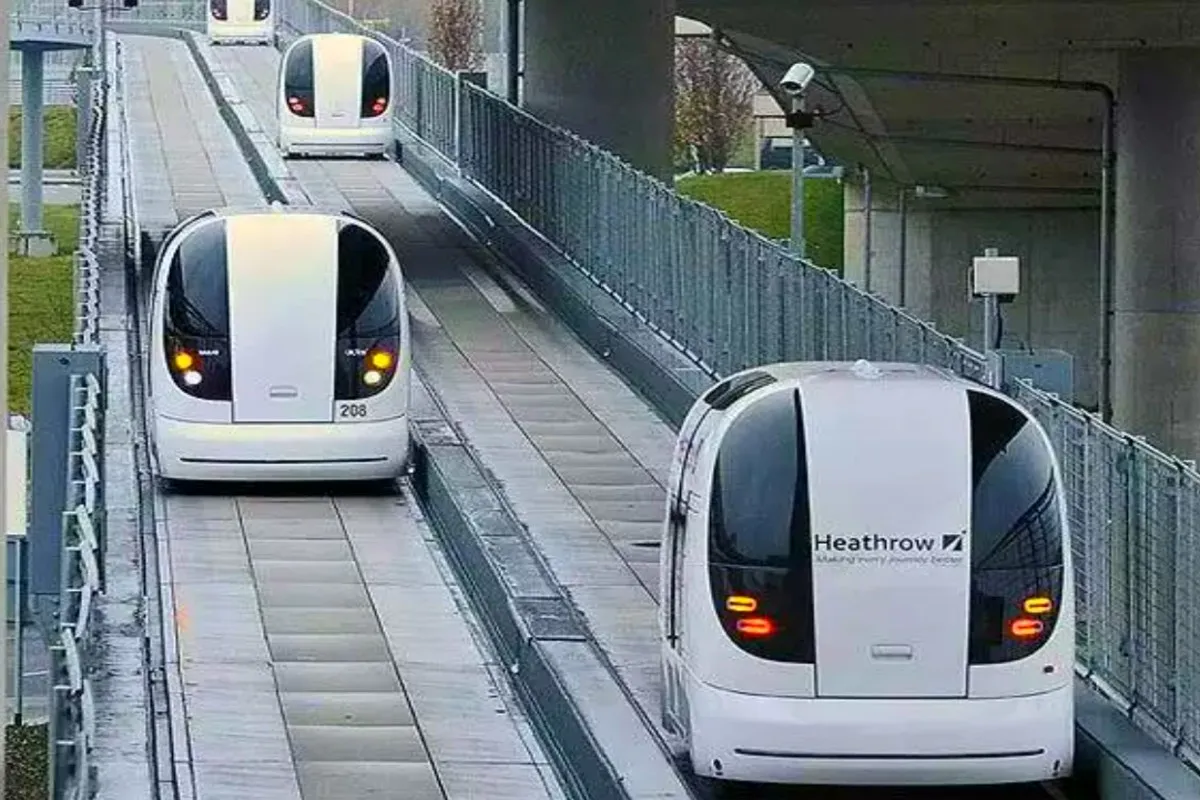
The Maharashtra government has asked civic bodies across the Mumbai Metropolitan Region (MMR) to prepare implementation roadmaps for a proposed Mumbai pod taxi network aimed at easing last-mile congestion around rail and metro stations. The directive, issued during a regional infrastructure review meeting, signals a renewed push to explore automated transit systems as a complement to Mumbai’s expanding mass transport grid.
Senior state officials said municipal corporations should identify viable corridors where pod-based Personal Rapid Transit (PRT) systems could connect residential clusters with suburban railway stations and metro nodes. Authorities were also advised to coordinate with the Mumbai Metropolitan Region Development Authority (MMRDA) for technical and financial structuring support.The Mumbai pod taxi network proposal comes at a time when metro rail corridors are expanding rapidly across the region, yet access between stations and surrounding neighbourhoods remains uneven. In many suburban pockets, commuters rely on auto-rickshaws, buses or private vehicles for short-distance travel, contributing to peak-hour congestion and rising emissions.
Urban mobility experts note that first- and last-mile gaps often limit the full ridership potential of high-capacity systems. Without seamless feeder connectivity, investments in rail infrastructure risk underutilisation. Automated pod taxis — typically small, driverless electric vehicles operating on dedicated guideways — are being considered as one possible solution to bridge these micro-mobility gaps.Globally, PRT systems have seen limited but evolving adoption, primarily in controlled environments such as airports and university campuses. Scaling such models to dense urban regions like MMR would require careful feasibility assessments, including land availability, capital costs, ridership projections and integration with existing fare systems.
Transport economists caution that while pod taxis may offer lower emissions and reduced street congestion if electrically powered, their financial viability depends on passenger volumes and operational efficiency. Elevated guideways, land acquisition and system maintenance can significantly increase upfront expenditure. Public-private partnership models may therefore become central to project structuring.From a climate perspective, mobility planners argue that any Mumbai pod taxi network must align with broader decarbonisation targets. Electrification alone does not guarantee sustainability; energy sourcing, lifecycle costs and urban design integration are equally critical. Well-planned feeder systems can reduce dependence on fossil-fuel-driven intermediate transport and improve air quality in densely populated suburbs.
Real estate analysts are also watching the proposal closely. Enhanced micro-connectivity around metro corridors often supports transit-oriented development, raising land values while encouraging compact, mixed-use neighbourhoods. However, planners emphasise that equitable access and affordability must remain central to avoid reinforcing spatial inequality.Civic authorities are expected to conduct preliminary corridor mapping and technical studies in the coming months. The next phase will likely involve financial modelling and stakeholder consultations before any pilot deployment.For Mumbai’s overstretched transport ecosystem, the debate is less about technology alone and more about integration. Whether pod taxis emerge as a practical mobility layer will depend on design clarity, regulatory oversight and long-term fiscal prudence.
Also Read:Vande Bharat Trains Drive Gujarat Travel Growth
Mumbai Pod Taxi Plan Targets Last Mile
