


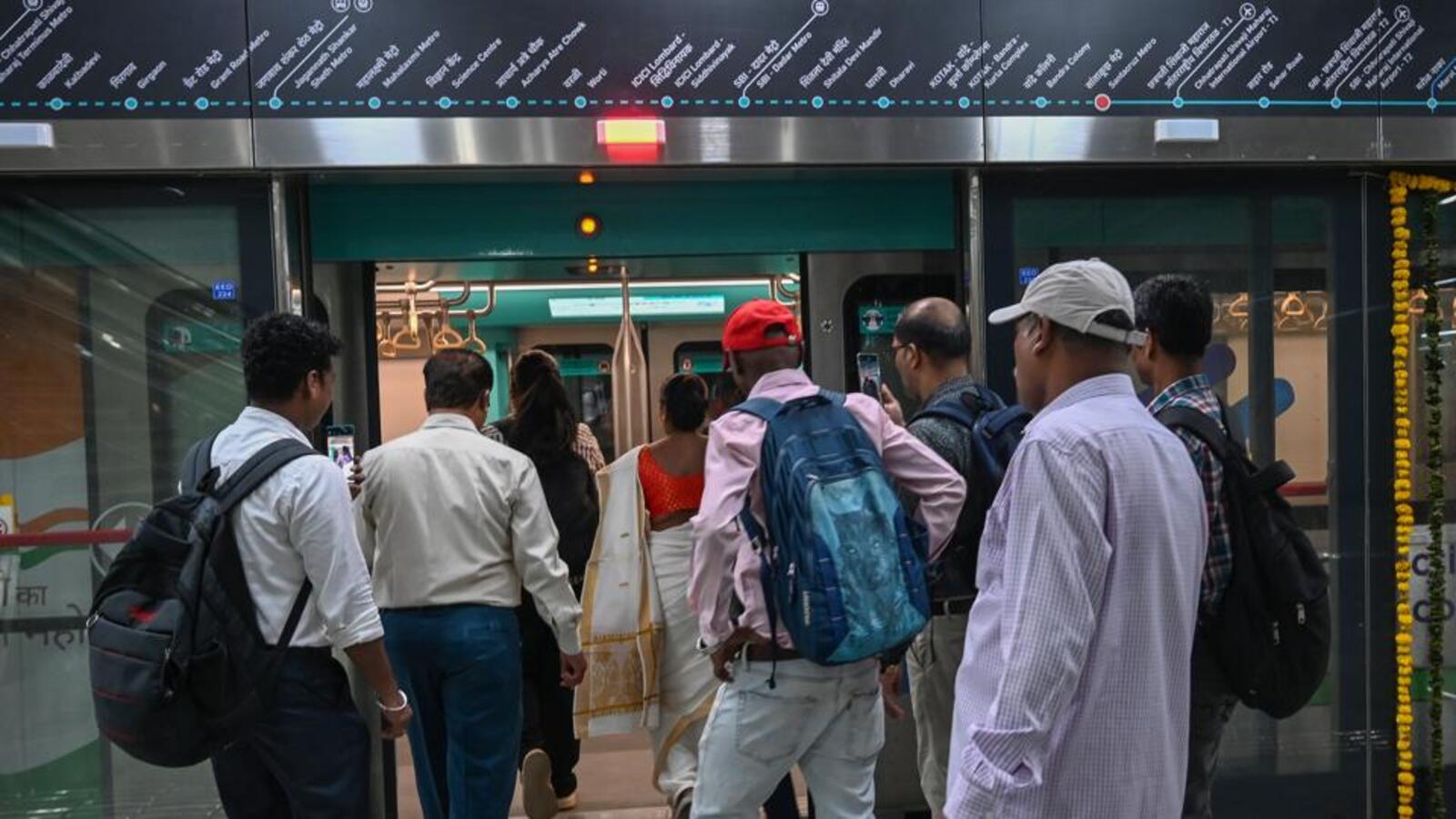
Dharavii is one of Mumbai’s most densely populated and economically vital localities — is poised to become a major Metro interchange.
The integration of Metro Line 3 (Colaba–BKC–SEEPZ) with the proposed extension of Metro Line 11 (Wadala–CSMT) will transform the locality into a strategic transit node, supporting both east-west and north-south mobility across the metropolis.
Currently being redeveloped under an ambitious transformation plan, Dharavi’s new Metro connectivity is expected to play a crucial role in enabling inclusive growth, reducing urban commute times, and expanding access to economic and social infrastructure for its lakhs of residents. According to officials involved in the planning process, the revised Metro blueprint proposes the addition of a second station in Dharavi — one that will be integrated into Metro Line 11 as it extends from Wadala and moves westward.
Metro Line 11, being developed as a key urban mobility corridor connecting Mumbai’s central and eastern zones to its southern business district, is estimated to cost over ₹16,000 crore. The Mumbai Metro Rail Corporation Ltd (MMRCL), which is currently executing the underground Metro Line 3, has also been entrusted with the planning and implementation of Line 11. The two lines are set to converge in Dharavi, which will function as a pivotal junction in Mumbai’s expanding multimodal transport system.
For decades, Dharavi — despite its proximity to central Mumbai and its economic dynamism — has suffered from inadequate connectivity. Residents, daily wage earners, and small business operators have long relied on overcrowded roads and limited rail options. The Metro expansion aims to reverse this legacy by turning Dharavi into a model for equitable urban access.
A senior official from the project team highlighted that the proposed “Dharavi Central Metro Station” would be designed as a multi-level interchange, allowing commuters to switch seamlessly between Metro Lines 3 and 11. This will not only improve Dharavi’s integration with Mumbai’s key commercial hubs — such as Bandra-Kurla Complex (BKC), Churchgate, and Chhatrapati Shivaji Maharaj Terminus — but also with suburban clusters in the east like Sion, Wadala, and Chembur.The interchange station is also expected to ease commuter pressure on road corridors like the Sion-Dharavi Link Road and the Eastern Express Highway. Once operational, residents from neighbouring areas including Chunabhatti, Antop Hill, and Mahim will have a direct underground route to business and transport centres, bypassing surface congestion.
According to urban transport planners, the Dharavi Metro interchange will be more than a transfer point. It is being envisioned as a future-ready mobility hub that incorporates last-mile services like feeder buses, pedestrian access pathways, and cycling infrastructure. These components are intended to support a modal shift away from private vehicles, in line with Mumbai’s goals of achieving low-carbon, sustainable mobility.“Rather than isolating Metro development from the surrounding neighbourhood, we are embedding it within the wider objective of the Dharavi Redevelopment Project,” said one of the officials leading the planning. “This means ensuring that residents, workers, and visitors alike have seamless multimodal access, whether by Metro, suburban rail, bus, or foot.”
The dual-station design in Dharavi — with one station aligned to Line 3 and the new one proposed under Line 11 — is being assessed for integration through pedestrian subways, skywalks, and possibly intra-station shuttle services. Officials confirmed that this integration will prioritise universal access, including escalators, lifts, and tactile flooring for the differently-abled and senior citizens.The transformation also presents an opportunity for environmental gains. By reducing dependency on road-based travel, the Metro interchange is expected to lower vehicular emissions and contribute to cleaner air in a neighbourhood where pollution levels routinely exceed safe thresholds. The planning team has indicated that the interchange station will be designed with green building norms, energy-efficient lighting, and water-saving installations.
While the Metro promises increased connectivity, concerns around equitable access remain. As Dharavi undergoes redevelopment, urban policy advocates have called for inclusive planning that ensures long-time residents are not displaced or marginalised in the name of infrastructure modernisation. Officials have stated that Metro alignments will be carefully coordinated with the Dharavi Redevelopment Project to prevent dislocation and support in-situ rehabilitation.Infrastructure experts believe that if executed with transparency and community engagement, the Dharavi Metro hub could become a template for integrating public transport within informal urban settlements. “What’s happening in Dharavi could redefine how we look at slum redevelopment,” said a transport policy analyst. “Instead of isolating communities through gated planning, the Metro can knit them more tightly into the economic fabric of the city.”
The project is currently at the planning stage, and detailed design and environmental assessments are underway. Construction is likely to be taken up in phases once all regulatory and financial approvals are secured.
As Mumbai continues its transition into a high-capacity public transport city, the Dharavi Metro interchange is emerging as a symbol of sustainable and inclusive mobility — one that connects lives as much as it connects locations. Whether this vision translates into tangible outcomes on the ground will depend on timely execution and meaningful community participation.
Also Read : Mumbai Metro 3 ridership crosses 4.7 lakh in 10 days
