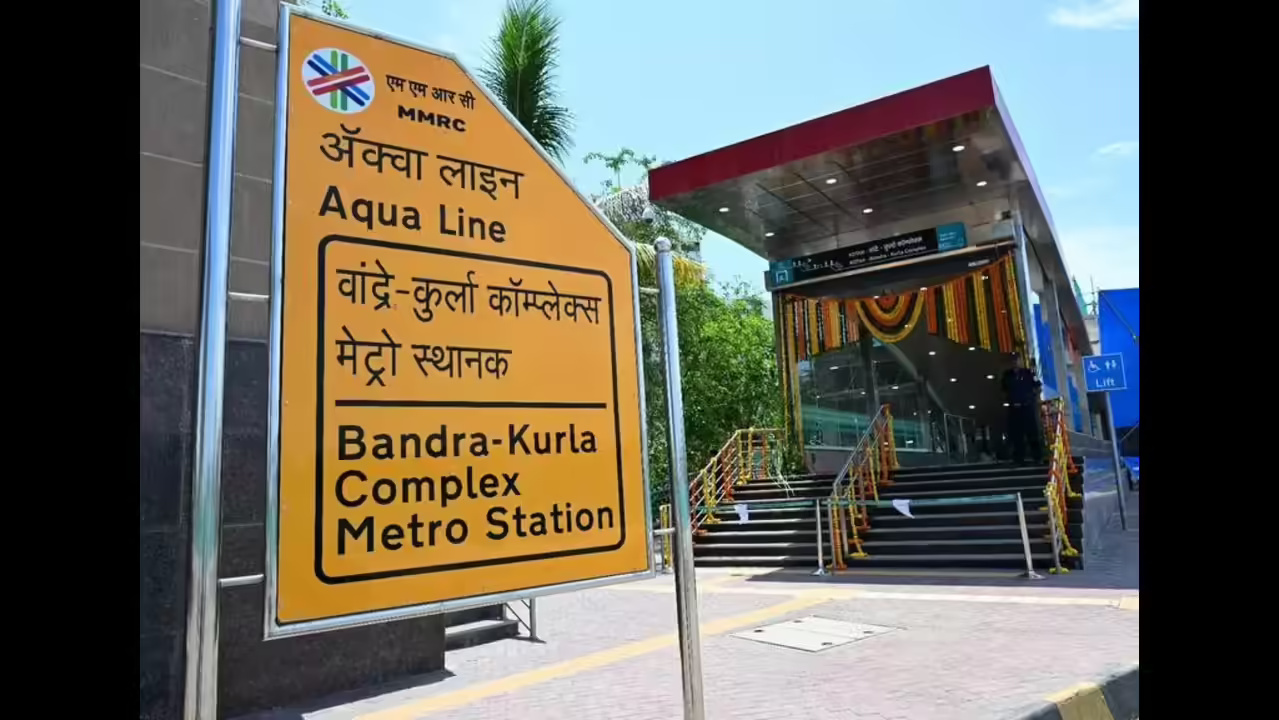
Mumbai’s fully underground Metro Line 3 could soon see an extensive network of pedestrian tunnels designed to ease first- and last-mile travel for thousands of commuters. The Mumbai Metro Rail Corporation has proposed nearly 3 km of sub-surface walkways linking the Science Centre station in Worli and the Bandra-Kurla Complex (BKC) station with surrounding commercial, cultural and transit hubs. Officials said the corridors aim to create safer, weather-proof routes in some of the city’s busiest districts.
The most ambitious stretch is planned in BKC, where a 1.4 km underground walkway is expected to provide a seamless interchange between the Metro 3 station and the upcoming Mumbai–Ahmedabad high-speed rail terminal. The connector, which will run below Tata Colony, is being positioned as an integrated mobility link that would allow passengers to shift between the metro and bullet train systems without entering road-level congestion. According to planners, such an arrangement is intended to reduce dependence on short-haul motorised trips and encourage commuters to adopt public transport for longer distances. In Worli, two additional tunnels have been mapped from the Science Centre station. One is a 1.1 km alignment leading towards the Worli promenade, passing beneath the Mahalaxmi Racecourse. The second, about 500 metres in length, is planned towards the cultural cluster around the Nehru Planetarium. Urban planners involved in the consultation process said both links are expected to relieve pressure on surface roads while improving access for pedestrians travelling to offices, tourist spots and recreational destinations.
Preliminary designs propose walkways roughly 5 metres wide, equipped with escalators or elevator access to ensure convenience for all users, including seniors and people with limited mobility. Officials estimate the project cost at around ₹250 crore, which is likely to be shared by the municipal corporation and the metro agency. A design and project management consultant will now be appointed to carry out surveys, finalise alignments and recommend the most efficient construction approach. The proposed network aligns with the city’s transit-oriented development regulations, which allow additional building rights within 500 metres of metro stations if developers provide direct access to transit corridors. Several stretches of the planned tunnels fall within this zone, opening opportunities for future connections with private developments and public facilities. Urban transport specialists noted that this could gradually build a more inclusive pedestrian grid, supporting equitable access in densely built neighbourhoods.
The walkways are targeted for completion by 2029–30, coinciding with the anticipated rise in Metro 3 ridership. Similar underground and elevated links at the international airport and the historic city terminus have already demonstrated the benefits of dedicated pedestrian facilities. Officials believe the new tunnels will not only improve connectivity but also encourage a shift towards low-carbon mobility by making public transport more accessible, safer and less weather-dependent.
Mumbai Plans 3km Underground Walkway Grid At Two Stations To Boost Metro Access