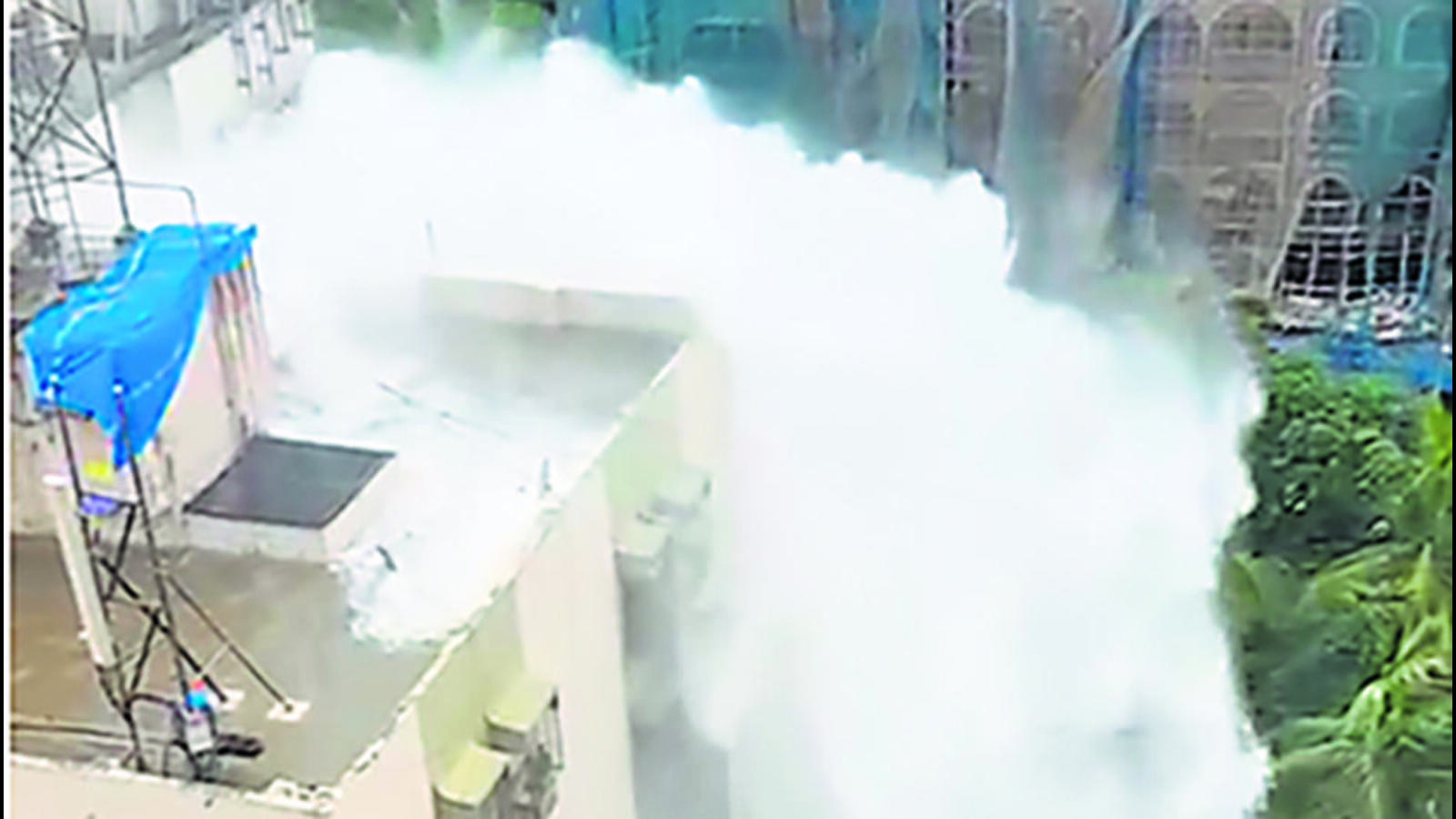
A sudden water pipeline failure during road concreting work in Andheri West has disrupted local supply and drawn attention to the fragile coordination between civic utilities and urban infrastructure upgrades in Mumbai. The incident, which occurred late Monday night in a residential pocket of Andheri West, resulted in large volumes of treated water being discharged onto the roadway, temporarily affecting nearby neighbourhoods.
According to civic officials familiar with the matter, the pipeline was damaged during ongoing road concreting activity in the Shastri Nagar area. The rupture caused water to surge several storeys high before emergency valves were shut and repair teams were mobilised. Traffic personnel in the vicinity alerted municipal authorities after noticing abnormal water flow and surface flooding on the stretch. Officials from the Brihanmumbai Municipal Corporation reached the site and carried out repairs to contain the leak and stabilise pressure in the local distribution network. While supply was gradually restored, residents in parts of Andheri West were advised to expect intermittent disruption as the system was recalibrated.
Urban infrastructure experts note that such incidents are becoming increasingly common as Mumbai accelerates road upgrades, metro construction and utility renewal simultaneously. Much of the city’s underground water network is decades old, and excavation without precise mapping can result in accidental damage. Beyond immediate inconvenience, large-scale water loss raises sustainability concerns in a city that already faces seasonal supply stress. The Andheri incident follows a similar pipeline failure earlier this month along a major arterial corridor in the western suburbs, where a high-capacity main developed a leak during excavation. Together, these episodes highlight the risks of undertaking capital-intensive roadworks without fully integrated utility management.
From an economic standpoint, unplanned service disruptions carry hidden costs. Water loss affects households, small businesses and service establishments, while emergency repairs often divert municipal resources away from scheduled maintenance. For road projects, repeated utility failures can delay completion timelines and inflate costs due to rework and traffic management requirements. Urban planners argue that Mumbai’s transition towards climate-resilient infrastructure depends not only on new construction but also on safeguarding existing networks. Digitised utility mapping, real-time monitoring sensors and stricter supervision of contractors are increasingly seen as essential tools for reducing such failures. Cities that have invested in integrated infrastructure planning tend to experience fewer service interruptions during upgrades.
Civic officials indicated that an internal review would assess whether protocols were followed during the concreting work and if additional safeguards are required in utility-dense zones. Contractors engaged in road upgrades may also be asked to strengthen pre-excavation checks in areas with ageing pipelines. As Mumbai continues its push for durable roads and modern transport corridors, the Andheri pipeline rupture serves as a reminder that resilient urban development must prioritise coordination below the surface as much as transformation above it. Ensuring that essential services remain protected during infrastructure renewal will be key to building a more reliable and resource-efficient city.
Mumbai Pipeline Failure Disrupts Water Supply In Andheri