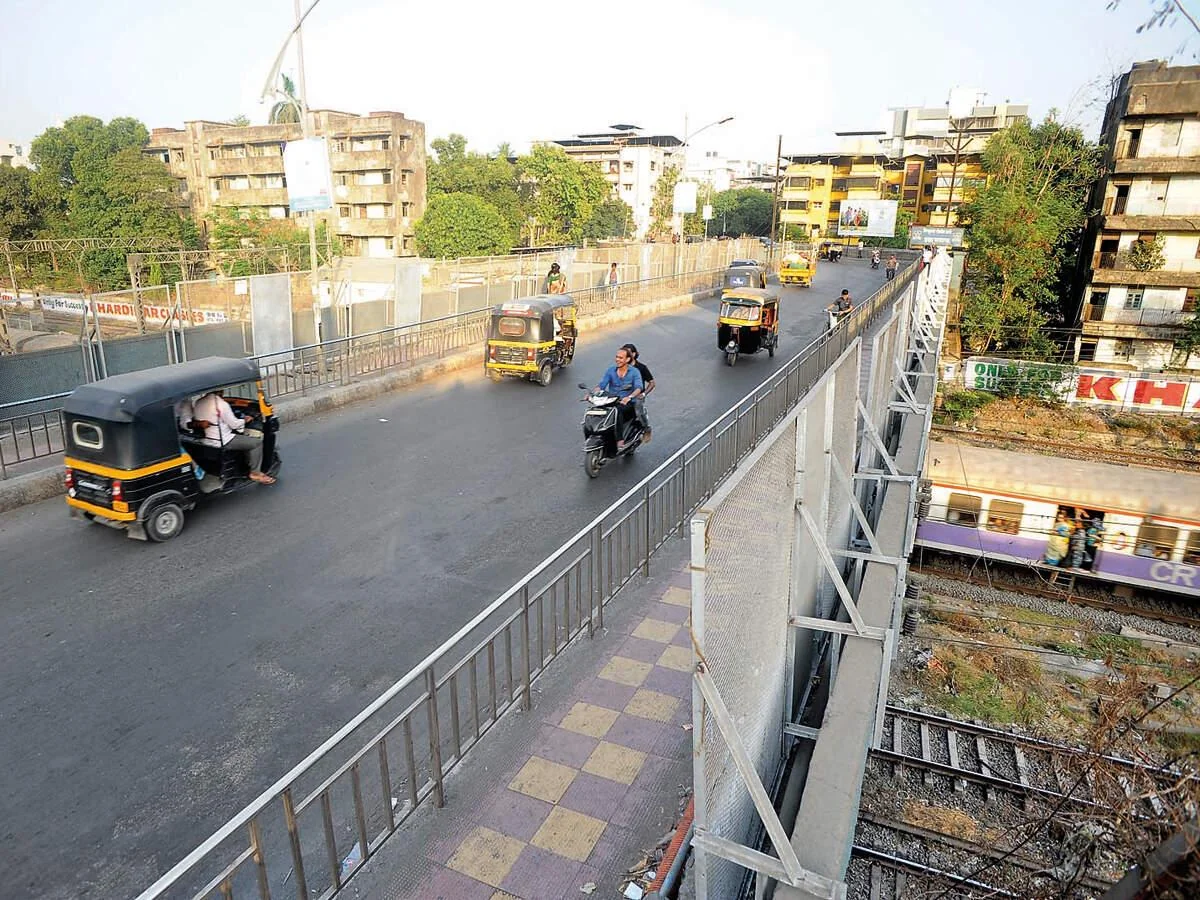
Mumbai Palava Flyover Becomes Hazard Zone Days After Inauguration Amid Complaints
Barely four days after its much-delayed inauguration, Mumbai’s Palava flyover has drawn sharp criticism from commuters and safety experts for its unsafe surface and shoddy execution. Designed to decongest the busy Shilphata-Kalyan corridor, the ₹250 crore structure is now being dubbed a “skidding zone.” With multiple riders already injured and loose gravel, cement spills, and exposed iron rods visible, public frustration is mounting as authorities scramble to issue explanations and initiate urgent patchwork repairs.
The 562-metre Palava flyover was intended to ease chronic traffic congestion along the Kalyan-Shilphata corridor, but its launch has sparked more concern than celebration. Since its opening, commuters have reported hazardous surface conditions—ranging from slippery asphalt and loose gravel to incomplete tar laying—resulting in bike skids and injuries. Roughly 450 metres of the bridge have already undergone makeshift patchwork as workers attempt to address public complaints. Experts point to a lack of proper mastic asphalt layering and poor surface bonding as key reasons for the mishaps. While the flyover was positioned as a vital link to reduce travel time from 45 to 10 minutes, its condition has raised questions over construction quality and monitoring mechanisms. Calls are growing for a full structural audit and public disclosure of spending. Transport analysts warn that if such issues are ignored, the long-term viability and public trust in urban infrastructure projects may severely erode.
The flyover’s troubled journey—from halted construction due to railway conflicts to delayed deadlines and inflated costs—has left commuters disillusioned. Initially proposed in 2018 with twin flyovers planned in both directions, the project was revised in 2020 to accommodate Indian Railways’ freight corridor expansion. While construction resumed after reapproval, its completion faced multiple setbacks, sparking protests and criticism over administrative inefficiency. Despite assurances from multiple authorities about timely delivery, commuters now contend with exposed iron rods, uneven surfacing, and patchy finishes. Senior infrastructure observers have flagged the quality lapses as indicative of systemic flaws in project supervision and contractor accountability. The flyover’s strategic placement—linking key suburbs like Dombivli, Kalyan, Thane, and Navi Mumbai—makes its compromised safety a serious concern for daily commuters. Experts stress the urgency of preventive maintenance and quality audits before opening public-use infrastructure, adding that budget inflations and rushed deadlines must not come at the cost of commuter safety.
The Palava flyover fiasco has once again brought into focus the consequences of compromised infrastructure planning and execution in high-traffic urban corridors. What was billed as a symbol of connectivity and ease has now become a cautionary tale of oversight failure. With riders injured and commuters angered, the urgency for structural audits, transparent reporting, and remedial actions cannot be overstated. Experts warn that without stringent accountability measures and long-term planning safeguards, such lapses will continue to risk lives and public trust. The Palava episode is a reminder that infrastructure must serve the public with safety—not surface-level optics.