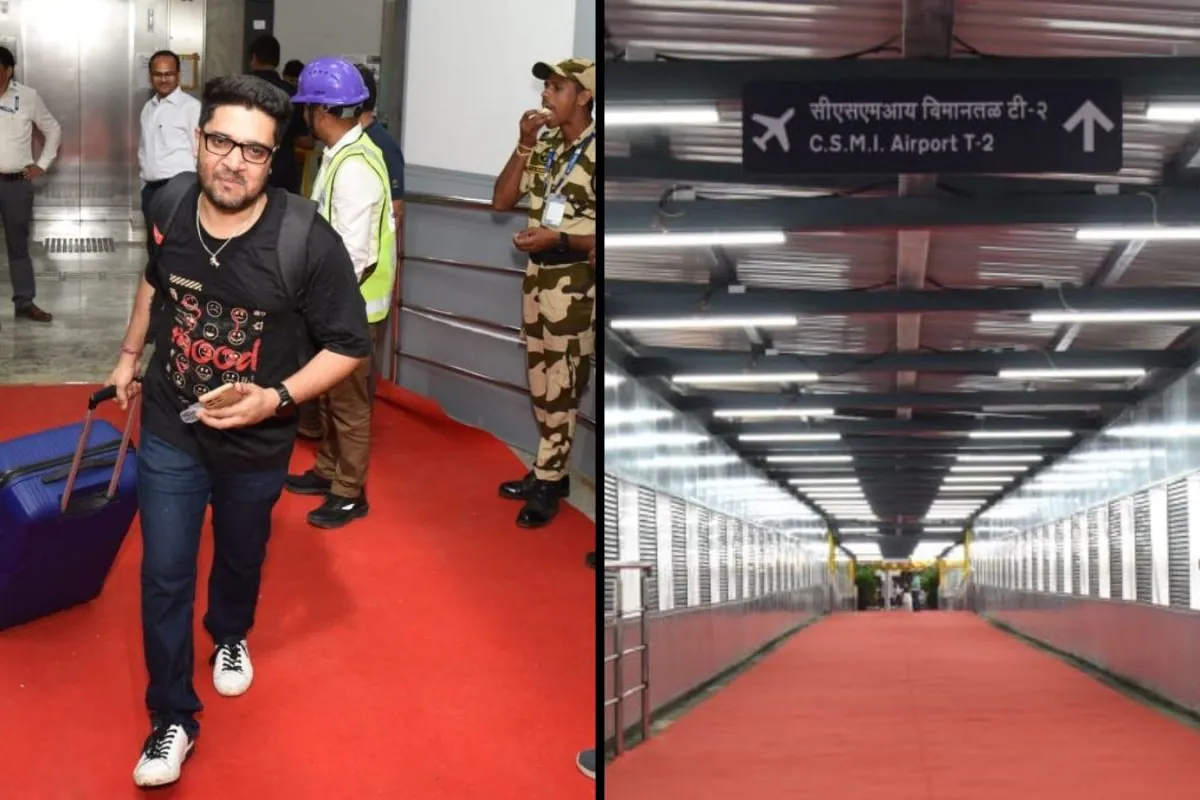
Mumbai opens 100m footbridge linking Metro 3 with Airport T2
Mumbai has taken a major step in strengthening last-mile connectivity with the inauguration of a 100-metre foot overbridge linking Metro Line 3’s CSMIA-T2 station directly to the international airport terminal. The elevated structure, designed with precision above ongoing metro works, cuts the walking distance from 450 metres to just 118 metres. Officials say the bridge will improve safety, reduce dependence on road transport, and encourage more passengers to opt for public transit to reach the airport.
A new 100-metre foot overbridge has been unveiled in Mumbai, directly linking the underground Metro Line 3 station at CSMIA–T2 with the airport’s Terminal 2, dramatically cutting walking distance for passengers. The structure, built 23 metres above ground, reduces the previous 450-metre road crossing to a mere 118 metres. Officials believe the addition will not only streamline passenger movement but also support the city’s wider goal of creating sustainable, seamless, and safer urban mobility.The steel structure has been designed to accommodate heavy passenger traffic, with a width of 4.3 metres and height clearance of three metres. Built above the ongoing Metro Line 7A works, the bridge connects directly to a lift-accessible entry point at the Metro station. Officials overseeing the project highlighted the precision engineering required to construct such a tall structure over active infrastructure works without halting other projects in the corridor.
For air travellers, the bridge is being seen as a game-changer. Previously, passengers had to navigate vehicular congestion and uneven pedestrian routes to reach the terminal from the Metro station. With the new link in place, officials estimate that passengers can now save up to 10 minutes per trip, besides avoiding the risks associated with road crossings. The integration is expected to significantly boost the uptake of public transport by airport users, a crucial step in reducing reliance on private cars and taxis.Transport experts say this development reflects a global shift towards last-mile connectivity improvements that encourage mass transit over individual mobility. By making airport access smoother through a safe, dedicated bridge, Mumbai is signalling its commitment to reducing carbon footprints while enhancing commuter comfort. The move is also aligned with the city’s efforts to reduce vehicular emissions near one of its busiest transport hubs.
Urban mobility analysts point out that this kind of infrastructure not only reduces travel stress but also has wider economic implications. Improved connectivity encourages more commuters to choose Metro services, helping the city achieve higher returns on its public transport investment. The strategic placement of the bridge is expected to reduce passenger dependence on polluting modes of transport, such as cabs idling outside the airport, thereby easing both traffic congestion and air quality concerns.While this bridge addresses one critical gap, experts caution that seamless airport access will require additional pedestrian-friendly infrastructure and integration with future metro and bus corridors. Nevertheless, the inauguration marks a significant milestone in Mumbai’s evolving journey towards equitable, sustainable, and carbon-conscious transport solutions.