


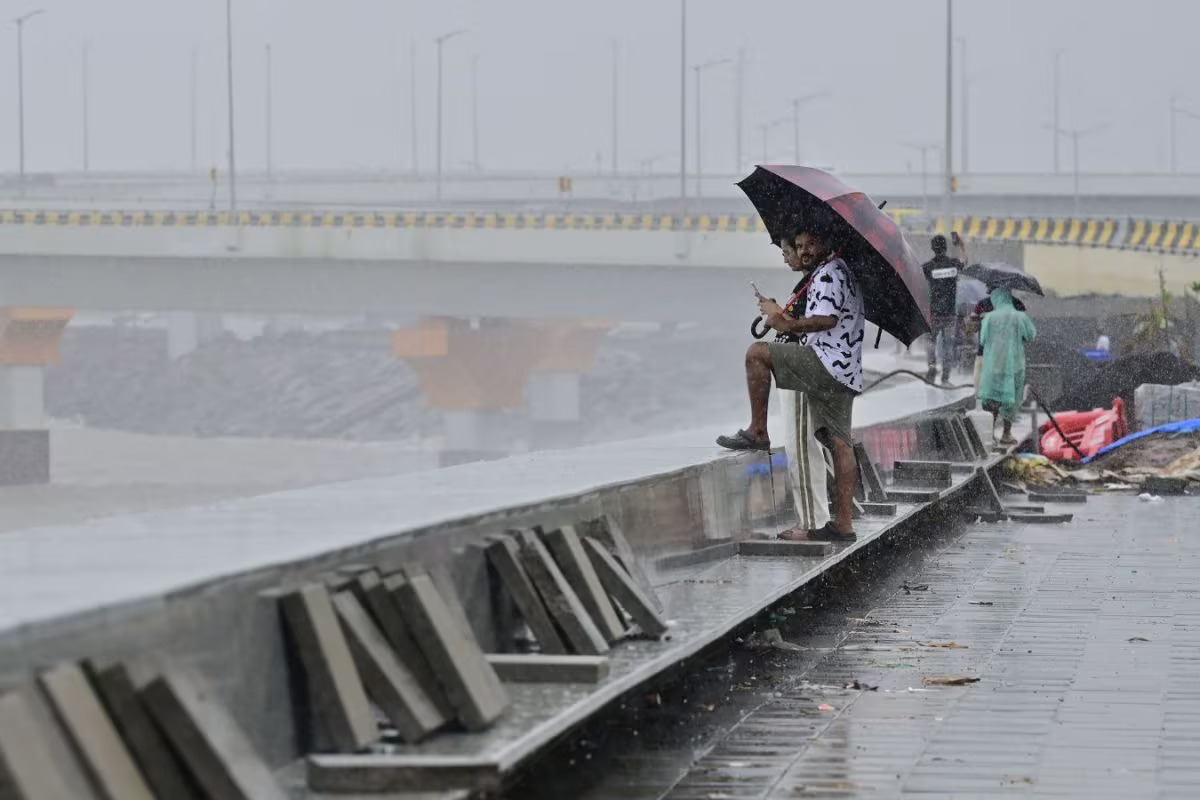
Mumbai’s relentless monsoon showed no signs of retreat on Thursday, keeping the city under a yellow alert for heavy rainfall. With waterlogging, traffic snarls and delayed trains stretching into another week, the city continues to struggle with widespread disruption while residents wait anxiously for clearer skies. According to data from the India Meteorological Department (IMD), the Santacruz observatory recorded 4 mm of rainfall in the past 24 hours. Temperatures stayed between 26 and 30.7 degrees Celsius, with humidity levels peaking at 87 per cent. Officials confirmed that both Wednesday and Thursday carried heavy rainfall warnings, raising the threat of flooding in vulnerable low-lying pockets.
Transport systems were once again the hardest hit. Commuters faced long delays as suburban rail services slowed under safety protocols, while major arterial roads remained clogged with stranded vehicles. Experts noted that the combination of saturated ground and inefficient stormwater drainage is compounding the urban flooding problem, a recurring challenge that city planners are yet to fully resolve. Despite the disruptions, forecasts hint at a gradual tapering of intensity. From Friday, the city is expected to receive moderate rainfall through the weekend. Cloudy conditions will persist, and while light showers are likely on September 1 and 2, meteorologists have not issued further alerts. Still, the absence of a complete dry spell highlights the unpredictability of this year’s monsoon.
Urban analysts suggest that Mumbai’s struggles reflect the growing impact of climate variability. Rains this season have been heavier and more frequent, a trend consistent with the broader climate models warning of extreme precipitation events in coastal cities. Without stronger investments in sustainable drainage, permeable surfaces, and green urban design, officials fear such disruptions will only worsen in the years ahead. Meanwhile, daily life in the city presses on with its trademark resilience. Office-goers waded through ankle-deep water to reach workplaces, street vendors improvised with tarpaulin shelters, and schoolchildren navigated flooded by-lanes. Environmental experts argued that such adaptability, though admirable, should not obscure the urgent need for systemic change in urban infrastructure.
With the monsoon season typically easing in early September, residents are pinning hopes on calmer weather in the coming days. For now, the city remains in a holding pattern, caught between the endurance of its people and the vulnerabilities of its infrastructure.
Also Read: Mumbai Elphinstone Bridge Set To Close After Ganapati For Upgrade
