


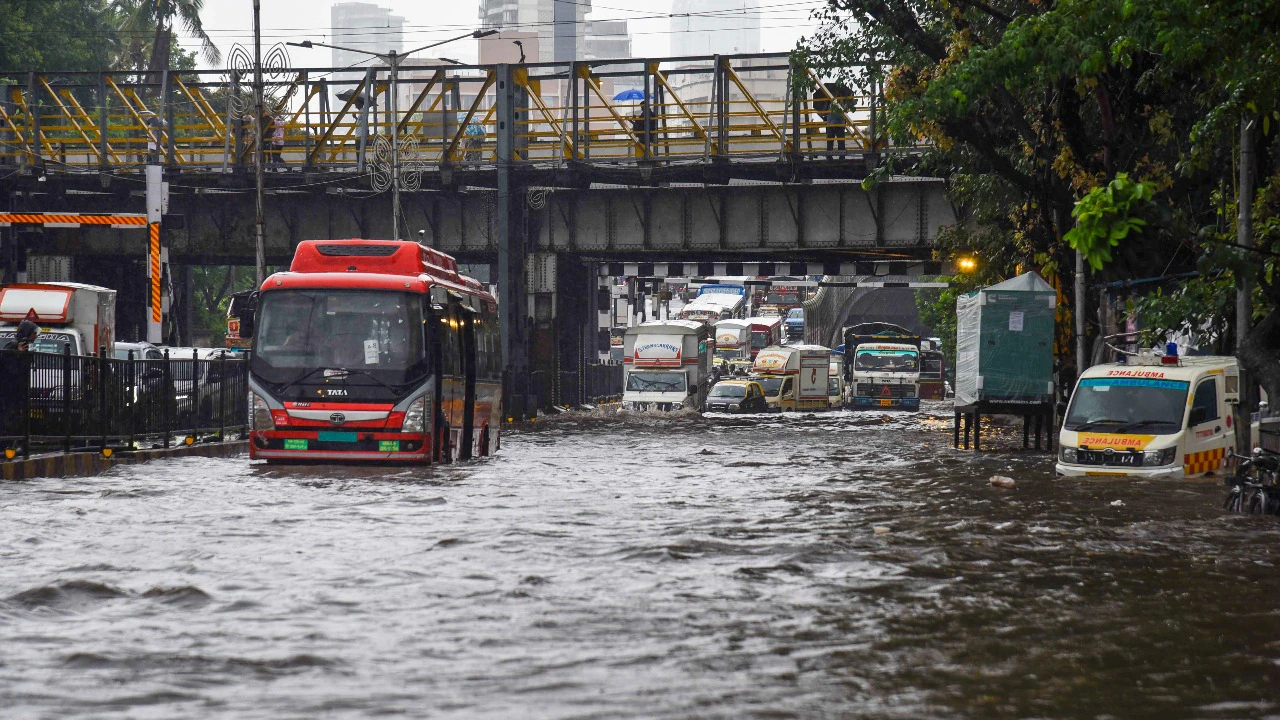
Mumbai was placed on red alert on Monday after torrential pre-monsoon rains battered the city, flooding key roads and suspending metro operations. The early arrival of the Southwest Monsoon — 16 days ahead of its usual onset — has sparked alarm about the city’s preparedness for what could be a prolonged and intense rainy season.
The India Meteorological Department (IMD) confirmed the rare monsoon advancement as the earliest in nearly 25 years. Mumbai’s maximum temperature is expected to hover around 31°C, while the minimum remains at a relatively cool 23°C, according to forecasts. But it is the deluge — and its consequences — that are drawing city-wide concern.With waterlogging crippling road traffic across major junctions including Hindmata, Worli Naka, King Circle, Powai Plaza, and Elphinstone Bridge, commuters faced paralysing delays. The situation turned more serious when operations at the Acharya Atre Chowk underground metro station had to be suspended due to water ingress. While other corridors remain operational, the incident underlined the vulnerability of underground infrastructure to climate volatility.
“Restoration is underway, and we are monitoring the situation closely,” said an official from the Mumbai Metro Rail Corporation, acknowledging the disruption caused by unexpected seepage following the intense rainfall.Deputy Chief Minister Eknath Shinde called the current spell one of the heaviest May rainfalls Mumbai has seen in decades. “We have activated a 24/7 control system, deployed 66 pump sets, and identified all high-risk waterlogging zones. Real-time monitoring is ongoing through CCTV networks and dedicated hotlines,” he stated.
The red alert issued for Mumbai is expected to remain in force until 8:30 AM today, with a yellow alert following for the next 48 hours. Nearby districts including Thane, Ratnagiri, Raigad, and Sindhudurg have also been placed on red alert.Urban planners and civic experts view the early deluge as a stark warning. Mumbai, with its high-density population, ageing drainage networks, and unregulated construction, is becoming increasingly prone to climate-induced breakdowns. The flooding of a newly commissioned metro station has intensified scrutiny over the city’s disaster readiness, especially concerning underground transport and housing infrastructure.
“There is a disconnect between infrastructure development and climate resilience. What we’re seeing today is not just an aberration in weather but a governance failure,” said a senior environmental consultant based in Mumbai.The coming days will be critical. If the current trend continues, civic systems may face repeated overloads before peak monsoon even arrives. Mumbai’s experience could serve as a cautionary template for other Indian cities witnessing similar urban expansion without proportional investment in climate-proofing.
With water levels yet to recede in several pockets, and heavier rainfall predicted later this week, the city stands at a crossroads between recurring crisis and long-overdue resilience planning.
Also Read : Pune residents suffer as Lohgaon road sinks
