


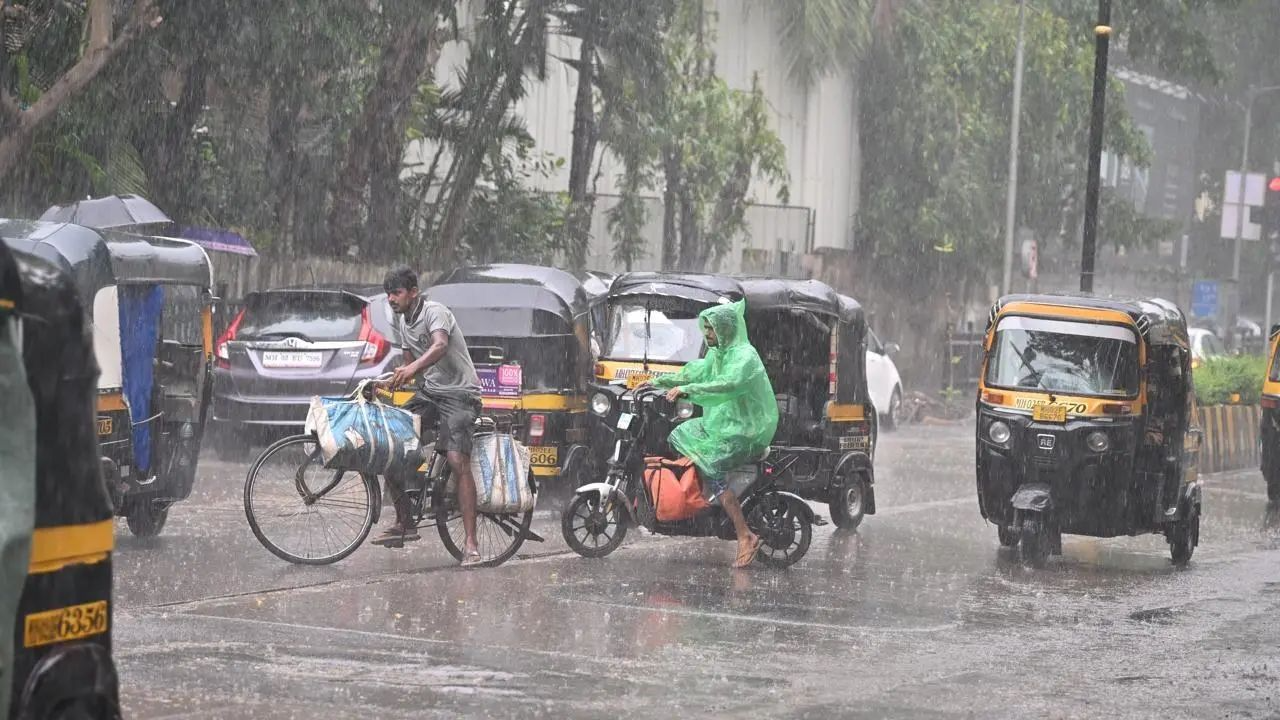
On Thursday, Mumbai remained on alert as the India Meteorological Department (IMD) maintained a yellow alert, forecasting intermittent heavy showers across isolated parts of the city. With the monsoon intensifying across the Konkan coast, the adjacent districts of Raigad and Ratnagiri were placed under an orange alert, anticipating very heavy rainfall that could impact normal life and mobility in vulnerable regions.
Rain activity had already begun increasing by Wednesday evening. According to the Brihanmumbai Municipal Corporation’s (BMC) automated weather monitoring system, the island city received 40.67 mm of rainfall, while the eastern and western suburbs recorded 25.37 mm and 23.34 mm respectively between 8 am and 8 pm. Thursday’s rainfall, triggered by a strengthening offshore trough and south-westerly winds from the Arabian Sea, was expected to persist through the day, accompanied by strong surface winds in some localities. The recurrent bouts of rainfall underscore the pressure on Mumbai’s infrastructure, which faces growing challenges in absorbing and draining excess water. Despite various mitigation efforts by municipal agencies, flash floods, road inundation, and drain overflows continue to affect commute times and public safety. Areas known for chronic waterlogging, particularly in low-lying neighbourhoods of central and western Mumbai, were under observation, with pumping stations and disaster response teams kept on standby.
Officials indicated that while Thursday’s rainfall may not reach extreme levels citywide, its isolated intensity—particularly during peak hours—could lead to temporary disruptions in both rail and road networks. Suburban rail services, which carry millions of commuters daily, have historically been vulnerable to brief but intense cloudbursts. Public transport authorities were monitoring track conditions and station crowding, especially during morning and evening rush hours. From a broader urban planning perspective, Thursday’s rainfall highlights once again the urgent need for climate-resilient infrastructure. Mumbai, already burdened with high urban density, continues to rely on a stormwater drainage system that dates back to the colonial era. With climate change amplifying both the frequency and severity of monsoon rainfall, city planners and sustainability experts are calling for a fundamental shift in how the metropolis adapts.
Initiatives to incorporate eco-sensitive urban development—such as rainwater harvesting, permeable paving, green roofs, and rejuvenated urban wetlands—are being proposed to mitigate the flooding risk. A number of such pilot projects have already been initiated in the suburbs, supported by civic partnerships with environmental groups. These interventions not only reduce runoff but also contribute to the city’s larger carbon neutrality targets. Equity remains another critical axis in the city’s flood preparedness. In several under-resourced localities, especially slum clusters built along natural drainage lines or close to mangroves, residents face heightened risks from both flooding and infrastructure failures. The BMC has started collaborating with community-led urban planners to create inclusive models of resilience, including women-managed rainwater storage units and decentralised relief shelters. These efforts seek to ensure that the city’s most vulnerable are not left behind in the monsoon response matrix.
Meanwhile, economic analysts have flagged the indirect cost of Thursday’s weather disruptions. Daily wage earners, small traders, and port logistics services often face a revenue hit during such rainfall alerts, with long-term implications for livelihoods and supply chain flows. With Mumbai being a major financial hub, localised rain delays can have ripple effects across sectors. In Raigad and Ratnagiri, where the IMD’s orange alert signalled the possibility of very heavy to extremely heavy rain on Thursday, district administrations issued advisories urging residents in landslide-prone and river-adjacent areas to exercise caution. Schools remained on alert and local gram panchayats activated contingency plans. With deforestation and terrain modification aggravating runoff and soil instability in these regions, environmental authorities stressed the importance of afforestation and slope stabilisation to prevent further disaster risks.
While Thursday’s rain was not categorised as a citywide emergency, it served as a sharp reminder of the urgent changes needed to create a liveable, resilient, and climate-friendly Mumbai. As weather patterns grow increasingly erratic, the future of urban India rests on cities adapting fast, with an eye toward both sustainability and social justice.
Also Read : Navi Mumbai Metro Introduces QR Code Ticketing System
