


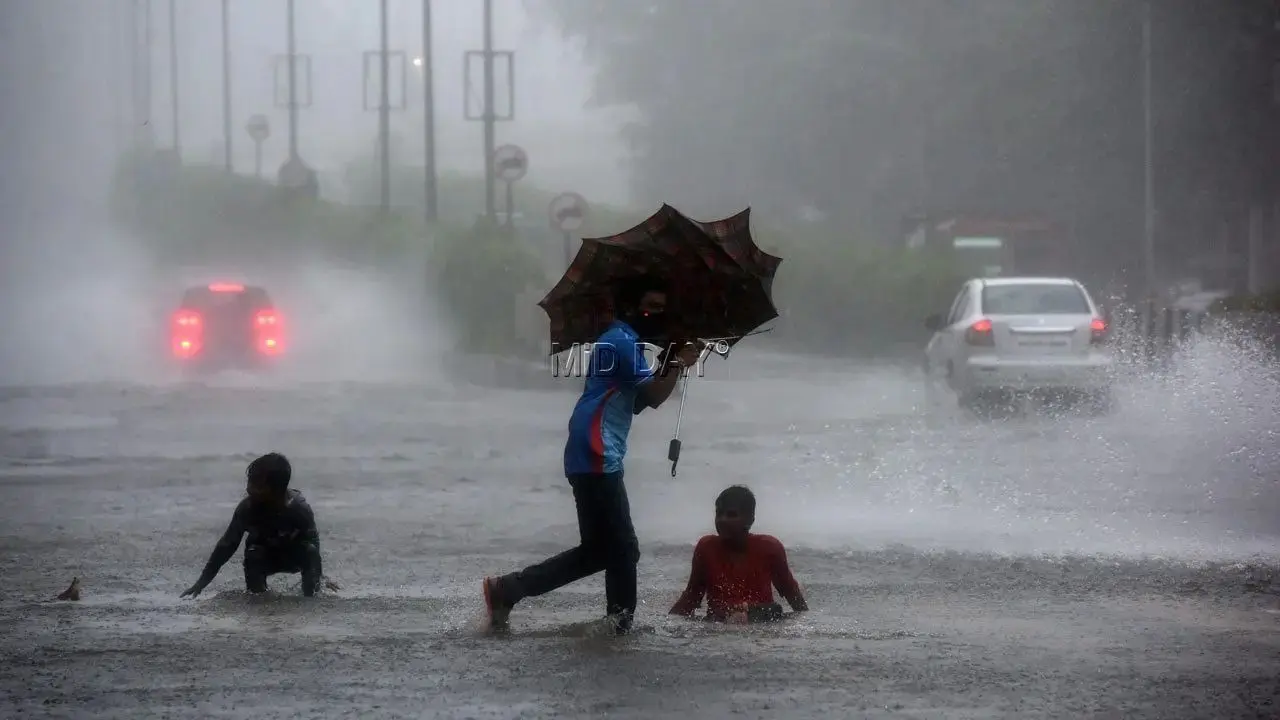
Mumbai is on alert as the India Meteorological Department forecasts heavy rainfall and strong surface winds on July 2 across the city and its adjoining districts, following early and intensified monsoon activity that has already pushed rainfall totals beyond seasonal averages. The IMD has issued a yellow alert for Mumbai, Thane, and Palghar, indicating the likelihood of heavy rain at isolated locations. A more severe orange alert has been issued for Raigad, anticipating intense downpours that could impact mobility, civic infrastructure, and vulnerable settlements.
These warnings are part of the department’s extended district-level forecast, which signals sustained weather activity through the first week of July. Rainfall data for the 24 hours ending at 8:30 am on June 29 recorded 5.8 mm at Colaba and 6.8 mm at Santacruz. While these figures may not appear extreme in isolation, they have contributed to cumulative totals well above normal: Colaba has received 591.4 mm of rainfall so far—74.5 mm more than average—while Santacruz has logged 511.2 mm, marginally exceeding its norm. Officials confirmed that the southwest monsoon covered the entire Indian landmass by June 29—nine days ahead of the typical July 8 timeline. Meteorological models attribute this accelerated spread to strong low-level westerlies and favourable pressure gradients across the Arabian Sea and western coast. Mumbai’s early encounter with robust monsoonal flows has heightened weather volatility at a time when the city is preparing for peak seasonal impact.
Adding to the current weather scenario, the IMD also observed gusty winds sweeping across the Mumbai Metropolitan Region. Santacruz reported wind speeds touching 50 kmph, while Palghar recorded gusts of 46 kmph. Coastal and semi-urban stretches have been advised to secure temporary structures, avoid marine activity, and exercise caution as wind conditions may remain unstable. Mumbai’s civic authorities face a seasonal challenge with each monsoon onset—balancing the benefits of water replenishment against the recurring threats of flooding, traffic paralysis, and service disruption. As the city absorbs higher-than-average precipitation, concerns are mounting over the efficiency of its stormwater drainage, many of which still depend on colonial-era outflows ill-equipped to handle today’s volumes.
Experts in urban planning and climate resilience point to the disconnect between Mumbai’s rapid vertical expansion and its lagging drainage and road infrastructure. Built over reclaimed wetlands, the city has lost significant natural absorption capacity. Mangrove degradation, blocked river outlets, and concretised open spaces have collectively reduced the city’s resilience to high-intensity rainfall events. In response to the alerts, the Brihanmumbai Municipal Corporation (BMC) stated that all 17 major pumping stations are operational, and emergency response teams are on standby across critical flood-prone zones including Sion, King’s Circle, Andheri Subway, and Kurla. The BMC also confirmed that its automated rainfall-based flood forecasting system will remain active through July.
Civic officials emphasised that de-silting operations were completed in June across over 300 km of open drains, yet they acknowledged that torrential downpours can still overwhelm city systems. Monsoon tides—often synchronising with heavy rains—are another major risk factor, with high tides forecast to reach over 4.5 metres on July 2 and 3, heightening the risk of backflow flooding in low-lying areas. Meteorologists have noted a growing trend of monsoon unpredictability in recent years, with longer dry spells followed by sharp, intense bursts of rain. Such fluctuations are being closely linked to broader climate change patterns, including increased moisture levels in the air, rising sea surface temperatures, and erratic wind shear across peninsular India.
The challenge for Mumbai now lies in turning forecasts into foresight. Environmental specialists have repeatedly urged investment in decentralised rainwater harvesting, restoration of urban wetlands, and a city-wide greening initiative to revive lost buffer zones. These long-term strategies are essential not only to manage water but to reduce urban heat and enhance biodiversity within the urban fabric. Meanwhile, residents have been advised to remain alert and limit outdoor travel on July 2, especially in the evening and night hours when rain activity is expected to peak. Local trains and suburban rail networks—already vulnerable to track flooding—are being monitored, and contingency plans are being developed to maintain essential services during the high-alert period.
As weather systems intensify across coastal Maharashtra, the Mumbai region’s readiness will once again be tested—not merely in terms of flood mitigation but in how equitably and efficiently the city responds to risk. Stronger winds and heavier rainfall are no longer aberrations—they are becoming the seasonal standard. With climate volatility now a recurring feature, the time for reactive response is over. Mumbai’s future, increasingly defined by climate extremes, demands that monsoon preparedness evolve beyond manual cleanups and toward systemic, nature-positive, and community-inclusive planning models. Whether the city can rise to that challenge this season remains to be seen.
Also Read : Himachal Red Alert Shuts Shimla‑Kalka Railway
