


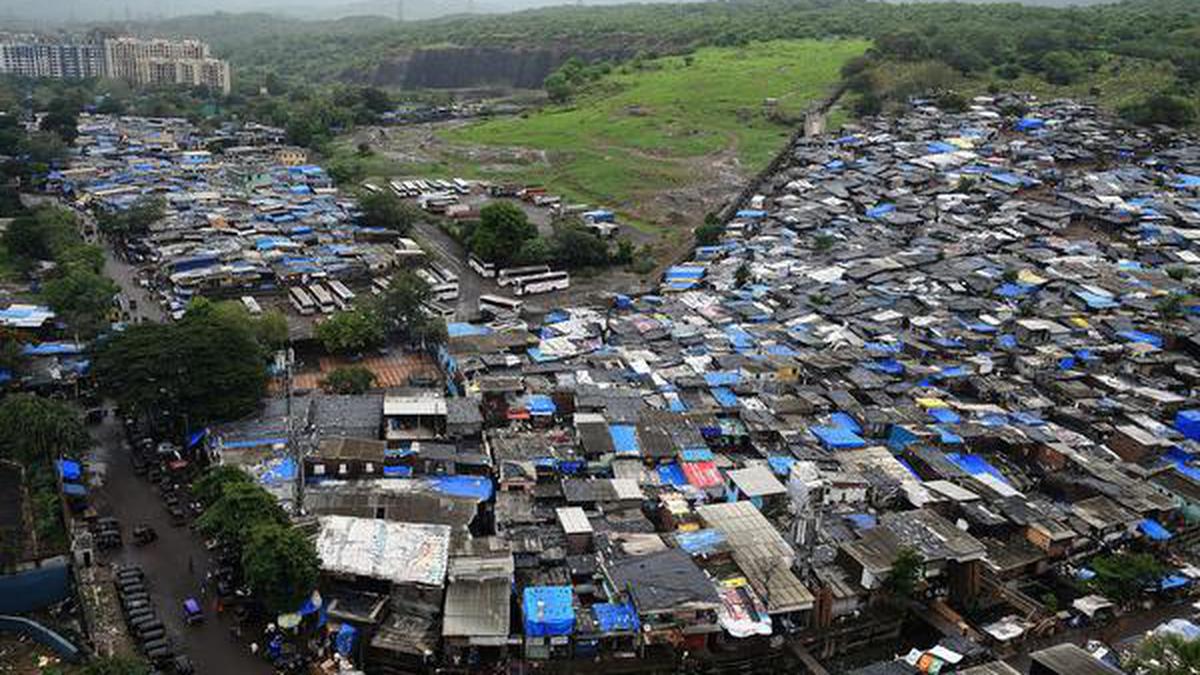
Mumbai suburban authorities are backing a proposal to reclassify land near Sanjay Gandhi National Park (SGNP) as non-forest, potentially preventing the forced relocation of nearly 80,000 slum households settled along its periphery.
The move aims to enable in-situ rehabilitation for residents of areas such as Ketkipada in Dahisar, stretching through to Dindoshi, rather than displacing them to locations outside the city like Thane. The proposal is seen as both a political and humanitarian response to long-standing legal and environmental complexities. The resolution, passed unanimously during the Mumbai Suburban District Planning Committee meeting, urges the Maharashtra government to submit this revised land classification to the Bombay High Court, which is currently reviewing a 1997 petition demanding the removal of encroachments on forest land. The petition, filed by an environmental group, criticises successive state administrations for failing to act on the court’s directive to clear forest lands of unauthorised settlements.
Mumbai officials argue that many of these settlements predate the 1970s, when forest land acquisitions included areas already occupied by informal communities. The recent inclusion of sections of Aarey Colony into the SGNP boundary has reignited debates over what constitutes forest land, especially in already urbanised and deforested zones. According to experts involved in the discussion, this legal ambiguity presents an opportunity to provide relief to thousands of families who have lived in these neighbourhoods for decades, contributing to the city’s economy but denied formal housing rights. Urban planning experts stress that forcibly relocating such a massive population would not only disrupt livelihoods but also overload receiving regions like Thane, where the state government has identified ten land parcels for potential resettlement. Shifting residents away from their existing communities could sever essential social and economic ties, particularly affecting children’s education, healthcare access, and employment.
Political motivations may also be at play, as any large-scale relocation would impact voter demographics in 15 to 20 municipal wards ahead of the upcoming BMC elections. However, beyond electoral calculations, officials say the focus must remain on humane urban development and legal clarity around land use. The call for reclassification is being framed not as a disregard for forest preservation, but as a way to regularise already degraded land that no longer serves ecological functions. Senior officials advocating this position argue that redevelopment of the area, with adequate housing built on-site, would be a more sustainable and socially responsible solution. Such a redevelopment plan could include transferring any unoccupied or restored green space to the Forest Department, maintaining ecological balance while fulfilling constitutional rights to housing.
An earlier suggestion by urban planning experts proposed that residents be resettled on a 10-acre plot in Kandarpada, Dahisar, earmarked for project-affected persons (PAP). However, officials say in-situ redevelopment remains the preferred path, offering continuity and security for existing residents without placing pressure on peripheral districts already struggling with infrastructure demands. The Bombay High Court has granted the state’s Forest Department six weeks to examine the legality of existing settlements and determine residents’ eligibility for free housing. The outcome of this process will be crucial in shaping future urban housing policy for encroachments on ecologically sensitive but heavily populated land in Mumbai.
If the court supports the proposal to reclassify certain SGNP-adjacent lands as non-forest, the matter may be escalated to the central government for a final decision. Legal experts note that any precedent set here could influence slum regularisation efforts across India, particularly in cities grappling with overlapping claims of conservation and habitation. For now, Mumbai’s push to protect SGNP slum households signals a growing willingness among city officials to prioritise inclusive and sustainable solutions over displacement. In the face of complex legal and environmental considerations, the city appears to be leaning toward a balanced approach that upholds both human rights and ecological responsibility.
Also Read : Mumbai: 162 Trains Cancelled Over Weekend Due to Kandivli Block
