


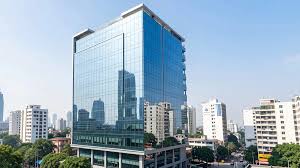
Mumbai’s flexible workspace market has crossed another milestone, with managed office operator Smartworks leasing 182,300 sq ft at The Square in Andheri (East), taking its total Mumbai portfolio beyond 2 million sq ft. The transaction underlines sustained enterprise demand for scalable office formats in one of India’s most supply-constrained commercial markets.
The newly secured space is located within The Square, a commercial development by Lloyds Realty Developers. Positioned near Chhatrapati Shivaji Maharaj International Airport and the MIDC business district, the asset benefits from proximity to key transit nodes, including Metro connectivity in Andheri East. For occupiers, such accessibility remains central to talent retention and commute efficiency. With this addition, Mumbai office leasing by managed workspace providers appears to be consolidating around large-format, amenity-rich campuses rather than smaller coworking centres. Market analysts note that corporates are increasingly favouring plug-and-play environments that allow rapid headcount adjustments without long-term ownership risk. The building’s pre-certified IGBC Gold status reflects growing alignment between institutional occupiers and environmental performance benchmarks. As commercial tenants adopt ESG-linked reporting standards, green certifications, energy-efficient systems and indoor air quality controls are becoming competitive differentiators. In dense urban zones like Andheri, such features also contribute to lower operational footprints over time.
The latest expansion follows sizeable managed campus deals in Vikhroli and Navi Mumbai, signalling a broader Mumbai office leasing trend: decentralised growth beyond the traditional Nariman Point–BKC corridor. Infrastructure upgrades including metro rail extensions and improved east-west linkages are gradually reshaping demand geography across the metropolitan region. Industry observers suggest that the managed office model has matured from short-term coworking to enterprise-grade real estate solutions. Operators typically lease entire buildings or large floors, invest in fit-outs and technology infrastructure, and sub-license space to corporate clients. This shifts capex burdens away from occupiers while offering developers predictable rental streams. However, experts caution that sustained absorption will depend on macroeconomic stability and job growth in sectors such as technology, financial services and consulting. Hybrid work policies continue to influence space planning, with many companies opting for collaborative layouts rather than dense desk configurations.
For Mumbai’s commercial real estate ecosystem, the deal underscores two structural shifts: the institutionalisation of flexible workspace and the premium placed on transit-oriented development. As the city balances economic expansion with climate and infrastructure pressures, well-connected, energy-efficient office stock is likely to define the next phase of Mumbai office leasing growth.
Also Read: Mumbai infrastructure crisis tests civic trust
Mumbai office leasing expands in Andheri East
