


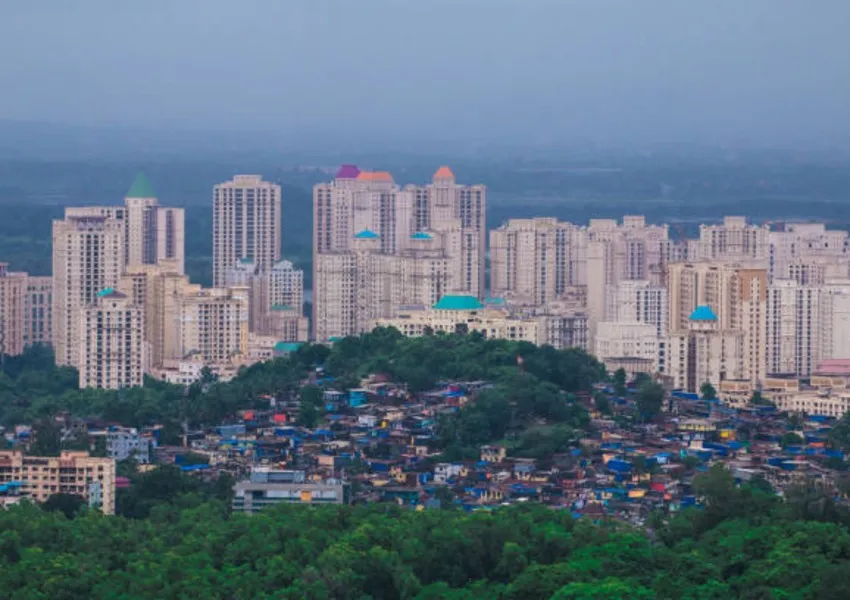
Listed developer Oberoi Realty has secured an 11-acre land parcel in Mumbai for approximately Rs 54 billion, reinforcing sustained competition for scarce urban land in India’s most expensive property market. The transaction underscores continued confidence in premium residential and mixed-use development potential across the Mumbai Metropolitan Region.
The parcel, located within a high-demand urban corridor, is expected to be developed into a large-scale project comprising luxury residences and potentially commercial components, subject to regulatory approvals. Analysts estimate that the land acquisition cost translates into one of the higher per-acre valuations seen in recent Mumbai transactions, reflecting limited supply of sizeable contiguous plots. In a city where redevelopment dominates new supply, outright acquisition of large greenfield or underutilised tracts remains rare. “Securing scale in Mumbai is increasingly difficult,” said a real estate investment advisor tracking land deals. “Developers with strong balance sheets are moving decisively when opportunities arise, particularly in micro-markets with proven absorption.” The Rs 54 billion outlay signals a strategic bet on sustained demand in the upper-end housing segment, which has shown resilience despite periodic moderation in overall transaction volumes. Premium and luxury homes have continued to attract high-net-worth buyers, non-resident Indians and business families seeking long-term asset allocation in gateway cities.
However, the economics of such acquisitions hinge on careful phasing, pricing discipline and infrastructure readiness. Construction input costs, compliance obligations and environmental clearances in Mumbai significantly influence project viability. Coastal regulation norms and climate risk assessments are increasingly shaping master planning decisions, especially in low-lying or infrastructure-intensive zones. Urban planners note that large parcels also offer opportunities to integrate sustainability at scale including energy-efficient design, water recycling systems, mobility integration and open space preservation. “With projects of this magnitude, developers can embed climate-responsive architecture and transit-oriented design from inception,” said an urban development consultant. The deal comes amid a broader recalibration of Mumbai’s land market, where institutional capital and listed developers are playing a more dominant role in structured acquisitions. Access to funding and execution capability have become critical differentiators, particularly as regulatory frameworks emphasise transparency and timely delivery. For the Mumbai Metropolitan Region, high-value land transactions such as this reflect enduring investor belief in the city’s economic fundamentals from financial services and technology to media and trade.
Yet experts caution that balanced growth will require parallel focus on mid-income and affordable housing, as well as infrastructure expansion to prevent further strain on urban services. As project details emerge, the development of the 11-acre parcel will be closely watched as an indicator of how Mumbai’s next wave of large-format housing integrates density, sustainability and long-term value creation in a land-starved metropolis.
Also Read: Agami Realty brand strategy shifts
Mumbai Oberoi Realty wins prime land
