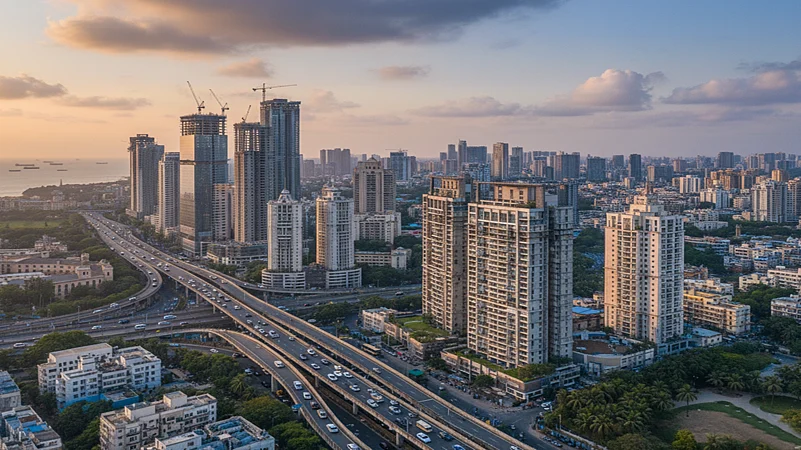
Mumbai New Home Prices Outpace Resale Market Trends
New residential properties in Mumbai, Pune and adjoining urban markets are commanding a notable premium over older resale units, with recent data showing new‑build prices outstripping resale by significant margins. This shift reflects evolving buyer preferences — favouring modern designs, infrastructure‑linked developments and lifestyle‑oriented communities — with consequences for affordability, market dynamics and long‑term urban growth.
According to a real estate sector report, the premium on new homes compared with resale in Mumbai has reached around 23%, while in Pune it has climbed to approximately 22%. These differentials illustrate how modern housing — particularly projects tied to transport connectivity, mixed‑use planning and developer branding — is increasingly valued by end‑users and investors alike. Urban planners and property analysts suggest that this divergence is driven by structural changes in demand. Buyers are prioritising amenities such as energy‑efficient design, community facilities, smart‑city features and proximity to employment and transit corridors — criteria that older stock often cannot satisfy without comprehensive redevelopment. While these shifts are market‑led, they also align with broader trends in Indian cities where quality of living and climate resilience are reshaping residential landscapes.
In Mumbai, longstanding land constraints and intensifying competition for limited space have already pushed average prices higher than in many other Indian cities. The current premium for new homes underscores how scarcity and buyer preferences interact: pockets with better connectivity and infrastructure see sharper price gains. This trend aligns with wider national patterns in premium housing markets, where luxury and mid‑to‑upper segment housing continue to appreciate even as overall sales volumes fluctuate. For Pune — a city experiencing rapid expansion in IT, manufacturing and service sectors — the strength of new home price premiums signals fresh interest from young professionals and families seeking modern, ready‑to‑move‑in units near employment hubs. Although resale homes remain an important segment for affordability, especially for price‑sensitive buyers, the premium gap suggests a clear tilt towards ready supply with higher specifications.
This pricing divergence has tangible implications for urban affordability and equity. Middle‑income households, already grappling with rising living costs in major metropolises, may find access to quality housing constrained if new units consistently command substantial markups over resale. Planners and policymakers have noted that balanced housing ecosystems — supported by incentives for affordable segments and inclusive development frameworks — are crucial to ensuring that urban growth remains broad‑based rather than skewed toward premium markets.Developers acknowledge the market shift but caution that supply dynamics will evolve. Some point to potential moderation as more projects come to completion and micro‑markets diversify. Others highlight risk factors such as rising input costs and financing conditions that could weigh on future pricing trajectories.
For cities like Mumbai and Pune, where infrastructure investments — from metro lines to expressways — continue to redefine urban geography, the interplay between new home premiums and resale affordability will be a key factor shaping residential choices over the next few years. Ensuring that growth does not outpace inclusion will require coordinated policy responses, innovative housing solutions and sustained investment in sustainable, people‑centric urban environments.