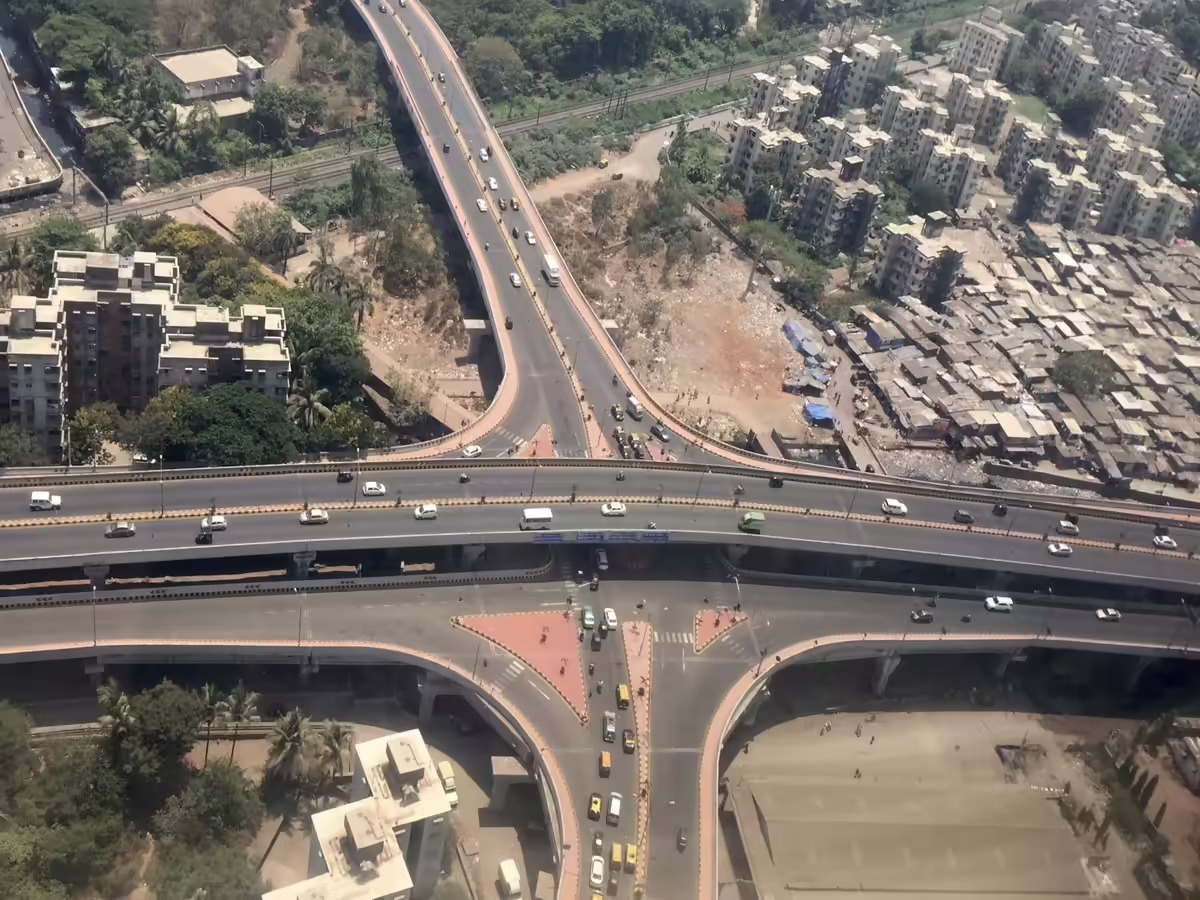
Mumbai’s congested south-central corridor has regained a critical east–west connection with the opening of a new flyover linking Tardeo, Nagpada and Mumbai Central, restoring a route that had remained disrupted for nearly two years. The project, delivered by the city’s civic administration, replaces a colonial-era bridge deemed structurally unsafe and reflects a broader push to modernise ageing urban infrastructure while improving daily commute efficiency.
The new structure reconnects neighbourhoods divided by railway lines near Mumbai Central railway station, a location that handles some of the city’s heaviest passenger and vehicular movement. For residents and businesses in south Mumbai, the reopening eases pressure on parallel arterial roads that had absorbed diverted traffic since the old bridge was dismantled. Urban mobility experts say the project addresses a long-standing gap in east–west connectivity, a structural weakness in Mumbai’s transport network. While north–south movement is supported by rail corridors and major roads, cross-city travel often depends on a limited number of bridges and flyovers. The new link is expected to reduce congestion on key surrounding roads and shorten travel times between commercial and residential precincts.
Built to contemporary safety standards, the flyover spans 333 metres, including sections over active railway tracks. It features a 7-metre-wide carriageway and pedestrian footpaths on both sides, signalling an attempt to balance vehicular flow with safer walking infrastructure. Civic engineers note that replacing a 130-year-old bridge with a modern structure significantly lowers long-term maintenance risks and improves resilience against increasing traffic loads and climate stress. The project was executed by the Brihanmumbai Municipal Corporation in coordination with railway authorities and traffic police. Despite complex site constraints, including utility diversions, rehabilitation of affected occupants and legal clearances, construction was completed well ahead of the contractual deadline. Officials involved in the project attribute the timeline to tighter inter-agency coordination and phased construction planning that minimised disruptions.
From an urban development perspective, such projects are increasingly viewed as economic enablers. Improved connectivity enhances access to employment hubs, supports small businesses reliant on footfall and logistics, and reduces fuel consumption caused by idling traffic. Transport economists point out that even modest reductions in congestion can deliver cumulative productivity and emissions benefits in a dense city like Mumbai. However, planners caution that flyovers alone cannot solve congestion. “Road infrastructure upgrades must be paired with public transport improvements and pedestrian-friendly design,” said an urban mobility specialist. The inclusion of footpaths on the new structure is seen as a positive step, though experts argue that last-mile connectivity and junction redesigns will determine its full impact.
As Mumbai continues to replace legacy bridges with modern links, the focus is shifting from reactive repairs to planned renewal. The reopening of this east–west flyover demonstrates how targeted infrastructure upgrades can restore urban continuity—provided they are integrated into a wider, people-first mobility strategy.
Mumbai New East West Flyover Reopens Key Corridor