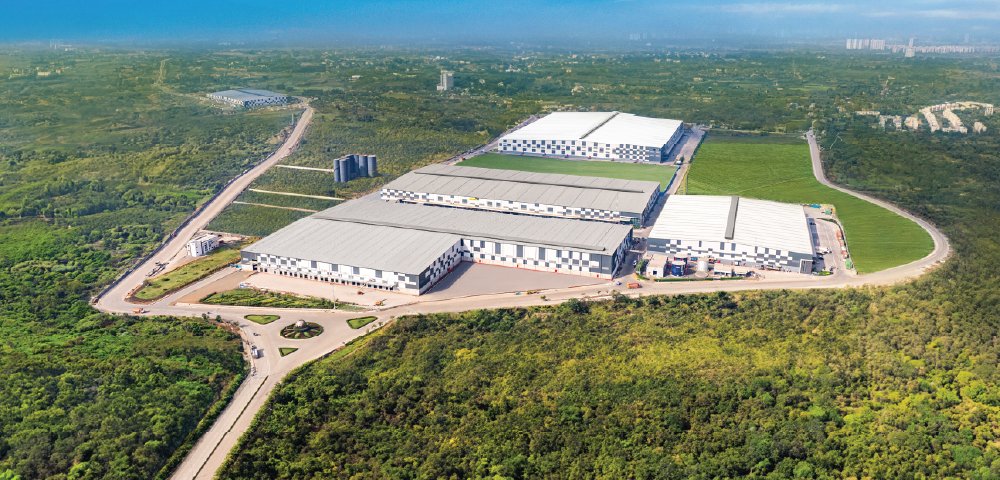
India’s industrial and warehousing stock has expanded significantly across its leading urban centres, reaching approximately 549 million square feet by the end of 2025. The growth, concentrated in cities such as Mumbai and National Capital Region, signals a structural shift in how logistics infrastructure is supporting consumption, manufacturing, and regional connectivity.
The rise in industrial warehousing stock reflects a broader transformation in India’s urban economy, where supply chains are becoming more decentralised and technology-driven. Industry assessments indicate that the eight primary markets including Bengaluru, Chennai, Pune, Ahmedabad, Kolkata and Hyderabad are collectively shaping the next phase of logistics-led urbanisation. At the centre of this expansion, Mumbai continues to anchor the industrial warehousing stock with the largest share, supported by port connectivity, dense consumption clusters, and established logistics corridors. The National Capital Region follows closely, benefiting from its strategic location near manufacturing hubs and its extensive highway network linking northern India.
Urban planners note that this growth is not merely about storage capacity, but about the reconfiguration of city economies. Warehousing clusters are increasingly emerging along peripheral zones and freight corridors, reducing pressure on dense urban cores while enabling faster goods movement. This decentralisation is expected to improve last-mile delivery efficiency, particularly in rapidly growing metropolitan regions. The expansion also points to the increasing role of third-party logistics providers, e-commerce firms, and manufacturing companies in shaping demand. As consumption patterns evolve and supply chains become more resilient, industrial warehousing stock is being developed with higher standards including automation, energy efficiency, and climate-responsive design. However, the rapid scale-up presents challenges. Experts highlight the need for integrated land-use planning, improved multimodal transport links, and sustainable construction practices. Without these, logistics growth could exacerbate congestion, emissions, and land-use conflicts in peri-urban areas.
Notably, the availability of additional development-ready land within organised warehousing parks suggests that supply is likely to keep pace with near-term demand. This could stabilise rental trends while encouraging more institutional investment into the sector. As India positions itself as a global manufacturing and consumption hub, the expansion of industrial warehousing stock will remain closely tied to infrastructure delivery, policy alignment, and environmental considerations. The next phase of growth is expected to hinge on how cities balance economic opportunity with sustainable and inclusive urban development.