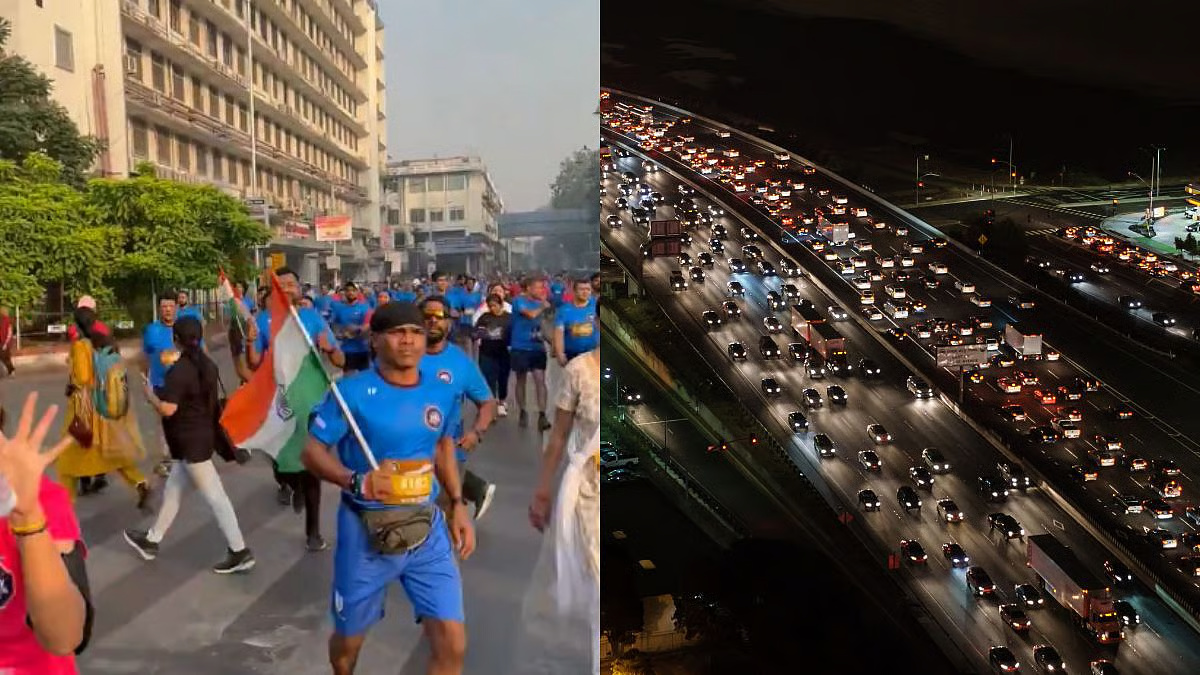
Mumbai’s civic and transport networks underwent significant adjustments on Sunday as South Mumbai hosted the annual Navy Marathon, an event that has become a major fixture in the city’s public calendar. To ensure safety for thousands of runners and manage crowd movement, authorities reorganised traffic flows across key corridors and altered over 30 bus routes operated by the city’s public transport undertaking.
The restrictions, which remained effective from midnight until the afternoon, resulted in full or partial closure of several arterial roads, including Peddar Road, Bhulabhai Desai Road, Veer Nariman Road and Maharshi Karve Road. These roads form the backbone of east–west and north–south connectivity in the island city, making the temporary shutdown particularly impactful for morning commuters. A traffic official said the measures were essential to create a safe, unobstructed running route in a dense urban environment. The city’s bus agency faced one of the largest operational realignments of its recent marathon-day deployments. Routes that typically run through the race corridor—such as those connecting Haji Ali, Worli, Churchgate and Marine Lines—were either curtailed or suspended entirely. Over two dozen other services were redirected via alternative networks, including the new coastal road, to minimise delays and prevent bottlenecks near sealed intersections. A transport planner noted that events of this scale highlight the operational flexibility required in large, multi-modal cities.
While disruptions were widely felt, officials emphasised that early advisories helped reduce confusion. Public announcements issued in advance encouraged commuters to plan non-essential travel later in the day and to rely on rail services wherever possible. Mobility experts observe that coordinated information-sharing, particularly during high-impact events, is increasingly critical for building commuter trust and reducing frustration in congested cities such as Mumbai. Beyond immediate traffic concerns, the marathon offers insight into how cities can use public events to foreground health, community participation and the use of reclaimed streets. Urban planners argue that temporary pedestrianisation—though disruptive—can spark broader discussions on equitable road use, safer walking environments and improved air quality. They note that events like these can encourage more sustainable mobility choices when supported by seamless transit arrangements.
However, the experience also underscores the city’s vulnerability to corridor closures and the limited redundancy in certain road sections. Experts suggest that long-term solutions may include diversifying transit routes, strengthening bus-priority corridors and ensuring real-time communication systems for large-scale events. A balanced approach, they argue, allows cities to celebrate public sporting events while still maintaining accessibility for essential travel. As the city resumes normal traffic patterns, officials say the lessons from this year’s edition will inform future mobility planning. The marathon’s growing popularity will require more integrated strategies to ensure that large gatherings coexist with a functional, inclusive and sustainable urban transport network.
Mumbai Navy Marathon Shuts Key Roads And Disrupts Over Thirty Best Bus Services