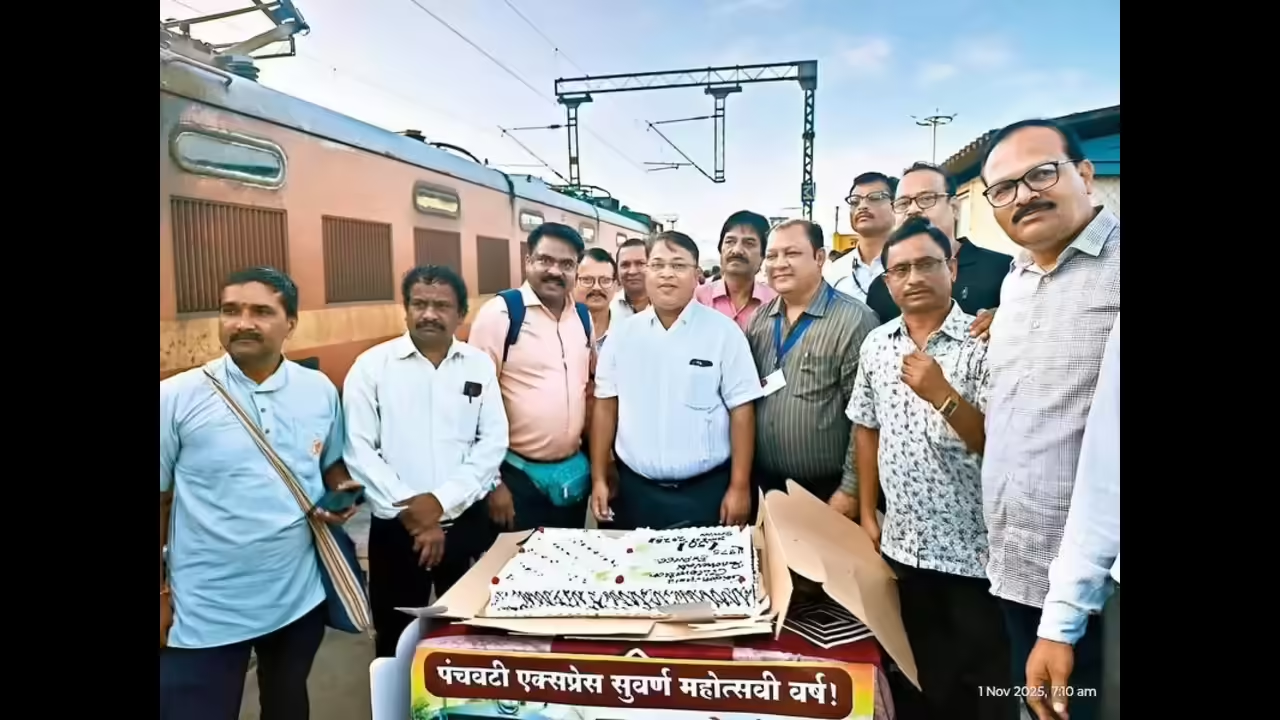
Mumbai Nashik Panchavati Express Completes 50 Glorious Years As Commuter Lifeline Today
The Panchavati Express, one of Central Railway’s most enduring and dependable trains, has completed 50 years of uninterrupted service, marking a significant milestone in the transport history of Maharashtra and reinforcing its role as a lifeline for thousands of Mumbai–Nashik commuters.
Launched on 1 November 1975, the train was conceived to address rising passenger volumes along the fast-industrialising Mumbai–Nashik–Manmad corridor. Over the decades, it has become more than a transport service an emotional and economic thread connecting workers, students, traders, and farmers who depend on daily mobility for their livelihoods.Railway officials noted that the Panchavati Express was introduced to meet growing demand during the 1970s, when Nashik was emerging as a major hub for industry and agriculture. Named after the sacred Panchavati area near Nashik believed to be linked with the epic Ramayana the train created an immediate cultural resonance, blending faith, functionality, and regional pride.
Covering approximately 258 km between Mumbai and Manmad in under five hours, the Panchavati Express became synonymous with punctuality and reliability. Over the years, its service has evolved with upgraded chair cars, enhanced safety systems, improved interiors, and energy-efficient design. The train’s record of consistent on-time performance earned it the reputation of being an “iconic express” within the Central Railway network.
For the Nashik–Mumbai region, the Panchavati Express symbolises the integration of urban economies. Daily passengers from office workers and students to agricultural traders from Lasalgaon and Niphad rely on it for affordable, dependable, and sustainable travel. As industrial estates expanded and Nashik’s agricultural exports grew, the train’s connectivity fostered economic inclusion by linking smaller towns with Mumbai’s metropolitan opportunities
.
Railway officials have indicated that the golden jubilee year will be marked with service improvements and passenger-focused initiatives. Industry observers believe that the train’s endurance offers valuable lessons for India’s broader mobility ecosystem where reliable, energy-efficient intercity transport remains crucial to sustainable regional growth.Experts also highlight that reviving and modernising legacy routes such as the Panchavati Express can play a key role in reducing highway congestion and carbon emissions.
“Strengthening rail-based commuting corridors between satellite cities and metros is essential for future-ready, low-carbon urban mobility,” noted a transport planner.
Half a century since its launch, the Panchavati Express continues to carry more than passengers it carries decades of memories, livelihoods, and a shared belief in accessible, sustainable public transport. Its journey reflects India’s evolving commitment to connecting cities and communities through safe, inclusive, and environmentally conscious mobility.