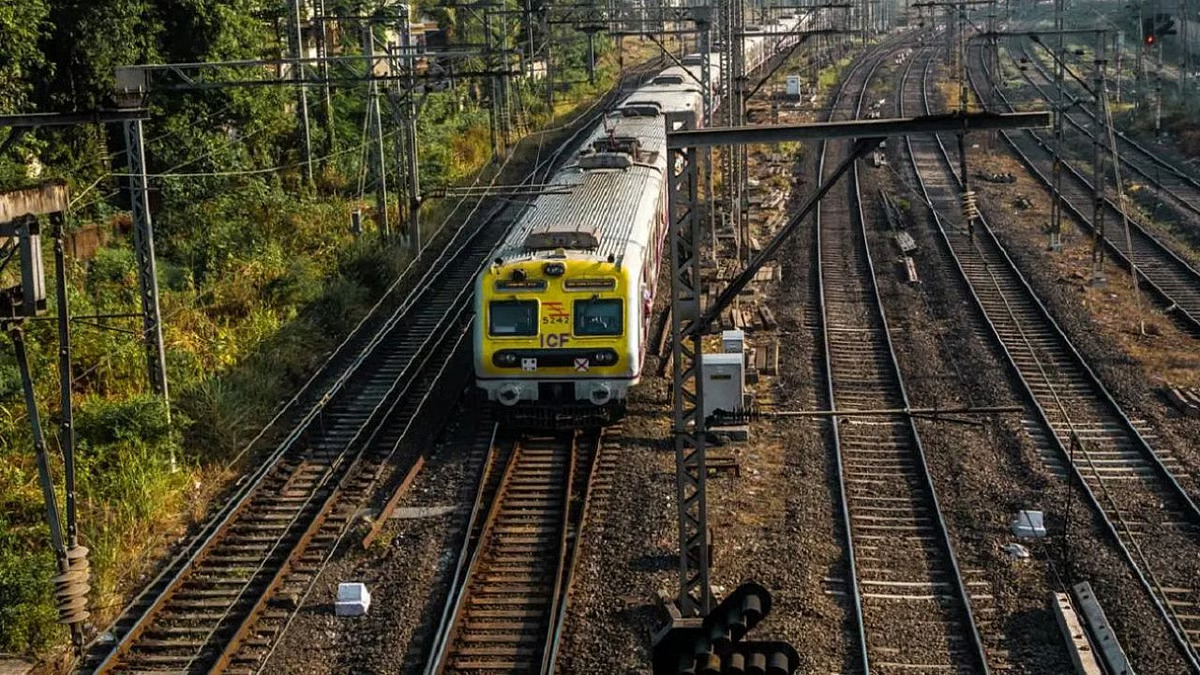
Plans to introduce a direct local train service between Mumbai and Nashik have moved into an active implementation phase, signalling a significant shift in regional rail connectivity across northern Maharashtra. The proposed service aims to extend suburban-style rail travel beyond its current limits, addressing long-standing commuter demand while supporting economic integration between two of the state’s most important urban and industrial centres.
At present, Mumbai’s suburban local train network under Central Railway operations terminates at Kasara. The new proposal envisages extending local services deeper into the Sahyadri corridor, connecting Mumbai directly with Nashik. Railway officials indicate that this will require substantial capacity augmentation, including the construction of additional rail lines and major tunnelling works through the ghat section. As part of the project, a third and fourth rail line are planned between Kasara and Manmad, one of the most constrained and operationally sensitive stretches on the network. Nearly 18 tunnels are proposed along this alignment to ease gradients and improve train speeds across the mountainous terrain. Transport planners say this engineering intervention will allow more reliable, non-stop services while reducing congestion caused by freight and long-distance passenger trains sharing the same tracks.
The expansion is expected to upgrade several intermediate stations, including Kasara, Igatpuri and Deolali, transforming them into modern regional transit hubs. Planned improvements include enhanced passenger amenities, parking facilities, upgraded waiting areas, and digital ticketing systems. Urban mobility experts note that station redevelopment will be critical in ensuring last-mile connectivity and encouraging a shift from private vehicles to rail for intercity travel. Beyond commuter convenience, the Mumbai–Nashik local train project is being viewed as a catalyst for regional economic growth. Both cities anchor major manufacturing, logistics, and agro-industrial clusters, while also hosting growing education and services sectors. Faster, more predictable rail travel is expected to benefit daily commuters, students, and small businesses by reducing travel time and costs, while widening labour market access across the corridor.
Land acquisition for the new rail infrastructure has commenced, with statutory notifications already issued. Railway administrators say early progress on land and environmental clearances will be essential to keeping the project on schedule, particularly given the ecological sensitivity of the Sahyadri range. Balancing construction activity with climate resilience and slope stability will be a key challenge during execution. Looking ahead, transport officials indicate that the Mumbai–Nashik local service could form the backbone of a wider suburban-style rail network extending further into north Maharashtra. If implemented as planned, the project could redefine regional mobility by offering a low-carbon, high-capacity alternative to highway travel, strengthening social and economic ties while easing pressure on roads.
Mumbai Nashik Local Train Project Gains Momentum