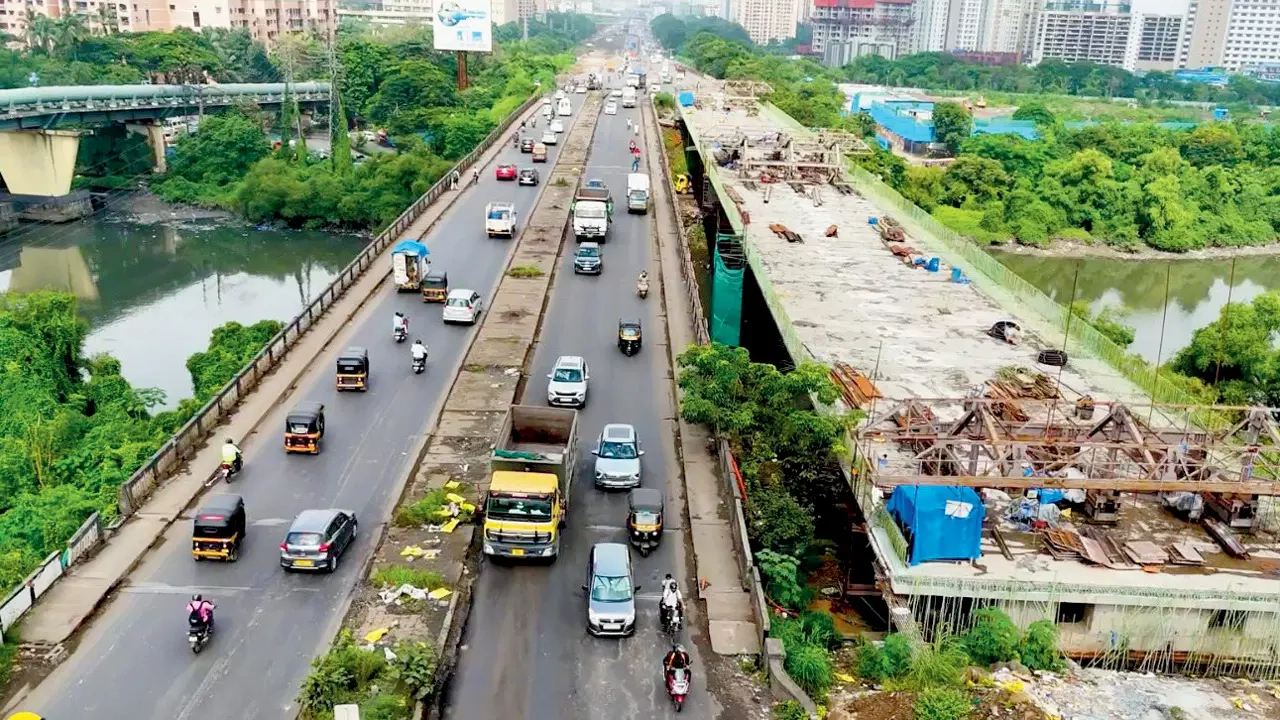
Daily commuters and freight operators along the Mumbai–Nashik highway may soon see long-awaited relief as the widening of a key stretch between Thane and Vadape approaches completion. The project, designed to expand the corridor’s capacity and streamline access to the Mumbai–Nagpur Samruddhi Expressway, is expected to significantly reduce travel times across one of the Mumbai Metropolitan Region’s most congested arterial routes.
The upgrade addresses a chronic bottleneck that has strained both passenger and commercial movement since construction began in mid-2021. Once fully operational, the expanded highway is expected to support faster regional connectivity, improve logistics efficiency for industrial clusters around Bhiwandi, and reduce pressure on parallel urban roads. Project authorities indicate that more than four-fifths of the main carriageway along the 28.8-kilometre Majiwada–Vadape stretch has already been widened from four to eight lanes. Supporting infrastructure has also progressed steadily, with most of the planned service roads now ready for use. The remaining sections are scheduled for completion within the current quarter, aligning with the project’s final delivery timeline.
Beyond additional lanes, the project incorporates several grade-separated structures intended to eliminate conflict points that have historically slowed traffic. Multiple flyovers and creek crossings are nearing readiness, while a railway overbridge remains under construction and is expected to be completed shortly thereafter. A series of underpasses at key village and neighbourhood access points are also being developed to improve local connectivity and pedestrian safety. Urban transport planners say the project’s importance extends beyond easing daily congestion. The Mumbai–Nashik highway functions as a critical economic spine, linking the Mumbai region with northern Maharashtra and supporting the movement of goods from warehousing, manufacturing, and agri-logistics hubs. With traffic volumes expected to rise further following the operationalisation of the Samruddhi Expressway, the widening is seen as essential for long-term network resilience.
Currently, motorists often spend close to two hours navigating the under-construction stretch, particularly during peak freight movement hours. Heavy vehicle traffic serving logistics parks around Bhiwandi has compounded delays, affecting both commuters and businesses dependent on predictable travel times. Officials overseeing the project note that tolling infrastructure is planned as part of the financial recovery model, reflecting a shift towards user-funded highway development. While toll operations are yet to begin, authorities maintain that improved travel speeds, reduced fuel consumption, and lower emissions from idling traffic will offset the added cost for most users.
From a sustainability perspective, transport experts point out that capacity augmentation must be paired with traffic management and public transport integration to deliver lasting benefits. As the highway nears completion, attention is likely to turn towards maintaining road safety, managing induced demand, and ensuring that improved regional connectivity translates into equitable economic gains across the metropolitan fringe.
Mumbai Nashik Highway Upgrade Nears Traffic Relief