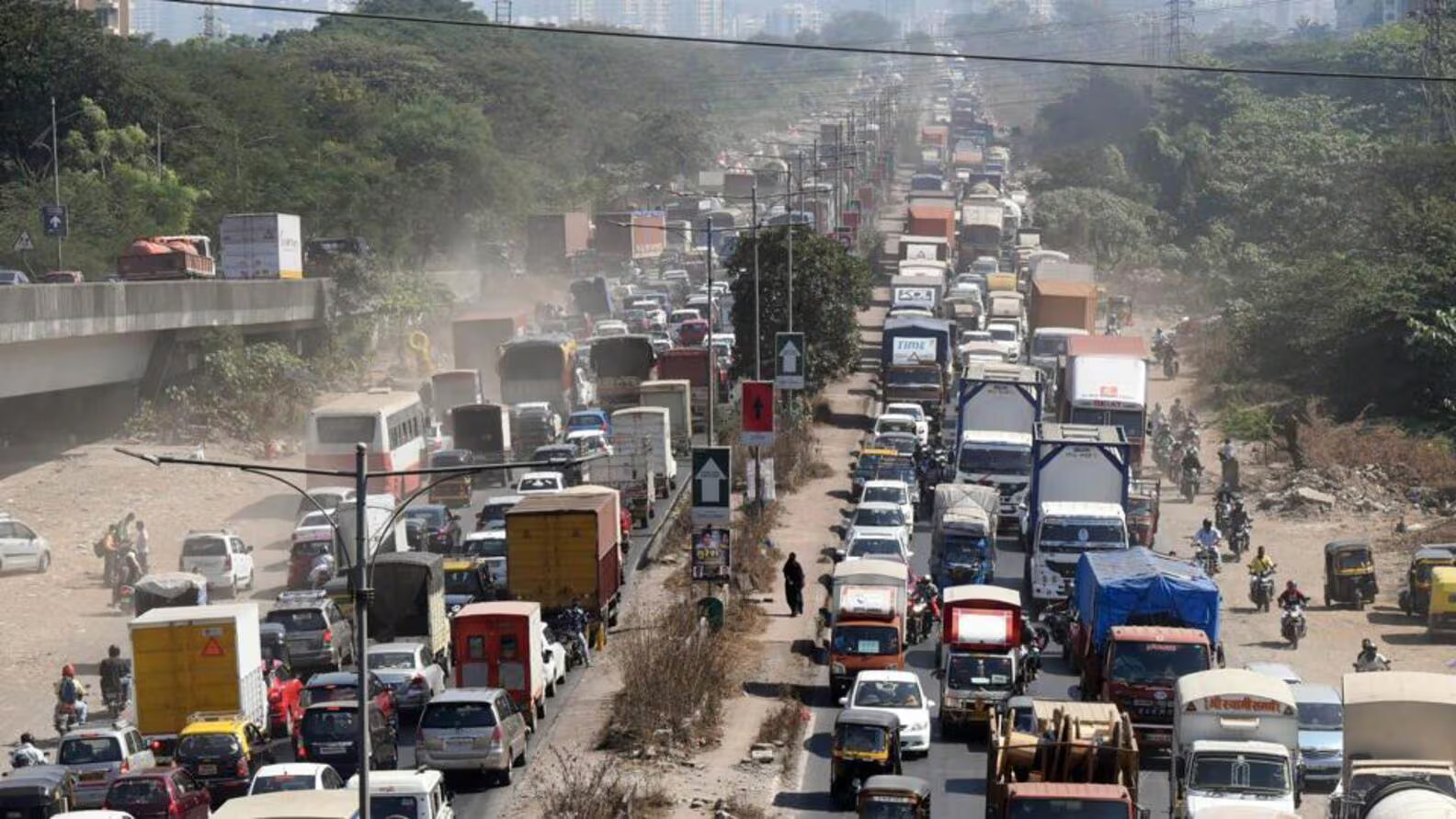
Mumbai authorities have initiated repair work on the Old Saket Bridge and its approach roads along the Mumbai-Nashik Highway, a strategic move aimed at addressing chronic congestion issues on this critical transport corridor. The restoration follows the recent opening of the New Saket Flyover, which underwent successful structural weight testing and has already alleviated part of the commuter load toward Nashik.
The Mumbai-Nashik Highway, particularly the stretch passing through Thane, is a high-density route carrying hundreds of thousands of vehicles daily. For years, the Old Saket Bridge has been a recurring bottleneck due to its deteriorating surface, narrow lanes, and incomplete approach roads. These structural limitations have forced heavy vehicles to slow down considerably, causing traffic standstills during peak hours and affecting regional connectivity and trade flows. Urban planners note that the bridge repairs are essential not only for commuter convenience but also for sustaining the efficiency of freight movement on this arterial highway. A senior official from the Maharashtra State Road Development Corporation (MSRDC) highlighted that repair work on the Nashik-bound lane of the old bridge began earlier this week and is projected to conclude within a month. Once completed, the bridge will be reopened at full capacity, restoring smoother vehicular flow and reducing travel times.
The current restoration forms part of a phased infrastructure strategy. Following the completion of Old Saket Bridge repairs, authorities plan to commence work on the nearby Kharegaon Underpass, further enhancing highway throughput. Experts suggest that such staggered interventions are vital in managing traffic during construction while maintaining accessibility for residents and commercial transporters. The renewed focus on the Old Saket Bridge underscores a broader urban infrastructure challenge: balancing ongoing maintenance with the rapid growth of vehicular traffic in metropolitan regions. Industry analysts emphasise that delayed repairs on key transport nodes can have cascading economic effects, including lost productivity, increased fuel consumption, and higher emissions. By prioritising both the new flyover and the restoration of the older structure, authorities aim to ensure resilience and sustainability in urban mobility.
Citizens can expect gradual improvements in commuting efficiency as these works progress, particularly during peak morning and evening periods. Planners and engineers also stress the importance of monitoring traffic patterns and adapting construction schedules to minimise disruption. Long-term, the integrated approach to flyover construction, bridge restoration, and underpass development is expected to create a more robust highway network capable of supporting regional economic activity and climate-conscious transport planning. As repair work continues, officials urge motorists to adhere to temporary traffic regulations and remain patient during ongoing construction. The coordinated infrastructure interventions reflect an effort to enhance road safety, streamline mobility, and future-proof one of Maharashtra’s most critical transportation arteries.
Mumbai Nashik Highway Traffic To Improve With Bridge Repairs