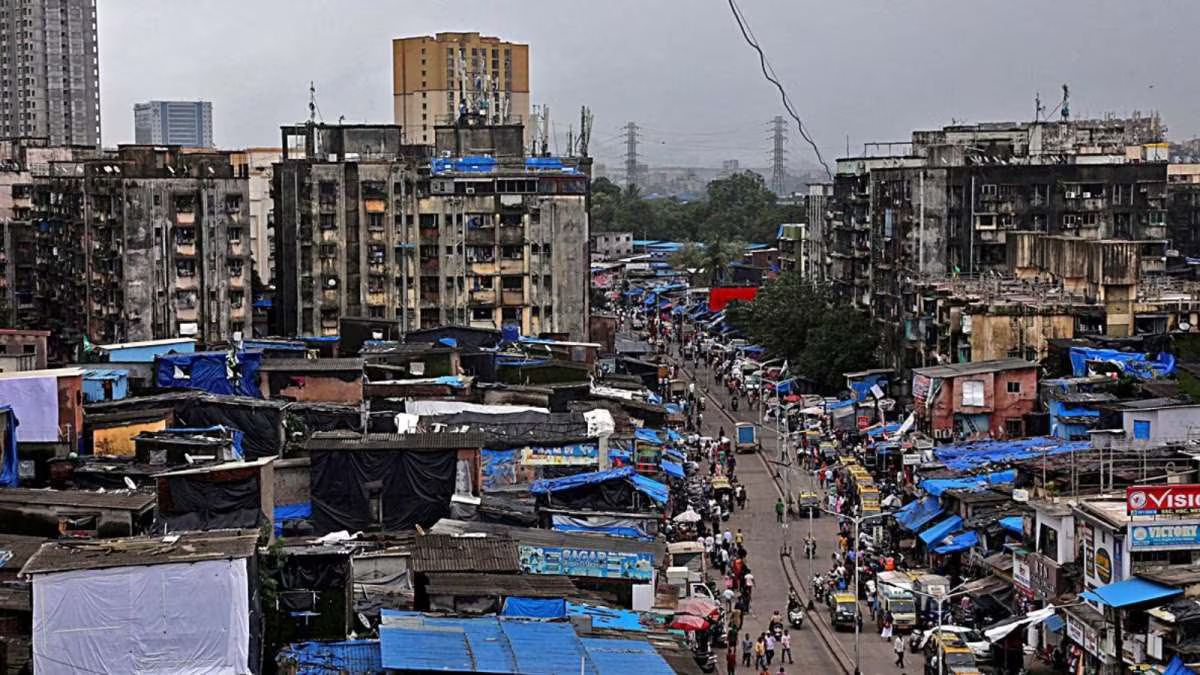
Mumbai’s long-running effort to eliminate informal settlements is entering a new phase, with a state-run infrastructure agency best known for highways and expressways stepping into large-scale housing redevelopment. The Maharashtra State Road Development Corporation has created a dedicated slum implementation unit to deliver dozens of redevelopment projects across the city, marking a strategic shift in how the state plans to unblock stalled urban housing schemes.
Under the government’s “Slum Free Mumbai” programme, the agency has been tasked with redeveloping nearly 98 acres of slum land covering more than 24,000 households across multiple neighbourhoods, including central, western and eastern suburbs. Officials say the move reflects growing concern that privately driven redevelopment models have struggled to cope with financing gaps, regulatory complexity and beneficiary disputes. For MSRDC, the assignment represents unfamiliar ground. Until now, its engagement with housing was largely limited to rehousing people displaced by road and metro projects. This time, the corporation is responsible for end-to-end delivery—from feasibility studies and land surveys to approvals, construction monitoring and handover of rehabilitation units.
To manage this transition, MSRDC has formed an eight-member core project unit bringing together technical, financial and social expertise. The team includes urban planners, architects, engineers, finance specialists, GIS and land survey professionals, and socio-development experts. Their mandate covers preparing cluster redevelopment proposals, structuring project finance, verifying eligible beneficiaries and coordinating statutory approvals, including real estate regulation compliance. Urban planners say the state’s decision to deploy an infrastructure-focused agency reflects a broader rethink of Mumbai’s housing strategy. “Large slum clusters require the same project management rigour as expressways or flyovers,” said a senior urban development expert. “The emphasis now is on execution certainty rather than speculative redevelopment.”
The initiative also signals deeper inter-agency coordination. Alongside MSRDC, multiple public bodies—including the Municipal Corporation of Greater Mumbai, Mumbai Metropolitan Region Development Authority, Maharashtra Housing and Area Development Authority and City and Industrial Development Corporation—are being aligned to accelerate approvals and funding flows. Some publicly led projects are already underway, including large rehabilitation schemes in eastern Mumbai that aim to deliver thousands of replacement homes within fixed timelines. These projects are being positioned as templates for climate-resilient, higher-density housing with improved access to sanitation, open spaces and public transport.
Economists note that slum redevelopment is not just a housing issue but a productivity and sustainability challenge. Informal settlements often sit on strategically located land close to employment hubs, yet lack basic infrastructure. Redevelopment, if executed responsibly, can unlock land value while improving living standards and reducing environmental stress. The success of MSRDC’s new role will depend on whether engineering-driven execution can adapt to the social and governance complexities of housing redevelopment. If it does, Mumbai’s slum-free ambition could shift from policy intent to measurable urban transformation.
Mumbai MSRDC Steps Into Slum Redevelopment Role