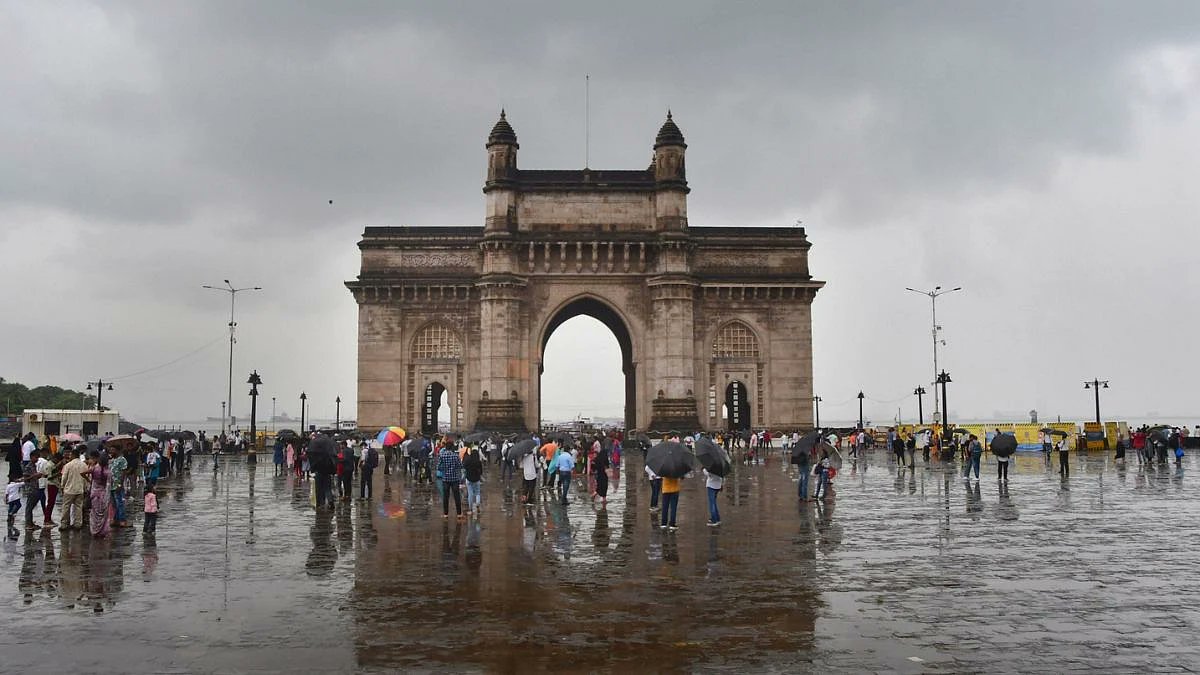
Mumbai’s monsoon rhythm appears to be slowing, with the city and its metropolitan region recording only light to moderate rainfall over the past 48 hours. According to the Indian Meteorological Department (IMD), while thunderstorms have swept across much of Maharashtra this week, Mumbai, Thane and Palghar have remained outside the current weather alerts. The IMD now anticipates that August will deliver below-normal rainfall across the city, with a stronger revival likely in September.
Showers began late Wednesday and continued through Thursday, offering relief from rising humidity but falling short of the volumes typically expected at this stage of the season. Localised rainfall readings show Sewri receiving 46 mm, Madh 45 mm and Chembur 44 mm in the last 24 hours. Other areas, including Santacruz, Bandra and Ghatkopar, recorded totals between 34 mm and 37 mm, highlighting the uneven distribution of precipitation across the metropolis.The IMD has forecast generally cloudy skies and intermittent light to moderate rain or thundershowers for Mumbai over the next two days, with temperatures expected to hover around 30°C during the day and 26°C at night. While most of Maharashtra remains under a yellow alert until the weekend, meteorologists have refrained from issuing similar warnings for the city.
Weather experts attribute this August slowdown to a temporary weakening of monsoon circulation over the west coast, part of a larger climate variability pattern observed in recent years. This shift has raised concerns over the resilience of water storage systems, particularly as reservoir replenishment depends heavily on consistent monsoon inflows during July and August. The anticipated September revival may ease supply pressures, but the current lull underscores the need for adaptive urban water management.Urban planners caution that prolonged dry spells, followed by intense rainfall bursts, place added stress on both drainage and supply infrastructure. Such extremes linked to broader climate change impacts demand integrated approaches that combine rainwater harvesting, greywater reuse and watershed restoration. These measures not only address supply volatility but also contribute to building a zero-carbon, climate-resilient city.
The IMD’s broader seasonal outlook for the second half of the monsoon suggests that Maharashtra will likely finish with above-average rainfall overall in 2025. However, the short-term forecast emphasises the need for cautious consumption, sustainable usage practices, and preparedness for both scarcity and sudden flooding when rains return with force.For now, Mumbai’s monsoon story remains one of moderation a pause before the likely September surge. Whether the coming downpours will balance the season’s water ledger or overwhelm city systems will depend on the speed and scale of urban climate adaptation.