


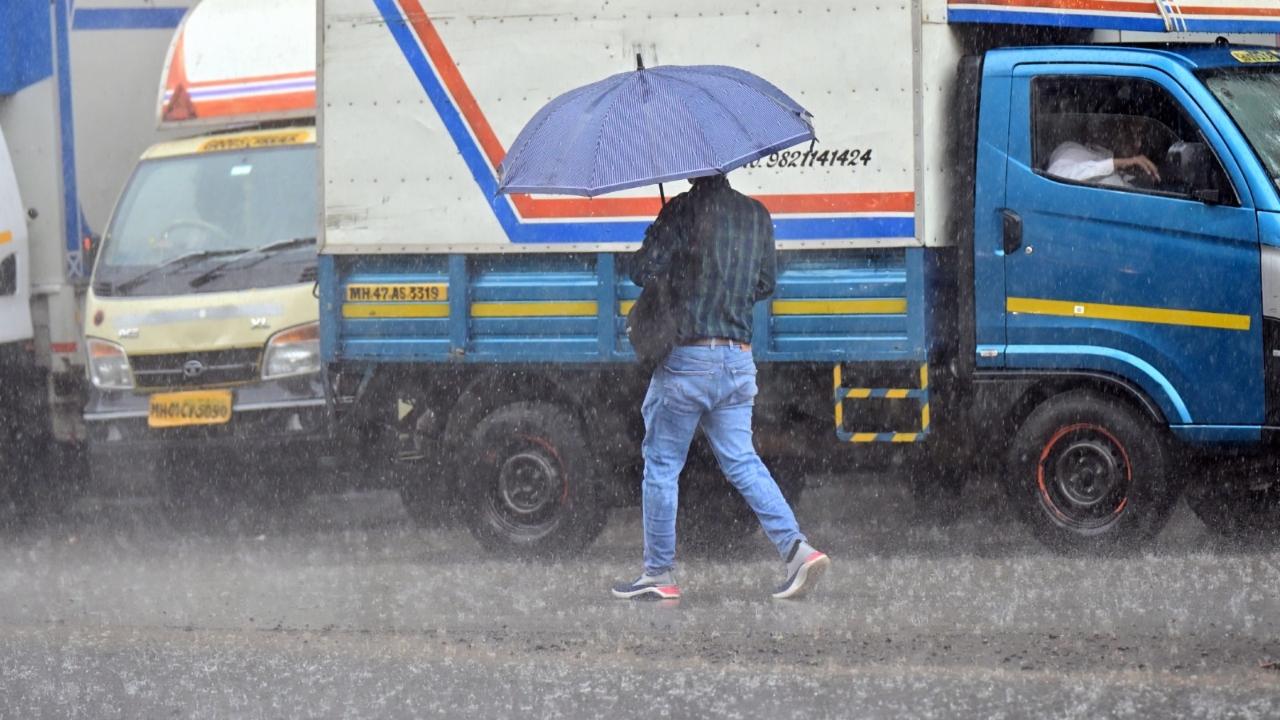
Mumbai is set to witness a quieter week of monsoon activity as the India Meteorological Department (IMD) has downgraded weather alerts across the city and surrounding districts. After two weeks of intense rainfall driven by cyclonic circulation, the city will now experience more stable weather marked by light to moderate showers.
Forecasts for the coming days suggest no significant rainfall warnings for Mumbai, with localised yellow alerts continuing only for Thane, Palghar and Raigad districts on July 14. The IMD has predicted partly cloudy skies with intermittent rain and gusty winds for the city and suburbs over the next 48 hours. Temperatures are expected to hover around 30°C maximum and 25°C minimum. Despite the easing rains, the preceding deluge has already delivered a considerable seasonal bounty. As of July 12, Mumbai had received close to 30 percent of its annual average rainfall. The city region recorded 595 mm, the eastern suburbs 700 mm, and the western suburbs 628 mm. This surge in precipitation has significantly boosted lake levels—currently at 75 percent of total storage capacity—ensuring a much-needed early cushion in the city’s annual water security cycle.
Officials from the city’s hydraulic engineering department confirmed that the Modak Sagar reservoir had already started overflowing last week, prompting the opening of two of its gates to manage the excess inflow. The current water stock is being viewed as one of the highest mid-July levels in recent years. For comparison, the lake storage stood at just 25 percent on the same date last year and 28 percent the year before. This early buffer in lake reserves is a positive sign for civic planners and sustainable city management. It reduces the likelihood of water cuts later in the year and bolsters the resilience of the urban water system. Experts, however, caution that the city must use this window to push water conservation measures and upgrade storage infrastructure in line with climate-adaptive urban planning.
While the temporary dip in rainfall brings relief to residents weary of traffic disruptions and waterlogging, it also underscores the unpredictable nature of monsoonal patterns. The IMD’s continued monitoring and adaptive forecasting remain critical in alerting local authorities to potential shifts in rain intensity. The lull in rain may offer Mumbai a brief breather, but it also presents an opportunity to reflect on how infrastructure and urban planning must continue to evolve. With the lakes already nearing optimal capacity and weather warnings subdued, the city stands on a strong footing—but must tread wisely to ensure that short-term relief translates into long-term sustainability.
Also Read : BMC Gets One EOI For 100-Seat Medical College In Govandi Under PPP Model
