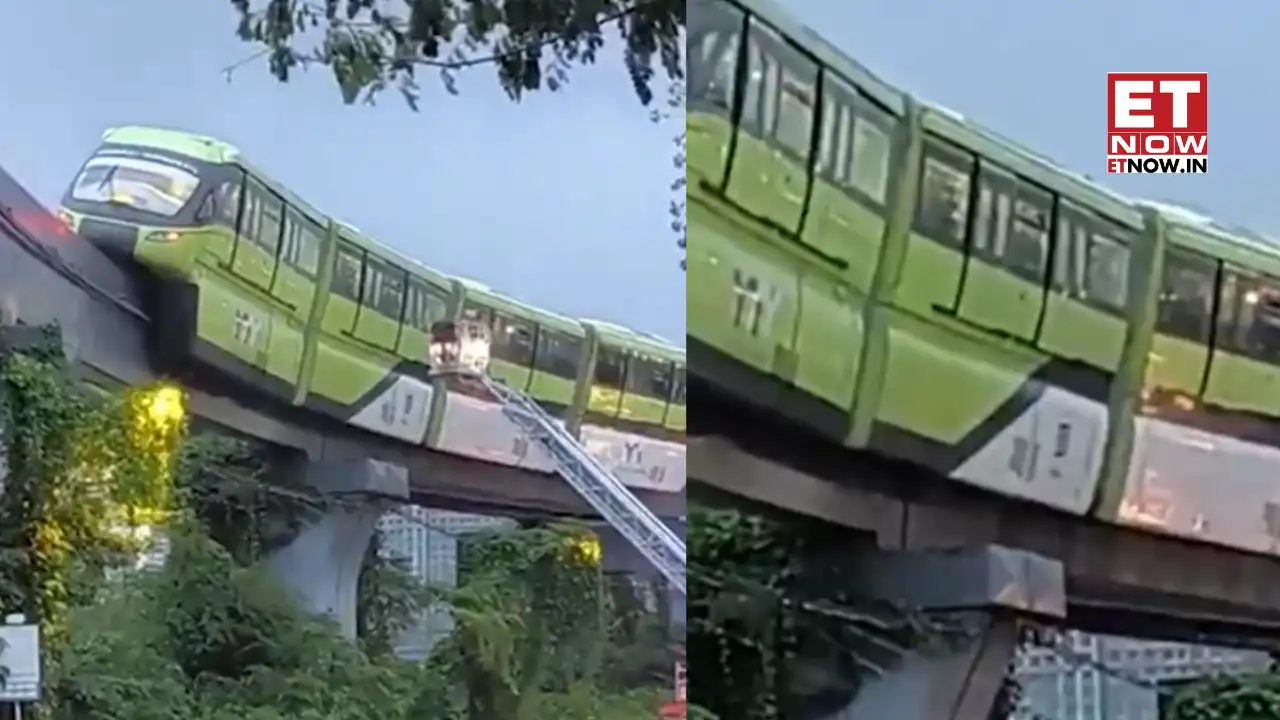
Mumbai remained on edge this week as relentless downpours paralysed its already stretched infrastructure, halting flights, delaying trains and stranding hundreds of passengers inside two monorail rakes. More than 750 people were eventually rescued in coordinated operations, but the disruption laid bare the vulnerabilities of a city confronting both extreme weather and inadequate public transport systems.
According to civic and transport officials, power supply failures amid torrential rain led to two separate incidents on the city’s monorail network. One rake stopped abruptly between Acharya Atre and Wadala stations with around 200 passengers on board, all of whom were safely evacuated. In the second and larger incident, a train carrying nearly 600 passengers came to a standstill near Mysore Colony. Rescue teams, including fire officials, worked for hours to ensure the evacuation of every commuter.
The Indian Meteorological Department confirmed that several neighbourhoods recorded rainfall exceeding 250 mm in a single day, with suburbs like Kandivali and Dindoshi crossing the 300 mm mark. South and eastern districts also reported close to 290 mm, underscoring the scale of the deluge. In response, a red alert was issued for Mumbai, Thane, Raigad, Pune, Satara and Ratnagiri, warning of heavy to extremely heavy rainfall over the next 48 hours.
The impact extended to aviation and railway services. At Mumbai’s international airport, over a dozen flights were diverted and several forced into holding patterns, leading to average delays of 40 minutes. Railway operations also reported significant disruptions, with suburban services slowing down during peak hours as tracks were waterlogged. Officials admitted that overcrowding on the monorail contributed to the technical snags that compounded the crisis. With the city’s dependence on mass transit only increasing, experts warn that climate-resilient planning must be prioritised. They argue that sustainable solutions, such as rainwater harvesting, improved drainage, decentralised energy systems and resilient public mobility, are no longer optional but essential to safeguard lives and livelihoods.
The rainfall data reveals a broader challenge—climate variability is intensifying monsoon spells in urban India, overwhelming outdated infrastructure. For Mumbai, a city of over 20 million people, building eco-friendly and future-ready transport systems could be the only way to ensure mobility and safety during climate shocks. While the successful rescue of stranded commuters provided temporary relief, the larger question remains: how long can India’s financial capital continue to rely on reactive responses rather than systemic adaptation? With rainfall patterns set to intensify further, Mumbai’s resilience will depend on how quickly its civic systems shift from repair to preparedness.